Why Choose Interior Acoustic Panels for Better Sound?
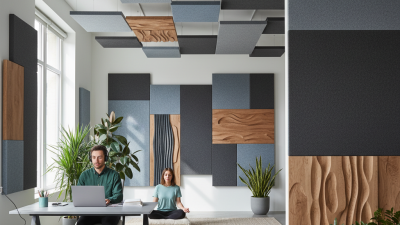
In busy offices, classrooms, restaurants, and healthcare spaces, sound shapes daily experience. Voices bounce from glass, concrete, and painted ceilings. The result can be fatigue, distraction, or uncomfortable privacy gaps. Interior acoustic panels help control these reflections by absorbing part of the sound energy. They can make speech clearer without forcing people to speak louder.
The World Health Organization’s 2018 Environmental Noise Guidelines identify excessive noise as a significant public-health concern. The report connects unwanted noise with sleep disturbance, annoyance, and other health risks. Although interior panels cannot solve every noise problem, they can reduce reverberation inside a room. Acoustic professionals commonly assess this effect through reverberation time, measured under ISO 3382 procedures. They may also review absorption ratings, such as NRC values tested under ASTM C423. Numbers matter.
So does practical experience. A fabric-wrapped panel behind a reception desk can soften repeated speech reflections. Ceiling baffles above a shared table can reduce the sharpness of nearby conversations. Panel placement usually matters more than simply adding more material. A room covered randomly may still sound uneven and disappointing.
This is not a magic fix. Panels do not block heavy noise through walls or stop mechanical vibration. Effective design considers room volume, occupancy, furniture, glazing, background noise, and speech privacy. The WELL Building Standard also treats acoustic performance as part of healthier building design. Still, product claims should be checked against laboratory data and project conditions. A quiet-looking panel is not automatically an effective one. Careful measurement remains essential. For many interiors, that balance makes acoustic panels a practical, visible, and professionally defensible choice for better sound.
What Are Interior Acoustic Panels?
Interior acoustic panels are engineered surfaces that absorb sound inside a room. They commonly use porous cores, fabric coverings, or perforated materials. Instead of blocking every external noise, they reduce reflected energy from walls and ceilings.
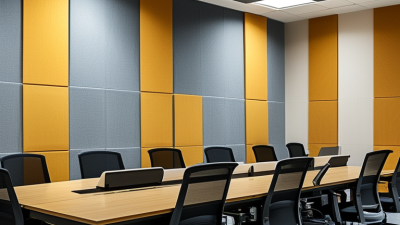
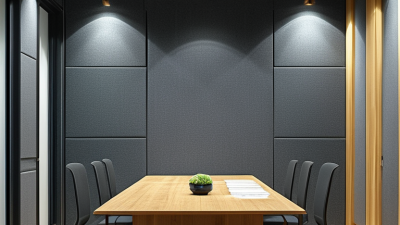
Think of a meeting room with a bare table and glass walls. Voices bounce sharply, creating a metallic echo. Wall panels capture part of that energy, shortening reverberation time and improving speech clarity. ISO 354 measures sound absorption in a reverberation room, while ASTM C423 supports laboratory ratings such as the Noise Reduction Coefficient. These ratings help designers compare products, but they do not predict every real-room result.
Room geometry still matters. Placement, ceiling height, furniture, and occupancy can change performance. A panel that works well behind a speaker may contribute less on a distant sidewall. The World Health Organization’s 2018 Environmental Noise Guidelines recommend classroom indoor noise below 35 dB(A) during teaching. Acoustic panels cannot guarantee that target, especially when traffic or mechanical equipment enters through gaps. They address reflections, not weak windows or noisy ventilation.
That distinction is easy to miss. Good design begins with measurement, not decoration. An acoustic consultant may record reverberation time, speech intelligibility, and background noise before selecting panel coverage. In my experience, modest treatment often feels more natural than covering every visible surface. The result should sound calm, not strangely muted.
Why Choose Interior Acoustic Panels for Better Sound?
Interior acoustic panels are sound-absorbing products, commonly made with porous materials such as mineral wool or fiberglass and covered with fabric. They reduce reflected sound and help improve speech clarity and listening comfort.
Typical sound absorption coefficients at 500 Hz. Higher values indicate that more sound energy is absorbed instead of reflected. Actual performance varies with thickness, mounting method, air gap, and room conditions.
How Interior Acoustic Panels Improve Sound Quality
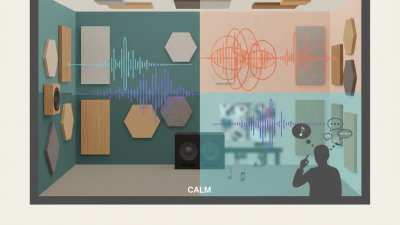
Interior acoustic panels improve sound quality by controlling reflections inside a room. Their porous surfaces absorb part of the sound energy before it returns from walls and ceilings. This reduces reverberation, echo, and speech masking. Conversations become easier to follow. The difference is practical.
ANSI/ASA S12.60 sets a 35 dBA background-noise limit for core learning spaces and limits classroom reverberation to about 0.6 seconds. Although designed for schools, this benchmark helps offices, studios, and meeting rooms. A panel rated NRC 0.80 absorbs substantial mid-frequency energy, but its result depends on thickness, spacing, and placement. Ratings are not room promises.
Good design begins with measurement. ISO 3382-2 describes methods for measuring reverberation time in ordinary rooms before and after treatment. Designers should test the room, not simply cover every wall. The World Health Organization’s Environmental Noise Guidelines for the European Region recommend average outdoor night exposure below 40 dB Lnight. Interior panels cannot replace sealed doors, quiet ventilation, or better glazing. That limitation matters.
A poorly placed panel may absorb speech frequencies while leaving low-frequency noise almost untouched. I would question any claim that promises silence; the realistic goal is clearer, calmer sound.
Key Materials and Designs Used in Acoustic Panels
Why Choose Interior Acoustic Panels for Better Sound?
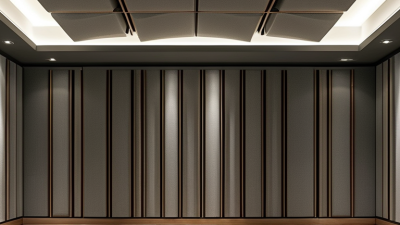
Interior acoustic panels manage reflected sound rather than simply blocking outside noise. Their key materials include mineral wool, fiberglass, polyester fiber, and perforated wood. Mineral wool and fiberglass usually provide strong absorption because their open structures convert sound energy into small amounts of heat. Polyester fiber offers lighter handling and flexible color options. Perforated wood adds a warmer visual character, but its backing cavity must be designed carefully. Otherwise, the surface may look acoustic without performing well.
Design matters as much as material.
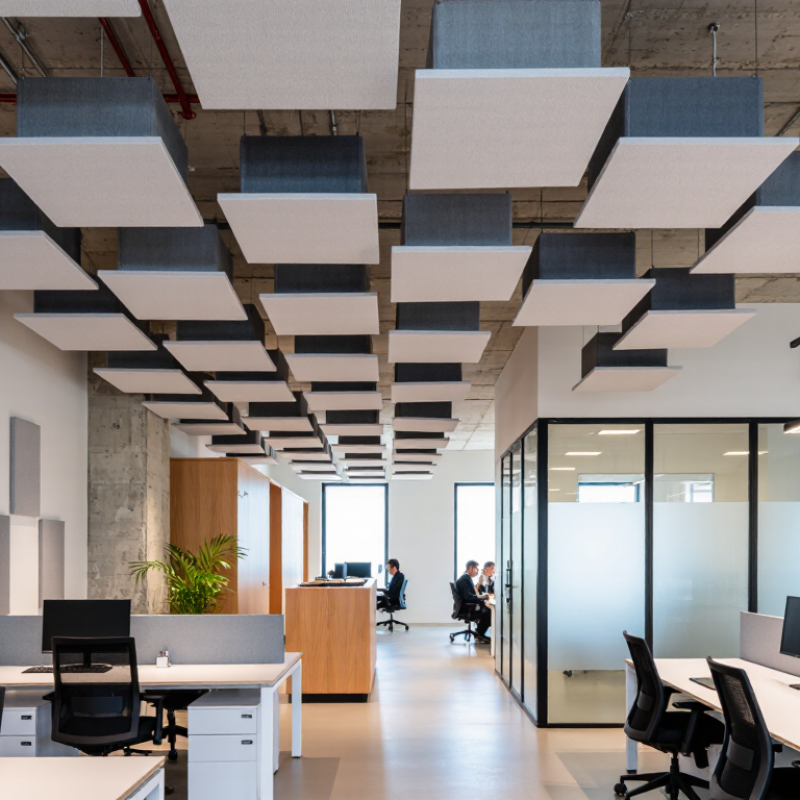
Wall clouds, suspended baffles, fabric-wrapped panels, and slatted systems target different reflection paths. ISO 3382 provides methods for measuring reverberation time, clarity, and related room-acoustic conditions. A practical design should consider ceiling height, speech frequency, furniture, and panel spacing. Too much absorption can make a room feel unnaturally quiet. That is often overlooked.
The World Health Organization’s 2018 environmental noise guidelines link excessive noise exposure with serious health impacts, including sleep disturbance and reduced well-being. Although panels cannot solve every noise problem, they can improve speech comfort in offices, classrooms, studios, and restaurants. Acoustic professionals commonly combine measured reverberation data with occupant feedback before selecting coverage. A 2023 assessment may not predict every 2026 workplace need. Rooms change. People adapt. Good design leaves room for adjustment.