Blog
China Top 10 Noise Reduction Panels Manufacturers
Choosing among China’s top noise reduction panels manufacturers requires more than comparing prices or product photographs. A panel that looks dense may absorb little sound if its material, thickness, or installation method does not suit the room. In a small meeting room, speech can bounce between hard walls; in a workshop, machinery may create a different acoustic challenge. The right solution starts with the noise source, the room’s surfaces, and the frequencies that need attention.
Acoustics professor Trevor Cox’s research offers a useful reminder, paraphrased here: room sound depends on how surfaces and space shape reflections. That principle matters when assessing noise reduction panels. Buyers should check test methods, documented acoustic performance, material specifications, and available installation guidance. Ask for reports that match the intended application. A laboratory result alone may not predict performance in a finished room.
Details matter. So does fit.
This guide introduces ten manufacturers in China and considers their product ranges, stated capabilities, customization options, and communication with buyers. It is not a substitute for independent testing, and a ranked list cannot capture every project’s needs. Some supplier information may also change over time. Compare evidence carefully, request samples where practical, and confirm that panel performance suits the actual space. A panel is not a cure-all; poor placement can leave the room noisy.
What Noise Reduction Panels Are and How They Work
What Noise Reduction Panels Are and How They Work
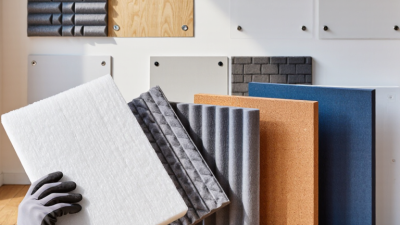
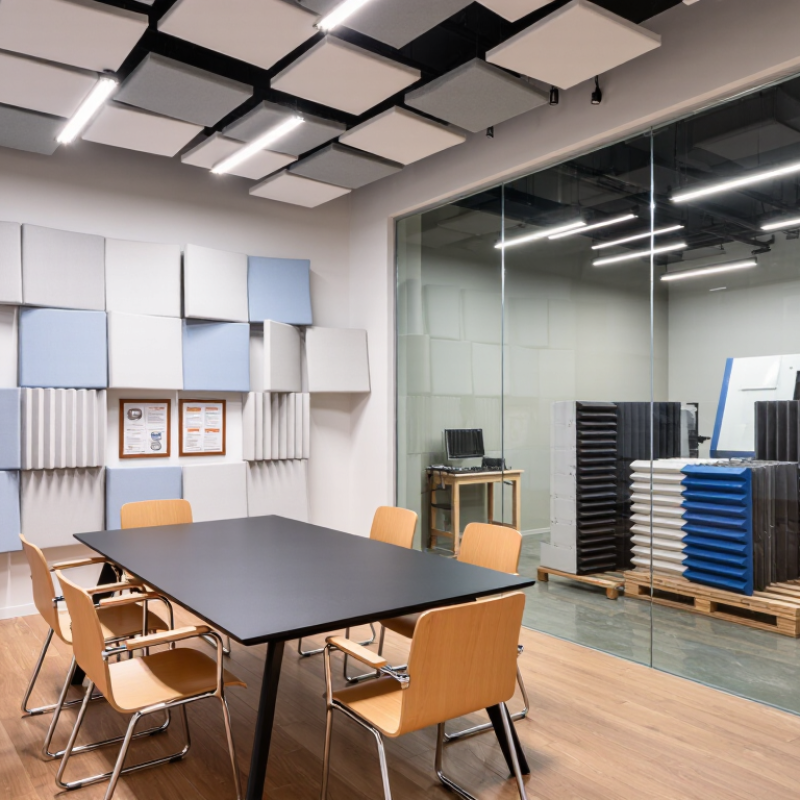
Noise-reduction panels are porous materials designed to absorb sound inside a room. They are not soundproof barriers. Sound waves enter the panel’s fibers or open cells, where friction converts some acoustic energy into heat. Less sound then reflects from the room’s walls and ceiling. The difference is noticeable: speech can sound clearer, and a sharp clap may produce a shorter echo. ASTM C423-23 measures sound absorption in a reverberation room. Its Noise Reduction Coefficient, or NRC, averages absorption at 250, 500, 1,000, and 2,000 hertz. Numbers need context.
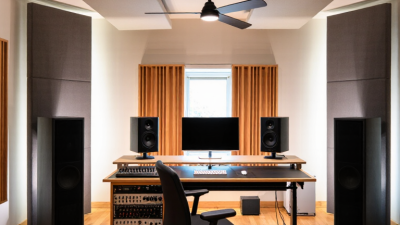
The WHO and European Commission’s 2011 noise-burden report estimated that environmental noise caused more than one million disability-adjusted life years to be lost annually in western Europe. That broad estimate concerns health impacts, not panel performance. Still, it shows why indoor sound deserves attention. In a meeting room, panels placed near reflection points can reduce distracting reverberation. Yet thin panels often absorb high frequencies better than deep bass. A room may feel quieter while a low mechanical hum remains. I would question any claim that panels alone “solve” noise; room size, panel thickness, coverage, and sound leakage all matter.
| No. | Panel Category | Typical Materials | How It Reduces Noise | Common Applications | Key Selection Consideration |
|---|---|---|---|---|---|
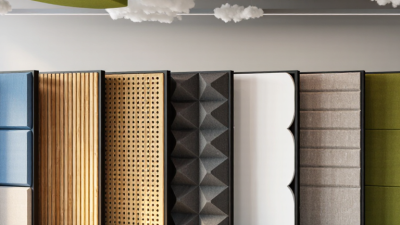
| 1 | Fabric-Wrapped Acoustic Panels | Porous fiberglass or mineral-fiber core with acoustically transparent fabric | Sound enters the porous core, where friction converts some acoustic energy into heat. These panels primarily absorb room reflections rather than block sound between rooms. | Offices, classrooms, meeting rooms, studios, and auditoriums | Check tested absorption data, panel thickness, edge details, fabric durability, and fire-performance requirements. |
| 2 | PET Acoustic Panels | Nonwoven polyester fiber, often made partly from recycled PET | The fibrous structure absorbs sound through viscous and thermal losses as air moves through the material. | Workplaces, schools, libraries, and interior feature walls | Compare tested acoustic performance, density, thickness, recycled-content documentation, and applicable fire ratings. |
| 3 | Perforated Metal Panels with Absorptive Backing | Perforated steel or aluminum facing with mineral wool or fiberglass behind it | Sound passes through the perforations and is absorbed by the porous backing; the facing protects the absorber and can be designed for robust environments. | Factories, transport facilities, plant rooms, and large public buildings | Review perforation ratio, backing thickness, corrosion resistance, cleanability, and the complete tested assembly. |
| 4 | Perforated Wood Panels | Wood or wood-based panel with drilled holes or slots and a sound-absorbing layer behind | Openings admit sound to the backing layer. The panel assembly can combine absorption with a finished architectural surface. | Auditoriums, conference rooms, cultural venues, and commercial interiors | Confirm opening pattern, cavity depth, backing specification, finish, and applicable emissions and fire requirements. |
| 5 | Wood-Slat Acoustic Panels | Timber or wood-veneer slats mounted over an absorptive backing, commonly felt | Gaps between slats allow sound to reach the backing, which absorbs part of the incident sound energy. | Offices, hospitality interiors, retail spaces, and residential rooms | Check slat spacing, backing coverage, mounting arrangement, finish durability, and full-system test results. |
| 6 | Microperforated Panels | Thin metal, plastic, or other rigid sheets with very small openings, often installed over an air cavity | Air movement in the small openings and cavity creates acoustic losses. Performance depends on hole size, open area, panel stiffness, and cavity design. | Architectural ceilings, cleanable interiors, and spaces where fibrous surfaces are undesirable | Request test data for the exact panel-and-cavity configuration; small design changes can affect performance. |
| 7 | Acoustic Foam Panels | Open-cell polyurethane or melamine foam | Open pores dissipate sound energy as air moves within the foam. These panels treat reflections and reverberation; they are not, by themselves, soundproofing barriers. | Recording and broadcast rooms, equipment enclosures, and selected indoor spaces | Verify fire and smoke performance, installation suitability, cleaning needs, and frequency-specific test results. |
| 8 | Mineral-Wool Acoustic Panels | Stone wool or glass wool, typically protected with fabric, perforated facing, or a suitable veil | The interconnected fibers resist air movement and dissipate sound energy. The facing and mounting cavity influence the finished system's performance. | Industrial buildings, cinemas, offices, and building-services spaces | Check fiber containment, facing compatibility, moisture conditions, fire classification, and installation details. |
| 9 | Acoustic Ceiling Panels | Mineral fiber, fiberglass, metal with backing, or other tested ceiling-system materials | Ceiling surfaces absorb sound within a room; suspended systems may also use a plenum cavity that affects acoustic behavior. | Offices, schools, hospitals, and commercial interiors | Evaluate the complete ceiling system for absorption, fire safety, humidity resistance, access needs, and compatibility with services. |
| 10 | Sound-Barrier Panels with Absorptive Faces | Mass-loaded solid core or metal construction with porous absorptive surfaces | The solid core helps limit sound transmission, while absorptive faces reduce reflections. Barrier performance depends on mass, airtight joints, height, and installation. | Roadside barriers, industrial boundaries, and screening around noisy equipment | Ask for transmission-loss or sound-insulation data as well as absorption data; they measure different properties. |
Note: This manufacturer-neutral table describes ten common noise-reduction panel categories, not a ranking of companies. Sound absorption reduces reflections within a space; sound insulation limits sound passing through a partition. Actual results depend on the tested assembly, room conditions, and installation.