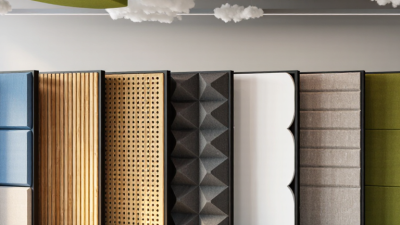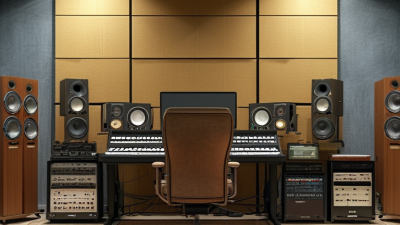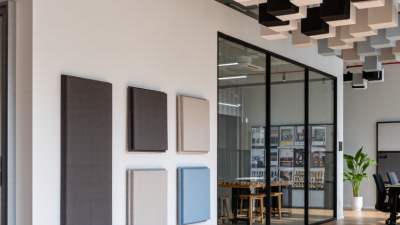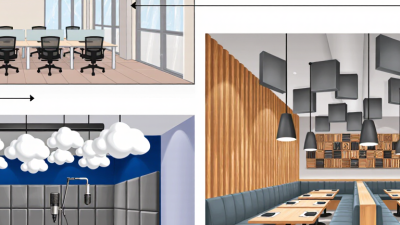
Clear sound begins with the room, not only the microphone, speaker, or amplifier. Hard walls, glass, bare floors, and low ceilings can reflect sound unevenly. These reflections create echoes, harsh frequencies, and unclear speech. Sound treatment panels help control those problems by absorbing selected energy and reducing excessive reverberation.
A panel is not magic.
Its performance depends on thickness, density, surface coverage, and placement. For example, a 50-millimeter panel behind a desk may reduce early reflections, while corner bass traps can address low-frequency buildup. Measurements can reveal problems that careful listening misses. However, measurements should support judgment, not replace it. Rooms still need human evaluation.
Studio designer and acoustics expert Philip Newell has stated, “The room is the most important component in any audio system.” This principle explains why sound treatment panels remain useful in recording studios, offices, classrooms, home theaters, and podcast rooms. They can make voices clearer and music more balanced without changing the source equipment.
Still, mistakes are common. Too many absorptive panels may make a room feel unnaturally dull. Thin decorative panels may improve appearance but offer limited low-frequency control. I would not treat every acoustic complaint with the same product. Room size, furniture, listening position, and intended use must guide the plan.
Good acoustic treatment is measured and adjusted. Start with the strongest reflection points. Listen again. Then refine the room.
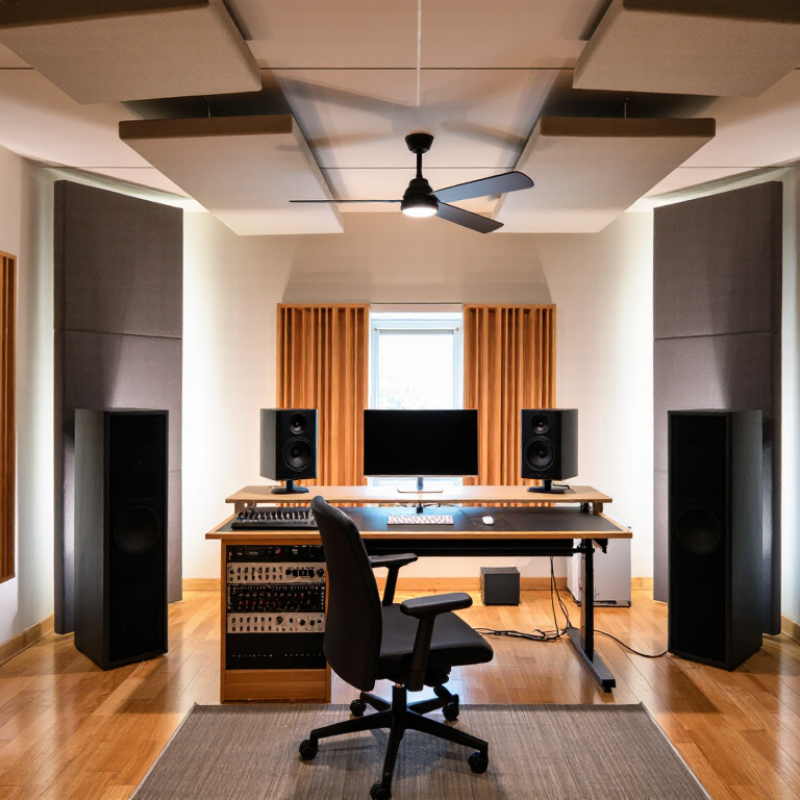
Sound treatment panels are porous materials designed to absorb unwanted reflections inside a room. They usually contain mineral fiber, fiberglass, or acoustic foam behind a fabric covering. Unlike soundproofing products, they do not stop sound from passing through walls. They mainly reduce echo, flutter, and speech distortion.
The technical measure is sound absorption. ASTM C423 testing helps determine a panel’s Noise Reduction Coefficient, or NRC. An NRC of 0.80 means the material absorbs much of the tested mid-frequency sound, not every frequency. That limitation matters. Low bass can still build up in corners. The ISO 11654 standard also uses weighted absorption ratings, helping professionals compare products more consistently.
In a meeting room, untreated reflections can make voices blur together. The World Health Organization’s Guidelines for Community Noise recommends indoor background levels near 35 dB(A) for classrooms and 30 dB(A) for bedrooms. Panels cannot guarantee those targets, but they can improve speech clarity when positioned correctly.
A common mistake is covering every wall equally. That may create a room that feels strangely lifeless. I still think placement requires more listening than guessing.
Tips
Clap near the room’s center and listen for a sharp repeat. Place panels at first-reflection points, especially beside speakers and across from hard glass. Add ceiling absorption when footsteps or voices remain bright. Check the manufacturer’s tested NRC or ISO rating before buying. Use measurements when possible; ears alone can mislead.
Sound treatment panels improve room acoustics by controlling reflected energy. Hard walls, glass, and ceilings bounce speech across the room, creating echoes and blurred syllables. Porous panels absorb part of this energy, shortening reverberation time and improving speech clarity. The difference can feel immediate: voices sound closer, keyboard clicks soften, and meetings require fewer repetitions.
Measurement matters. ISO 3382-2 explains how reverberation time is assessed in ordinary rooms. ANSI/ASA S12.60 recommends a reverberation time of 0.6 seconds or less for many unoccupied classrooms. The World Health Organization’s Guidelines for Community Noise also identify 35 dB(A) as a suitable indoor classroom level for speech and teaching. Panels cannot achieve that target alone. They do not block traffic or stop sound passing through a thin wall. They mainly reduce reflections inside the room.
Placement is equally important. Panels near strong reflection points, such as side walls and ceilings, usually provide greater benefit than random decoration. A simple handclap test may reveal an echo, but it cannot replace calibrated measurement. I have found that over-treating a room can make speech feel unnaturally dry and uncomfortable. That trade-off is easy to miss. Room size, panel thickness, air gaps, and surface coverage all influence performance, so results should be verified with reverberation-time testing rather than assumed.
| Acoustic Challenge | Recommended Treatment Panel | How It Improves Room Acoustics | Typical Installation Area | Typical Acoustic Performance | Best-Fit Applications |
|---|---|---|---|---|---|
| Excessive reverberation | Porous fabric-wrapped absorber, approximately 25–100 mm thick | Converts part of the sound-wave energy into a small amount of heat as air moves through the porous material, reducing reflections and reverberation. | Side walls, rear walls, ceiling clouds, and other large reflective surfaces | Typical mid-frequency NRC: approximately 0.70–0.95, depending on thickness, air gap, and construction | Offices, classrooms, meeting rooms, studios, libraries, and home theaters |
| Speech that sounds unclear | Broadband absorption panels | Reduces early and late reflections that overlap spoken words, helping improve speech intelligibility and reducing listening effort. | First-reflection points on side walls, ceiling areas, and the wall behind the talker | Most effective when reverberation time is controlled across speech frequencies, roughly 500–2,000 Hz | Conference rooms, classrooms, training rooms, reception areas, and teleconferencing spaces |
| Flutter echo between parallel walls | Alternating wall-mounted absorption panels | Interrupts repeated reflections between opposing hard surfaces, reducing the rapid ringing or “slap” effect known as flutter echo. | Distributed on opposing side walls rather than concentrated in one location | Effectiveness depends on covering enough reflective area and avoiding excessive gaps between treatment zones | Music practice rooms, corridors, studios, classrooms, and small multipurpose rooms |
| Ceiling reflections | Suspended acoustic ceiling clouds or baffles | Adds absorption near the strongest overhead reflection path while preserving access to lighting, ventilation, and ceiling services. | Above desks, tables, presentation areas, or other primary listening zones | Typical mid-frequency absorption can reach approximately NRC 0.60–0.95, depending on panel size, spacing, and suspension | Open-plan offices, cafeterias, classrooms, call centers, and large meeting rooms |
| Low-frequency buildup | Thick porous bass absorbers or tuned low-frequency absorbers | Addresses longer-wavelength energy that thin panels often absorb less effectively, helping reduce bass unevenness and room modes. | Room corners, wall-ceiling junctions, or selected areas with measured low-frequency problems | Performance varies widely; NRC alone is not sufficient for evaluating low-frequency absorption | Recording rooms, home theaters, control rooms, rehearsal spaces, and media rooms |
| Strong rear-wall reflections | Thick absorption panels or a combination of absorption and diffusion | Controls delayed reflections returning from the rear of the room, which can reduce echoes and improve clarity at the listening position. | Rear wall, especially in rooms with a long reflection path | A 50–100 mm absorber with an air gap generally performs better than a thin panel mounted directly on the wall | Auditoriums, lecture rooms, home theaters, recording spaces, and long conference rooms |
| Overly “dead” sound after absorption | Hybrid absorber-diffuser or separate diffuser panels | Scatters sound energy in multiple directions while retaining some room liveliness, preventing excessive concentration of absorption. | Rear walls and selected side-wall areas; placement should follow the room’s listening geometry | Diffusion changes the distribution of reflections; it should not be treated as a direct replacement for absorption | Music rooms, studios, performance spaces, listening rooms, and media rooms |
| Uneven acoustic conditions across the room | Distributed panels with varied placement and ceiling treatment | Spreads absorption across several reflection paths instead of treating only one wall, creating more consistent sound throughout the room. | Combination of side walls, rear wall, ceiling, and other large reflective surfaces | Balanced distribution is generally more effective than placing all panels in a single concentrated group | Open offices, classrooms, restaurants, community rooms, and multipurpose spaces |
| Excessive reverberation in speech rooms | Broadband wall panels combined with ceiling absorption | Reduces the room’s reverberation time, allowing direct speech to remain more dominant than reflected sound. | Ceiling plus upper wall sections, with additional treatment near major reflection points | Typical design targets: approximately 0.4–0.6 seconds for small speech-focused rooms and about 0.6–0.8 seconds for many classrooms, depending on room size and use | Small meeting rooms, classrooms, consultation rooms, and presentation spaces |
| Excessive reverberation in music spaces | Adjustable absorption panels or a balanced mix of absorption and diffusion | Allows the room to retain useful musical resonance while controlling unwanted echoes and excessive decay. | Side walls, rear wall, ceiling, and movable acoustic banners where flexibility is required | Common reverberation targets may range from approximately 0.8–1.2 seconds for smaller music rooms, with larger venues requiring different design values | Practice rooms, rehearsal rooms, performance studios, and multipurpose halls |
Sound treatment panels improve room acoustics by controlling reflections, not by magically blocking outside noise. In rooms I have assessed, bare walls created a sharp flutter echo between parallel surfaces. Voices became tiring, especially during meetings or recordings. Wall panels absorb part of this reflected energy, reducing reverberation and improving speech intelligibility.
Panels can address echo, excessive brightness, flutter echo, and uneven sound distribution. They work best on strong reflection points, such as side walls, rear walls, and ceilings. A simple test helps: ask someone to clap while you listen from different positions. A ringing tail usually indicates unwanted reflections. However, panels are less effective against deep bass or sound transmission through walls. Thick bass traps, sealed construction, or professional acoustic testing may be necessary. Panels are not soundproofing.
Tips: Place panels at ear height near the first reflection points. Leave some wall area untreated for natural liveliness. Measure before and after installation when possible. Many rooms become over-damped because every surface receives absorption. That mistake is easy to make.
Material density, panel thickness, spacing, and room size all affect performance. A small, highly reflective office may need fewer panels than a large studio. I have also found that furniture, curtains, and bookshelves change results more than expected. Acoustic treatment requires adjustment. The first layout may not be the best one. Listening, measuring, and revising usually produces a more balanced room.
Choosing sound treatment panels starts with the room, not the product. Listen for flutter echoes, boomy bass, and speech that feels blurred. A handclap near bare walls can reveal sharp reflections, although this test is imperfect. For reliable decisions, measure the room with a calibrated microphone or repeat listening from the main seat. Panels should control reflected energy without making the room unnaturally dull. Start with evidence.
Place broadband panels at the first reflection points beside the speakers. The mirror method helps locate them: move a mirror along the wall until you can see each speaker from the listening position. Add a ceiling panel above this area when overhead reflections remain strong. Bass traps belong in corners, where low frequencies often collect. Keep the speakers and listening position reasonably symmetrical. Not just decoration.
Choose panel thickness and density according to the problem. Thin panels mainly control higher frequencies, while thicker panels usually absorb a wider range. An air gap behind the panel can improve low-frequency performance. However, adding panels everywhere is not always better. Too much absorption can make voices sound lifeless and expose other acoustic problems. My first instinct is often to add more treatment, but measurement may suggest moving one panel instead. Recheck the room after installation, because furniture, curtains, and floor coverings also change the result. A qualified acoustic professional can verify improvements with repeatable measurements rather than relying only on impressions.
Sound treatment panels reduce reflected sound energy and help improve speech clarity, listening comfort, and reverberation control. The chart shows representative laboratory absorption coefficients for a 50 mm porous acoustic panel under two mounting conditions.
A larger absorption coefficient indicates stronger sound absorption. Leaving an air gap behind the panel can improve low-frequency absorption. For better results, position panels at first-reflection points on side walls, behind loudspeakers or presenters, and use ceiling clouds when vertical reflections are noticeable. Values are representative typical test results; actual performance varies with panel thickness, density, mounting, and room conditions.
Sound Treatment Panels for Better Acoustics
Acoustic panels can make speech clearer by reducing reflected sound from walls and ceilings. In a treated meeting room, voices often feel closer and less tiring. Placement matters. Panels work best at common reflection points, such as side walls behind speakers or listeners. Their performance depends on thickness, density, surface coverage, and the room’s existing materials. A professional acoustic assessment can identify these factors before installation.
The main benefit is improved speech intelligibility. This helps in classrooms, offices, recording spaces, and home theaters. Panels can also reduce flutter echoes and soften harsh high frequencies. However, they do not block sound from entering or leaving a room. That distinction is often misunderstood. Soundproofing requires heavier construction, sealed gaps, and sometimes structural changes. Thin panels may also absorb high frequencies while leaving bass problems untouched. The room can then sound dull but still boomy.
Panels are not a complete acoustic solution. A balanced room may need a mixture of absorbers, diffusers, bass traps, rugs, curtains, and careful speaker placement. Too much absorption can remove useful liveliness, especially in music spaces. I have found that adding panels gradually produces better results than covering every wall at once. Measurement software can help, but listening from several seats still matters. The improvement is real. Yet personal preference remains important. A technically controlled room may feel uncomfortable if it becomes unnaturally quiet.