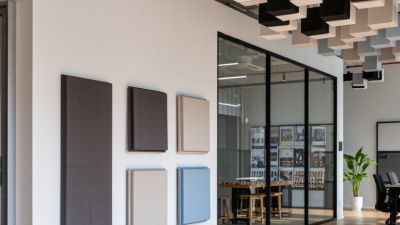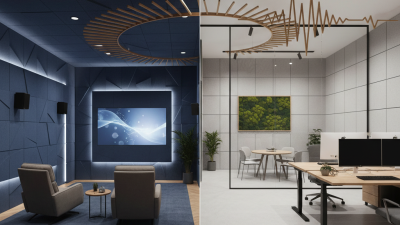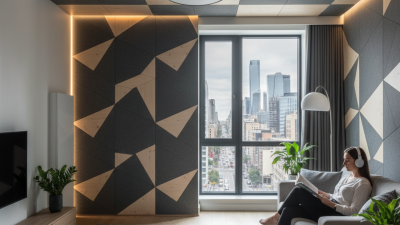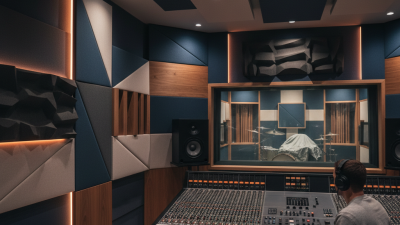
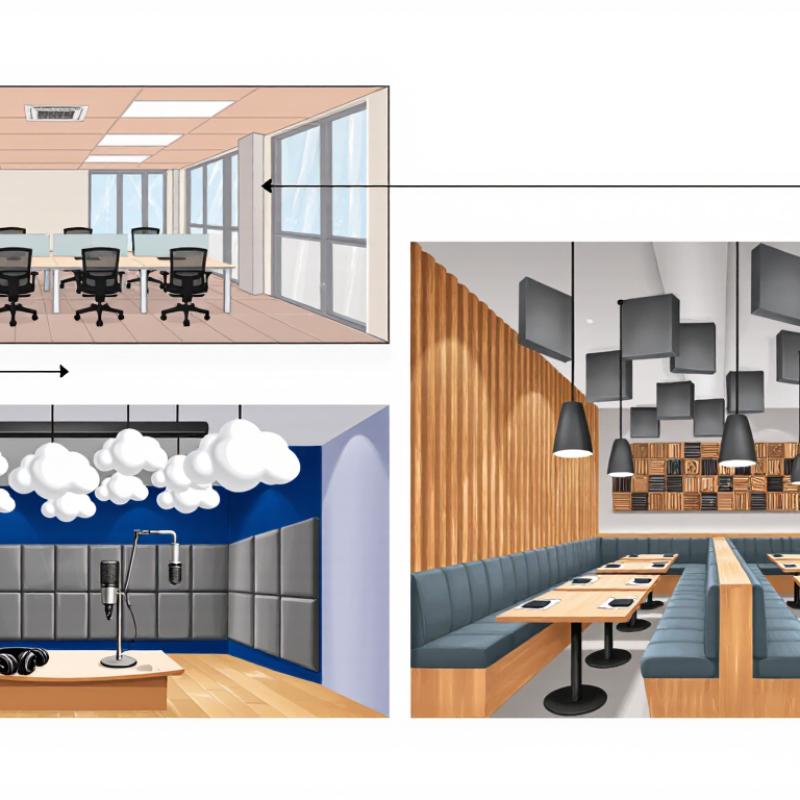
Choosing the best acoustic solutions begins with the room, not the product label. A quiet podcast studio needs different treatment from a busy restaurant or open-plan office. In a small studio, untreated walls can create sharp echoes, uneven bass, and unclear speech. Thick wall panels may soften reflections, while ceiling clouds can reduce sound bouncing above the listener. Yet absorption alone is not always enough.
Every room tells a different story.
In my experience, effective acoustic design balances absorption, diffusion, and sound isolation. Absorption controls reflected energy inside the room. Diffusion spreads sound more evenly across surfaces. Isolation limits noise entering or leaving the space. These goals often overlap, but they are not interchangeable. A foam tile may reduce high-frequency reflections, but it cannot block traffic noise through a thin window. That distinction matters.
A reliable decision should follow measurement, listening tests, and professional guidance. Qualified acousticians can examine reverberation time, background noise, room dimensions, and the intended use. Basic tools can reveal problems, although inexpensive phone applications may not provide laboratory-level accuracy. This is where judgment remains important.
There is no universal winner.
The best acoustic solutions are practical, measurable, and suited to the people using the room. A classroom may need clear speech at the back wall. A home theater may require controlled bass and reduced vibration. A conference room may prioritize privacy. Budget, appearance, installation limits, and future changes also deserve attention. The ideal solution may still involve compromises. That is worth admitting before any purchase.
Acoustic solutions are designed methods for controlling how sound behaves in a room. They address noise, echoes, speech clarity, and sound transfer between spaces. The best type depends on the room’s purpose, construction, and daily users.
In a classroom, ceiling panels and wall absorbers can reduce reverberation around the teacher’s voice. In a meeting room, careful absorption helps people hear soft speech without making the space feel unnaturally quiet. Sound isolation serves a different purpose. It limits noise passing through walls, doors, floors, or ceilings. Diffusion can scatter reflected sound and preserve a room’s natural energy. These functions should not be confused.
Measure before choosing materials.
A practical assessment may include background-noise readings, reverberation-time tests, and a close inspection of gaps around doors. I have seen rooms treated with thick panels that still felt uncomfortable because hard surfaces remained overhead and behind the listeners. That result is a useful reminder: more material does not always mean better acoustics. Placement matters. Occupancy matters too. Empty rooms often sound harsher than occupied ones.
Reliable acoustic planning connects the treatment to a clear purpose. An office may need privacy, while a studio may require balanced reflections. A healthcare space may prioritize calm and speech intelligibility. Professional recommendations should explain expected performance, installation limits, maintenance needs, and testing methods. Even then, acoustic design is not perfectly predictable. Furniture changes, new equipment, and user habits can alter the final result.
The best acoustic solution depends on how sound moves through a room. Sound reflects from hard walls, glass, ceilings, and polished floors. These reflections can create flutter echoes and blurred speech. Soft materials absorb part of the energy. Thick curtains, fabric panels, carpets, and upholstered furniture can reduce excessive reverberation. However, absorption alone may make a room feel unusually dull.
Room size and purpose also matter. A small meeting room often needs controlled absorption near speech zones. A music room may need balanced absorption and diffusion. Diffusers scatter sound across different directions. They can preserve a sense of natural liveliness. In an open office, ceiling panels can reduce sound travel between workstations. Screens may also block direct speech paths. They cannot stop every conversation.
I have noticed that acoustic problems are often misdiagnosed as volume problems. Lowering the speaker level may help briefly. It does not fix long reverberation or sound leakage. A practical assessment should examine room dimensions, surface materials, occupancy, and noise sources. Measuring reverberation time can provide stronger evidence than guesswork. Still, measurements do not replace human experience. A room may meet a target yet feel uncomfortable. This is where acoustic design becomes less perfect, and more thoughtful.
A useful test is simple: speak from one corner and listen from another. If words lose clarity, the room is telling you something.
The best acoustic solution depends on the problem, not the room’s appearance.
Sound absorption reduces reflections from ceilings, walls, and furniture. It makes speech clearer and lowers reverberation. ISO 3382-2 uses reverberation time to evaluate room acoustics, making this measure practical for offices and classrooms. Yet absorption alone cannot stop sound passing through a thin partition.
Diffusion scatters sound energy across different directions. It can preserve liveliness in music rooms, but it needs adequate room depth. Sound isolation blocks transmission through walls, doors, floors, and ventilation paths. It is usually the most important choice near meeting rooms or bedrooms. The U.S. General Services Administration’s Sound Matters guidance highlights gaps, flanking paths, and poor door seals as common weaknesses. Sound masking adds a controlled background sound, improving speech privacy when conversations remain audible. ASTM E1130 provides a method for measuring speech privacy performance. It does not create a silent room.
Tips: Measure before buying panels. Record reverberation, background noise, and partition performance. WHO’s Environmental Noise Guidelines recommend less than 30 dB(A) indoors at night for good sleep. That target does not fit every workplace. I have also found that visual comfort can mislead acoustic decisions. A beautiful wall may absorb very little sound. Review the data, then test one occupied space. Small errors can remain surprisingly expensive.
What Is the Best Type of Acoustic Solutions?
Selecting acoustic materials should begin with the environment, not appearance. The room decides. A busy cafeteria needs durable ceiling baffles and wall absorbers that reduce sharp, overlapping noise. In a quiet meeting room, fabric-wrapped panels can improve speech clarity without making the space feel enclosed.
In practical assessments, I measure reverberation time, background noise, and the distance between speakers and listeners. These details often reveal problems that a product sheet cannot show. Mineral wool panels usually provide strong absorption across speech frequencies. PET-based felt can suit offices because it is lightweight, flexible, and available in varied shapes. Perforated wood may add warmth, but its backing and installation determine much of its acoustic performance.
Moisture changes the decision. Pool areas and kitchens need materials that tolerate humidity and regular cleaning. Healthcare spaces require smooth, hygienic surfaces and carefully documented emissions. Corridors may need impact resistance more than maximum absorption. Looks can mislead. I once saw an attractive panel installed too high, leaving nearby voices harsh and reflective. The material was suitable; the placement was not.
Fire performance, cleaning methods, recycled content, and maintenance access should be checked before purchase. Acoustic ratings help, but laboratory results cannot fully predict a furnished room. Furniture, curtains, occupants, and open doors all affect performance. A small on-site trial is often wiser than covering every wall immediately. Surface coverage, air gaps, and panel thickness deserve equal attention.
The best acoustic solution is rarely the most expensive one. It should balance measured performance, installation cost, and future maintenance. In practice, a cheap foam panel may absorb high frequencies while leaving HVAC rumble untouched. Measure before buying. Record sound pressure levels, reverberation time, and speech clarity in occupied conditions. ISO 3382-2 provides a recognized method for measuring room reverberation. The World Health Organization’s Environmental Noise Guidelines for the European Region (2018) recommend indoor night noise below 30 dB(A) in bedrooms and below 35 dB(A) in classrooms. These targets show why appearance alone cannot define success.
Cost needs a wider lens. A ceiling system, wall treatment, or sound-masking setup may have different installation and replacement cycles. Compare purchase price, labor, cleaning, energy use, and expected service life. The World Green Building Council’s Health, Wellbeing and Productivity in Offices report (2014) states that people-related costs can represent about 90% of operating expenditure. Better acoustic comfort may therefore protect concentration and reduce complaints, even when the initial product cost is higher. That link is useful, but not automatic.
A practical design also respects the room’s purpose. Open offices need speech control, while classrooms need clear teacher communication. Healthcare spaces need privacy and easy cleaning. No solution is perfect. Occupancy changes, furniture moves, and performance can decline. I would specify measurable targets, test one representative area, and review results after installation. A 15% cheaper option is not cheaper if it needs early replacement. The final judgment should remain evidence-based, not decorative.
| Acoustic Solution | Primary Function | Typical Performance Data | Indicative Installed Cost (USD/m²) |
Space and Installation Impact | Maintenance and Durability | Main Advantages | Main Limitations | Best-Fit Applications | Long-Term Practicality |
|---|---|---|---|---|---|---|---|---|---|
| Fabric-Wrapped Mineral Wool or Fiberglass Panels | Broadband sound absorption that reduces reverberation, reflected speech, and general room noise. |
NRC: approximately 0.75–1.00 Effective across mid and high frequencies; thicker panels generally improve low-frequency absorption. |
$90–$250 | Usually 25–100 mm thick; wall-mounted or suspended from ceilings. Installation is relatively simple and causes limited disruption. | Typically 10–20+ years indoors when protected from moisture and physical impact. Fabric may require periodic vacuuming or replacement. | Excellent speech clarity improvement; high acoustic performance per unit area; available in many shapes and colors. | Does not significantly block sound transmission between rooms; vulnerable to punctures, stains, and moisture if poorly protected. | Offices, classrooms, meeting rooms, restaurants, studios, call centers, and open-plan interiors. | Very High |
| Recycled PET Acoustic Panels | Sound absorption and visual zoning using lightweight panels made from compressed polyester fibers. |
NRC: approximately 0.60–0.95 Performance depends on panel thickness, air gap, density, and installation method. |
$70–$220 | Lightweight; can be wall-mounted, suspended, shaped into screens, or used as ceiling clouds. Requires less structural support than many rigid systems. | Usually 10–20 years in normal interior conditions. Generally resistant to corrosion and easy to clean with low-moisture methods. | Lightweight, flexible, visually versatile, and suitable for suspended or movable configurations. | Low-frequency absorption is limited unless thicker panels or air gaps are used; exposed edges can be damaged in high-traffic areas. | Open offices, education spaces, libraries, hospitality areas, collaborative zones, and temporary layouts. | High |
| Acoustic Ceiling Clouds and Suspended Baffles | Absorbs sound from the ceiling plane and reduces vertical reflections in large or open rooms. |
Product-specific NRC: approximately 0.70–1.00 Ceiling coverage and the air gap above the product strongly affect overall performance. |
$100–$300 | Uses ceiling volume rather than wall area. Requires secure suspension points and coordination with lighting, sprinklers, HVAC, and services. | Typically 10–20+ years indoors. Dusting may be required, especially in exposed ceiling installations. | Effective where wall space is limited; improves speech intelligibility and can visually define activity zones. | Higher installation complexity than wall panels; not suitable where ceiling clearance or sprinkler access is restricted. | Warehouses, atriums, cafeterias, airports, gyms, open offices, and high-ceiling commercial spaces. | High |
| Perforated Wood or Micro-Perforated Panels with Absorptive Backing | Combines sound absorption with a durable architectural finish and moderate diffusion. |
NRC: approximately 0.60–0.90 The backing cavity and perforation pattern determine the frequency range and absorption level. |
$180–$450 | Commonly installed as a wall or ceiling lining. Requires accurate detailing, sub-framing, and coordination with doors, lights, and access panels. | Often 15–30 years or more in stable indoor conditions. Surface cleaning is straightforward, but damaged decorative finishes can be costly to repair. | Durable, attractive, and suitable for high-end architectural interiors; can provide absorption without a visibly soft finish. | Higher capital cost and installation complexity; performance is reduced if the absorptive backing or cavity is omitted. | Auditoriums, boardrooms, cultural venues, hospitality interiors, premium offices, and lecture spaces. | High |
| Acoustic Operable or Movable Partitions | Provides room flexibility while reducing sound transfer through a temporary or reconfigurable division. |
Typical laboratory-rated STC: approximately 35–50 Field performance may be lower because of perimeter gaps, seals, flanking paths, and doors. |
$450–$1,200 | Requires ceiling tracks, floor guidance, storage space, and careful sealing. Uses more hardware than fixed wall treatments. | Approximately 10–20 years depending on operating frequency. Seals, rollers, hinges, and track components may require periodic adjustment or replacement. | Creates adaptable rooms and can improve privacy without permanent construction. | More expensive than fixed absorption; sound isolation is highly dependent on installation quality and user operation. | Training rooms, conference centers, schools, hotels, multipurpose halls, and flexible workplaces. | Moderate to High |
| Sound-Isolating Wall or Ceiling Assemblies | Reduces airborne sound transmission between rooms through mass, separation, damping, and airtight construction. |
Typical laboratory-rated STC: approximately 45–65+ Actual results depend on studs, layers, insulation, penetrations, doors, glazing, and flanking paths. |
$120–$400 | Requires construction access and may reduce usable floor area or ceiling height. Penetrations must be sealed and detailed carefully. | Often 30–50+ years when protected from moisture and physical damage. Repairs can be difficult if services are concealed. | Best option for privacy and sound transmission control; durable when correctly designed and built. | Does not by itself solve reverberation inside the receiving room; expensive or disruptive to retrofit; weak links can compromise the entire assembly. | Bedrooms, healthcare rooms, studios, offices, residential separations, plant rooms, and high-privacy spaces. | Very High |
| Acoustic Doors, Seals, and Glazing Upgrades | Controls sound leakage through common weak points in otherwise sound-isolating room envelopes. |
Typical door or glazing ratings: STC approximately 35–55 Perimeter seals, thresholds, frames, and installation tolerances are critical to performance. |
$500–$2,000 per door or $400–$1,500 per m² of glazing |
Usually requires localized replacement or modification. Door weight, frame strength, hardware, and egress requirements must be considered. | Approximately 15–30 years. Seals and automatic door bottoms are wear components and may need periodic replacement. | Addresses leakage at doors and windows, which are often the weakest elements in a partition. | High cost for limited area; performance is wasted if surrounding walls, ceilings, or ventilation paths remain weak. | Recording rooms, offices, hotels, healthcare facilities, residential units, and testing spaces. | High |
| HVAC Silencers and Duct Acoustic Lining | Reduces noise transmitted through ventilation systems while maintaining required airflow. |
Typical insertion loss: approximately 10–30 dB Results vary with frequency, airflow speed, pressure drop, silencer length, and duct configuration. |
$150–$600 | Installed inside or adjacent to ductwork. Requires space, access panels, fire and hygiene coordination, and pressure-drop checks. | Approximately 15–25 years when correctly selected and maintained. Linings must be protected from moisture, erosion, and fiber release. | Targets mechanical noise that room absorption alone cannot solve; can significantly improve background noise levels. | May increase pressure drop, fan energy use, and maintenance requirements; must not obstruct airflow or violate hygiene standards. | Hospitals, hotels, offices, studios, laboratories, residential buildings, and mechanical plant areas. | High |