China Top 10 Acoustic Solutions Suppliers?
China’s acoustic solutions market has grown beyond basic wall panels and ceiling baffles. Suppliers now support offices, hotels, schools, studios, factories, and transportation spaces. Their work can shape speech clarity, privacy, reverberation, and everyday comfort.
Sound expert Julian Treasure states, “Sound affects us physiologically, psychologically, cognitively, and behaviorally.” That principle gives this ranking practical meaning. A reliable supplier should understand room geometry, absorption coefficients, noise transmission, and installation conditions. Product appearance matters, but measured performance matters more. Certifications, laboratory reports, fire ratings, and project references also deserve careful review.
This guide examines China’s top 10 acoustic solutions suppliers through several realistic factors. These include manufacturing capability, engineering experience, product range, customization, quality control, export performance, and after-sales support. Some companies focus on PET panels and decorative systems. Others provide industrial noise control, acoustic doors, soundproof rooms, or complete architectural treatments.
No ranking is flawless. Supplier data can change, and advertised performance may depend on laboratory conditions. Buyers should request current test reports and inspect finished projects whenever possible. A beautiful panel can still fail in a lively meeting room. A lower-cost option may also create higher installation expenses later.
The following companies are presented as strong candidates, not unquestionable winners. Their suitability depends on room function, budget, local building codes, and project complexity. This perspective helps buyers compare practical acoustic solutions instead of relying on product photos or broad marketing claims.

What Are Acoustic Solutions and Why Does China Lead the Market?
Acoustic solutions control unwanted sound, reduce reverberation, and improve speech clarity.
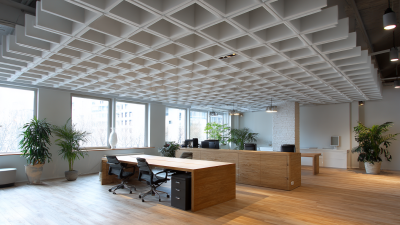
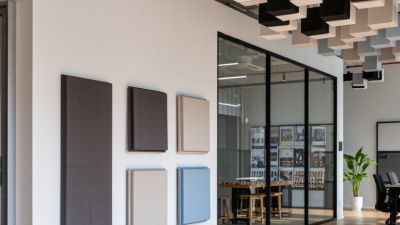
They include wall panels, ceiling systems, movable partitions, doors, barriers, and vibration-control materials. In a real meeting room, untreated walls can create a sharp echo after every sentence. Proper absorption makes voices feel closer and easier to understand.
China leads this market because its supply chain connects raw materials, fabrication, testing, and export services efficiently. Many suppliers can produce custom sizes, colors, densities, and installation systems. They also serve offices, schools, studios, factories, hotels, and transport facilities.
Experienced suppliers usually provide acoustic data, fire-performance information, drawings, and installation guidance. However, the market is not flawless. A low quotation may hide weak testing, inconsistent density, or poor edge finishing. Acoustic performance should be checked, not assumed.
Tips:
Measure the room before selecting products. Identify the main noise path first. Ask for tested absorption or transmission values. Check fire ratings and indoor-air documentation. Request samples, because catalog colors and textures can mislead. Installation matters greatly; even excellent panels can underperform when gaps remain. I have seen projects focus on attractive surfaces while ignoring ceiling reflections. That mistake is common. A balanced design considers sound, safety, maintenance, appearance, and budget together.
How to Evaluate China’s Acoustic Solutions Suppliers
China Top 10 Acoustic Solutions Suppliers?
Evaluating China’s acoustic solutions suppliers requires more than comparing prices. The World Health Organization’s World Report on Hearing (2021) states that over 1.5 billion people live with hearing loss. This highlights the importance of measurable noise control, not attractive product descriptions.
Request laboratory reports for sound absorption, airborne sound insulation, and fire performance. Check whether testing follows ISO 354, ISO 10140, or relevant Chinese standards. A supplier should provide reverberation-room results, material density, thickness, and test conditions. Without these details, a “high NRC” claim means little. It is an easy trap.
Factory experience also matters. Ask for production records, quality-control procedures, and samples from current batches. Compare the sample with the mass-produced shipment. Small differences can affect acoustic performance. I once trusted a clean technical sheet too quickly; the installation later revealed uneven panel edges and visible gaps. The specification was correct, but the workmanship was not.
The 2024 MarketsandMarkets acoustic insulation study identifies building construction, industrial facilities, and transportation as major application areas. This supports a practical question: can the supplier adapt products to your site, climate, and installation method? Check moisture resistance, dimensional stability, packaging, and replacement support. Audit communication speed as well. A low quotation is not low cost if redesign, delays, or reinstallation follow. Suppliers deserve scrutiny, but buyers must also provide accurate drawings and realistic performance targets.
China’s Top 10 Acoustic Solutions Suppliers by Expertise
China Top 10 Acoustic Solutions Suppliers?
China’s top ten acoustic solutions suppliers should be judged by expertise, not visibility alone. Strong suppliers understand room behavior, material performance, and installation limits. They may design acoustic panels, ceiling systems, soundproof partitions, floating floors, and industrial enclosures. Their experience should cover offices, studios, schools, hotels, factories, and public venues.
A reliable supplier begins with measurements. Site surveys can reveal reverberation, speech interference, vibration paths, and equipment noise. Technical teams should provide drawings, absorption data, fire-performance documents, and installation guidance. Independent laboratory testing adds confidence, especially for large projects. Ask whether the supplier has handled similar room sizes and construction conditions. A beautiful sample may still perform poorly after careless installation. That detail is often underestimated.
Tips: Request a written acoustic target before comparing quotations. Check test conditions, not only claimed ratings. Ask for a small sample area when possible. Confirm lead times, replacement procedures, and on-site support. Review completed projects with similar acoustic problems. Photographs help, but measured results are better. Do not choose only by price. A cheaper system may require extra framing, labor, or later correction. I would also question vague promises, even when the sales presentation looks convincing. Some specifications can sound precise while leaving important assumptions unstated. Reliable expertise appears in practical answers, transparent limits, and consistent technical evidence.
Comparing Products, Industries, Certifications, and Service Capabilities
Choosing among the top ten acoustic solutions suppliers requires more than comparing product brochures. Their portfolios may include wall panels, ceiling baffles, acoustic doors, enclosures, silencers, and vibration-control systems. Product performance should be checked through laboratory reports, not only marketing claims. ISO 354 supports sound absorption testing, while ISO 16283 guides field measurements. Real rooms behave differently.
Industry fit matters. Offices often need speech privacy and lower reverberation. Factories require machinery enclosures, impact-resistant barriers, and cleaner installation methods. Recording rooms demand controlled reflection, while healthcare facilities need hygienic, easily washable surfaces. The European Environment Agency reported in 2020 that road traffic noise exposed about 113 million people to levels above 55 dB Lden across Europe. This shows why acoustic planning affects public health, not just comfort.
Certifications can separate capable suppliers from ordinary fabricators. Review ISO 9001 quality systems, ISO 14001 environmental management, fire-resistance classifications, recycled-content evidence, and independent acoustic test records. Service capability is equally practical: site surveys, noise mapping, shop drawings, installation supervision, commissioning, and post-installation measurements. The World Health Organization recommends night noise below 40 dB Lnight to protect sleep in Europe. Targets need context, though. A supplier may provide excellent laboratory absorption while missing flanking noise on site. That weakness is easy to overlook. Ask for project references, calibrated measurement methods, maintenance guidance, and a clear response process when performance falls short.