Blog
What Are the 2026 Top Acoustic Wall Treatment Types?
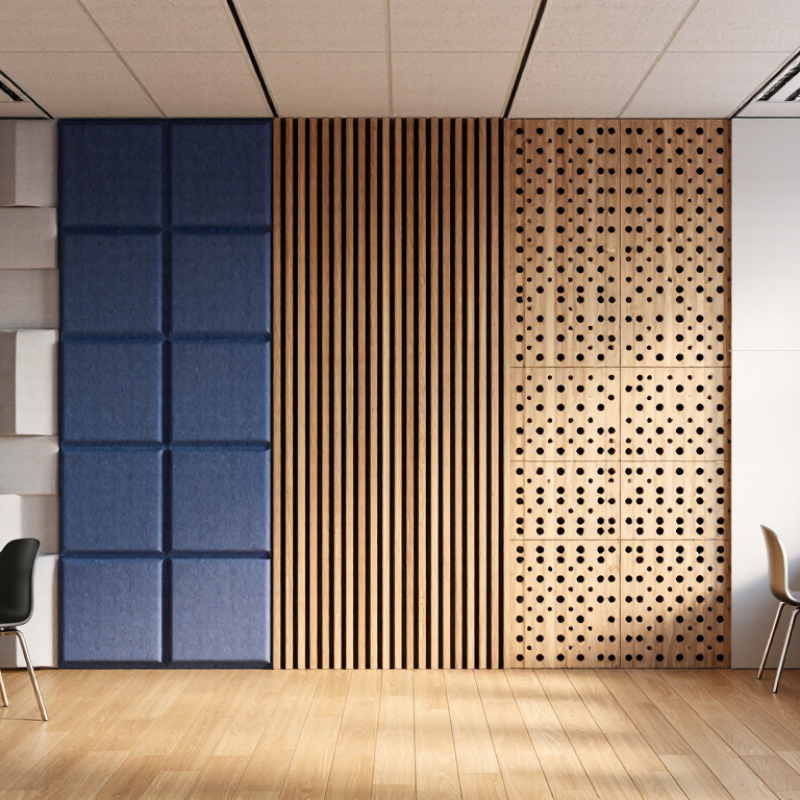
In 2026, acoustic wall treatment is becoming more deliberate, measurable, and visually integrated. Offices, restaurants, studios, classrooms, and homes now require quieter spaces without sacrificing character. The leading solutions include PET felt panels, fabric-wrapped fiberglass, slatted wood systems, perforated acoustic wood, and decorative acoustic plaster.
Each type controls sound differently. PET felt panels offer flexible shapes and strong mid-frequency absorption. Fabric-wrapped fiberglass provides reliable performance in meeting rooms and recording spaces. Slatted wood adds warmth while reducing reflections behind the open surface. Perforated wood can combine architectural detail with engineered absorption. Acoustic plaster creates a nearly seamless finish, although installation demands greater skill.
The choice matters.
Dr. Lily M. Wang, a respected acoustics researcher and educator, has emphasized, “Acoustics is not just about sound; it is about how sound affects people.” That principle should guide every 2026 comparison. A high Noise Reduction Coefficient does not automatically create comfort. Room volume, ceiling height, speech patterns, furniture, wall coverage, and low-frequency buildup also influence results.
This guide examines the most practical acoustic wall treatment types for modern interiors. It considers absorption, appearance, maintenance, fire performance, sustainability, installation complexity, and long-term value. Manufacturer data helps, but real rooms can behave differently from laboratories. That is the uncomfortable part.
A treatment may look impressive yet leave speech unclear. Another may appear ordinary but make a crowded room noticeably calmer. Careful measurement, professional advice, and post-installation listening remain essential. No ranking is perfect. The best solution depends on the room, its users, and the sounds that need control.
What Are Acoustic Wall Treatments and How Do They Work?
Acoustic wall treatments manage sound inside a room. They do not magically block every noise source. Absorptive panels use porous materials, such as fiberglass or mineral wool, to convert sound energy into small amounts of heat. They reduce reflections, reverberation, and speech blur. This matters in offices, classrooms, studios, and restaurants.
Common options include fabric-wrapped panels, perforated wood panels, PET-felt panels, acoustic plaster, and diffusers. Absorbers usually perform best across mid and high frequencies. Low bass needs thicker construction, air gaps, or dedicated bass traps. A wall panel’s NRC rating, measured under ASTM C423, helps compare absorption. However, one rating cannot describe every frequency. The World Health Organization recommends indoor bedroom noise below 30 dB at night and classroom noise below 35 dB during teaching hours (WHO Environmental Noise Guidelines, 2018). Wall treatment can improve clarity, but it cannot replace proper isolation, sealed doors, or quieter equipment.
Tips: Start with measurements, not decoration. Use a sound-level meter and note flutter echoes near parallel walls. Place absorbers at reflection points, usually beside speakers and across from them. Leave a small air gap behind porous panels; it can improve lower-frequency absorption. I have seen attractive panels underperform because they were too thin or widely spaced. That is an uncomfortable design lesson. Ask for octave-band data, installation details, and independent laboratory testing before choosing a system. A qualified acoustical consultant can verify the result using ISO 3382 reverberation measurements.
What Are the 2026 Top Acoustic Wall Treatment Types? - What Are Acoustic Wall Treatments and How Do They Work?
| Acoustic Wall Treatment Type | How It Works | Common Construction | Typical NRC Range* | Best-Fit Applications | Key Advantages | Important Limitations |
|---|---|---|---|---|---|---|
| Fabric-Wrapped Absorber Panels | Porous internal material converts a portion of sound energy into a small amount of heat, reducing reflections and reverberation. | Fabric face, rigid fiberglass or mineral-fiber core, and a framed or frameless backing. | 0.70–1.00 | Offices, classrooms, meeting rooms, restaurants, studios, auditoriums, and home theaters. | Strong broadband absorption, flexible sizes and shapes, easy visual coordination, and good speech clarity improvement. | Does not block sound transmission through walls; performance depends on thickness, air gap, and installation coverage. |
| PET-Felt Acoustic Panels | Fibrous recycled or virgin polyester captures reflected sound through friction within the panel fibers. | Thermally formed or layered polyester fiber, usually installed as flat panels, tiles, baffles, or sculpted surfaces. | 0.60–0.95 | Open-plan offices, schools, libraries, corridors, hospitality interiors, and flexible workspaces. | Lightweight, low-VOC options are available, easy to cut into decorative patterns, and resistant to fiber shedding. | Thin panels may provide limited low-frequency absorption; exposed surfaces can collect dust if not maintained. |
| Perforated Wood Acoustic Panels | Perforations allow sound to pass into an absorptive backing or cavity, while the wood face also provides limited scattering. | Perforated, slotted, or grooved wood veneer or laminate mounted over mineral wool, fiberglass, or an air cavity. | 0.60–0.90 | Performance venues, conference rooms, executive interiors, libraries, restaurants, and public buildings. | Combines acoustic control with a durable architectural finish and can contribute to visual warmth and sound diffusion. | Requires careful detailing; solid wood surfaces without perforations or absorptive backing provide relatively little absorption. |
| Acoustic Foam Panels | Open-cell foam absorbs reflected mid- and high-frequency sound by allowing air movement through its cellular structure. | Open-cell polyurethane or melamine foam in flat, wedge, pyramid, or convoluted profiles. | 0.40–0.85 | Recording rooms, podcast spaces, broadcast rooms, rehearsal rooms, and small media rooms. | Lightweight, simple to install, and effective for controlling flutter echo and high-frequency reflections. | Often less effective at low frequencies; appearance, fire rating, durability, and cleaning requirements must be evaluated carefully. |
| Microperforated Panel Systems | Very small perforations create a resonant absorption system that can target selected frequency ranges without using conventional fibrous infill. | Thin wood, metal, plastic, or composite facing with precisely sized perforations and an air cavity behind it. | 0.45–0.85 | Cleanable interiors, healthcare areas, transport facilities, ceilings and walls requiring a hard-wearing finish. | Can provide durable, hygienic, and visually integrated acoustic control with less exposed fiber. | Frequency performance is design-specific and depends strongly on perforation size, spacing, backing depth, and cavity construction. |
| Acoustic Plaster or Spray-On Absorptive Finishes | A porous sprayed or troweled surface absorbs sound while visually blending with the surrounding wall or ceiling. | Mineral, cellulose, or polymer-based acoustic material applied over a suitable substrate, often with a backing system. | 0.35–0.80 | Large public spaces, museums, galleries, lobbies, curved surfaces, and interiors where concealed treatment is preferred. | Seamless appearance, useful on irregular geometries, and compatible with discreet architectural design. | Repairs and future modifications may be more difficult; performance depends on substrate, thickness, and installation quality. |
| Diffusive or Resonant Wood Panels | Uneven surfaces scatter sound across multiple directions, while slots, cavities, or resonant chambers absorb selected frequencies. | Slatted, quadratic-residue, polycylindrical, or cavity-backed wood assemblies. | 0.30–0.75 | Music rooms, theaters, lecture halls, recording spaces, and rooms where acoustic balance is more important than maximum absorption. | Helps reduce strong echoes while preserving useful liveliness and spatial sound distribution. | Usually needs to be combined with absorptive panels; design and placement require acoustic planning. |
| Movable or Operable Acoustic Wall Panels | Portable or sliding absorptive elements change the amount and location of sound absorption as room layouts change. | Fabric-wrapped, PET-felt, or composite panels mounted on casters, tracks, hinges, or folding frames. | 0.50–0.90 | Multipurpose rooms, training centers, coworking spaces, classrooms, event venues, and adaptable offices. | Provides flexible zoning, privacy support, and adjustable reverberation without permanent construction. | Requires storage or clearance when moved; gaps, exposed edges, and panel orientation affect real-world performance. |
*NRC means Noise Reduction Coefficient. The ranges shown are indicative and can vary with material thickness, mounting method, air gaps, edge details, room conditions, and laboratory testing. Acoustic wall treatments primarily reduce reflections and reverberation; they do not replace a properly constructed sound-isolating wall.
Related Posts
-
2026 Top Wall Acoustic Panels for Global Buyers
-
Why Choose Interior Acoustic Panels for Better Sound?
-
What Is Building Acoustic Panels and How Do They Work?
-
2026 Top Interior Acoustic Panels for Noise Reduction Solutions?
-
Why Building Acoustic Panels is Essential for Sound Control in Your Space?
-

How to Choose the Best Interior Acoustic Panels for Your Space?