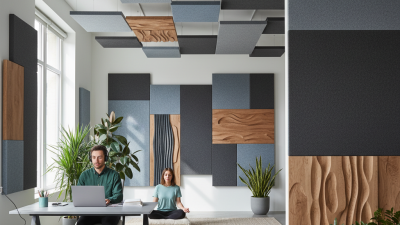
What Is Building Acoustic Panels and How Do They Work?
Building acoustic panels are engineered surfaces that control reflected sound inside rooms. They do not magically soundproof a wall. They absorb part of the sound energy, reduce reverberation, and improve speech clarity. Materials may include mineral wool, fiberglass, recycled PET, or perforated wood. A panel beside a meeting table feels different from one mounted behind a speaker. Placement matters.
The need is measurable. The World Health Organization’s 2018 Environmental Noise Guidelines recommend indoor classroom noise below 35 dB(A) during teaching. ANSI/ASA S12.60 also targets a maximum background level of 35 dBA and short reverberation times in classrooms. These figures explain why building acoustic panels appear in offices, schools, studios, restaurants, and healthcare spaces. Grand View Research’s acoustic insulation market analysis also identifies construction activity and indoor comfort as major demand drivers. However, insulation and absorption are not identical. That distinction is often missed.
Acoustic author F. Alton Everest described the aim of room acoustics as making sound “clear, intelligible, and pleasing.” His principle remains practical. A well-designed panel system should support conversation, concentration, and listening without making a room unnaturally dead. Too many panels can remove useful liveliness. Too few leave harsh reflections between glass, concrete, and bare desks. Real rooms are imperfect. Measurements, room use, ceiling height, and occupant behavior still need review. This article explains how building acoustic panels work, where they perform best, and why attractive installation alone cannot guarantee acoustic comfort.
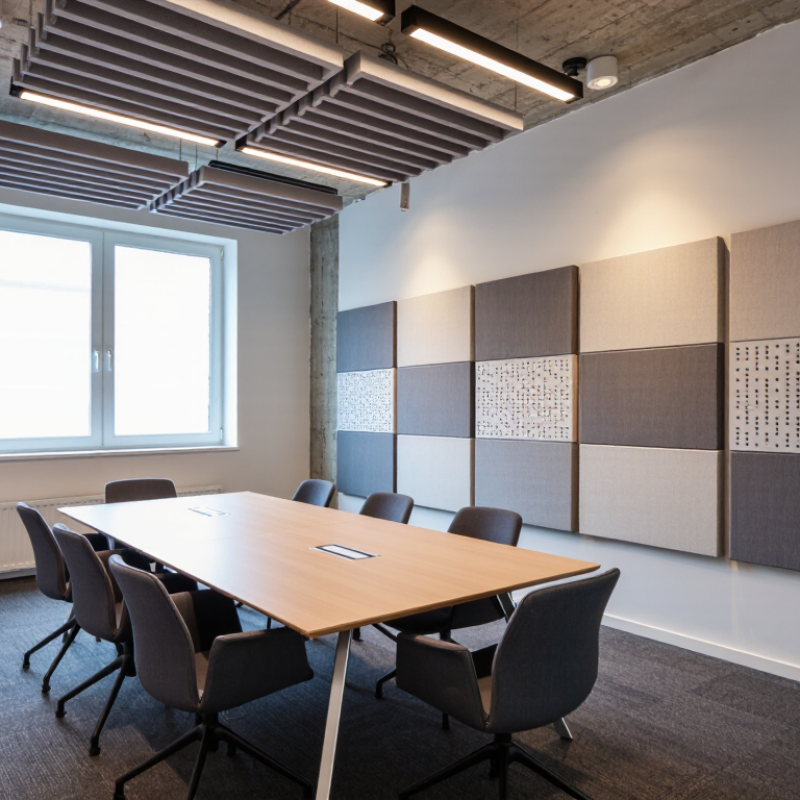
What Are Building Acoustic Panels?
Building acoustic panels are engineered surfaces that reduce unwanted sound inside rooms. They are commonly mounted on walls, ceilings, or suspended structures. Most panels use porous cores, such as mineral fiber, fiberglass, or recycled polyester. A fabric, perforated finish, or micro-slotted surface covers the core. Sound enters the panel instead of bouncing strongly across hard walls. The material converts part of that sound energy into small amounts of heat. This process is called sound absorption.
These panels improve speech clarity in offices, classrooms, studios, restaurants, and public buildings. They do not completely block sound between rooms. That difference matters. Soundproofing needs mass, airtight construction, and carefully sealed gaps. Acoustic panels mainly control echoes and reverberation within one space. Performance depends on thickness, air gaps, coverage, and installation height. Look for tested absorption data and suitable fire-performance documentation. A visually attractive panel may still perform poorly if the room has too little coverage.
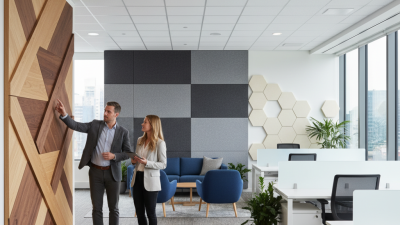
Tips: Place panels near strong reflection points, such as side walls beside speakers. Leave a small air gap behind wall-mounted panels when the design allows it. Start with measured room problems, not appearance alone. My first instinct might be covering every wall, but that can make a room feel unnaturally dull. Balance absorption with controlled reflection. Also inspect fabric durability, cleaning needs, edge finishing, and moisture exposure before installation.
What Are Building Acoustic Panels and How Do They Work?
Building acoustic panels are porous or perforated interior elements designed to reduce reflected sound. The chart shows representative sound absorption coefficients by octave-band frequency. A value closer to 1.0 indicates that more incident sound energy is absorbed, while a value closer to 0 indicates greater reflection.
Porous mineral-wool panels generally absorb a broad range of frequencies, while perforated wood panels typically provide stronger absorption around selected mid-frequency ranges. Actual performance depends on panel thickness, air gaps, mounting method, surface covering, and laboratory testing conditions.
Which Materials Are Used in Acoustic Panels?
Building acoustic panels usually combine a sound-absorbing core, a protective surface, and a rigid frame.
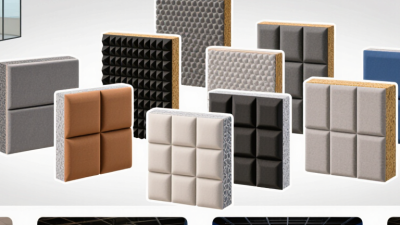
The core often uses mineral wool or fiberglass. These porous materials trap air movement and reduce reflected sound. Recycled polyester fiber is another practical option. It is lightweight, safe to handle, and available in different densities. However, its absorption performance depends on thickness and installation space.
Some panels use open-cell acoustic foam.
Foam absorbs mid and high frequencies well, but it may perform poorly against deep bass. Wood slat panels add a warmer appearance while using felt or mineral wool behind the slats. The wood surface scatters sound, and the hidden backing absorbs energy. Fabric coverings are usually breathable, because tightly sealed fabric can weaken absorption. A simple test is to blow gently through the fabric. Air should pass through it.
Panel thickness, air gaps, and room placement matter as much as the material itself.
A 50-millimeter panel with a small wall gap can outperform a thinner panel mounted directly. In practice, corners often need thicker treatment because bass collects there. Yet no material fixes every acoustic problem. I have seen attractive panels installed too high, leaving strong reflections near seated listeners. Measurements help, but careful listening still reveals details that specifications miss.
How Do Acoustic Panels Control Sound?
Acoustic panels control sound mainly through absorption, not magic soundproofing. Their porous cores, often made from mineral fiber or recycled polyester, let sound enter and lose energy as heat. The panel surface then reduces reflections from walls and ceilings. This process lowers reverberation, making speech clearer and music less harsh.
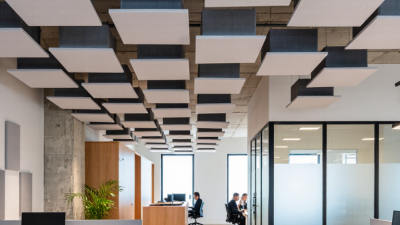
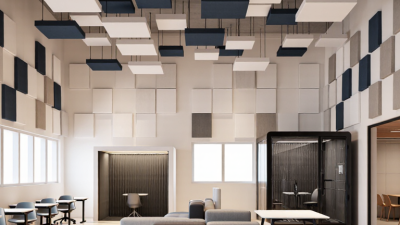
Laboratory ratings help explain performance. Under ASTM C423 and ISO 354 testing, a panel may receive a Noise Reduction Coefficient (NRC) of 0.80 or 0.90. That rating describes average absorption across selected frequencies. It does not mean the room becomes 90 percent quieter. Placement matters greatly. A ceiling cloud can calm overhead reflections, while wall panels near a speaker control early echoes. Leave gaps behind panels, and low-frequency absorption may improve.
The World Health Organization recommends indoor bedroom noise below 30 dB(A) for good sleep. Panels alone cannot usually achieve that target because they do not seal windows, doors, or mechanical noise paths. They mainly improve the room’s acoustic behavior. Real rooms rarely behave like laboratories. Furniture, panel spacing, room volume, and bass frequencies can change the result. A practical assessment should measure reverberation time before and after installation, rather than trusting one product rating. Some spaces still sound uneven. That is where professional testing earns its value.