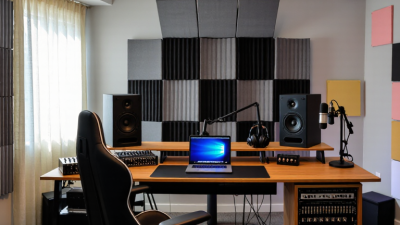
A room can make clear speakers sound muddy, harsh, or strangely hollow. You may hear it as a sharp slap between bare walls, or as bass that swells near one corner and fades by the sofa. Acoustic treatment helps manage those reflections and uneven resonances. It does not make every room perfect. That matters.
As audio researcher Dr. Floyd Toole puts it, “The room is part of the loudspeaker.” His point is useful when choosing treatment: sound depends on more than the equipment. Panels, bass traps, diffusers, and ceiling absorbers each address different problems. A thick panel may tame reflections, while a bass trap needs suitable placement and enough depth to affect lower frequencies. One product cannot do everything.
This guide compares ten acoustic treatment products for practical listening spaces, from home studios to living rooms. We’ll consider what each product is designed to do, where it may work best, and what to check before buying, including dimensions, materials, mounting, and coverage. Product claims deserve a careful look; advertised performance may depend on test methods and room conditions. Small changes can help. So can moving a chair or speaker—but that is less satisfying than unboxing something. Treatment is not decoration alone, and more panels are not automatically better. A useful choice starts with what you hear, not just what looks professional.
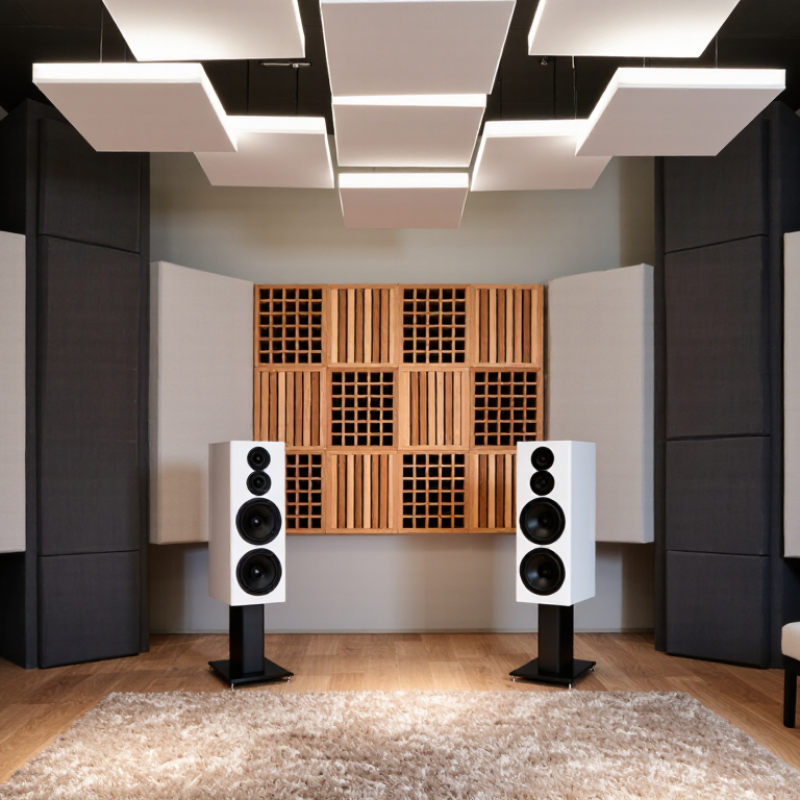
Acoustic treatment changes how sound behaves inside a room; soundproofing reduces sound passing through its boundaries. The distinction is easy to miss. Absorptive wall panels can soften reflections and flutter echoes, but they will not block a neighbor’s television. Bass traps address low-frequency buildup, while diffusers scatter reflections rather than simply absorbing them. Each product has a different job. EBU Tech 3276 recommends a reverberation time of 0.2–0.4 seconds for reference listening rooms across 200 Hz to 4 kHz. That is a useful benchmark, not a universal target for every bedroom or studio. ISO 3382-2 describes methods for measuring reverberation time in ordinary rooms; measurement is more informative than covering every wall with foam.
Soundproofing needs a different approach: mass, airtight seals, and sometimes separated wall or ceiling layers. Small gaps matter. Sound can leak around a door even when the wall is substantial. The World Health Organization’s 2009 Night Noise Guidelines recommend indoor bedroom noise below 30 dB(A) Lnight for good-quality sleep. Acoustic panels alone cannot ensure that level. A hand clap can reveal a sharp echo, but it cannot diagnose bass problems or noise leaking through a window. I would not trust one quick test. Room shape, furnishings, and installation all affect the result, and that part is easy to underestimate.
Absorption, diffusion, and bass control solve different acoustic problems. Absorbers reduce reflections, helping speech and instruments sound clearer. Thick porous panels work best when placed at reflection points, such as the side walls beside a listening position. Thin foam may soften high frequencies while leaving lower notes largely untouched.
The ANSI/ASA S12.60 classroom acoustics standard sets maximum reverberation times of 0.6 seconds for smaller classrooms and 0.7 seconds for larger ones. These figures apply to specific classroom conditions, not every home studio. Still, they show why room size and use matter. Diffusers scatter reflections rather than simply absorbing them; they can preserve a sense of liveliness when a room feels overly damped. Placement matters. A diffuser too close to a listener may create uneven results.
Bass is stubborn. Low-frequency energy builds up near corners and can make one note boom while another seems to disappear. Corner bass traps help, though their effectiveness depends on depth, coverage, and the room’s dimensions. ISO 354:2003 describes laboratory measurement of sound absorption, but real rooms rarely behave like test chambers. I would not treat a product rating as a guarantee. Measure the room, listen from more than one seat, and adjust gradually; even then, some compromises remain.
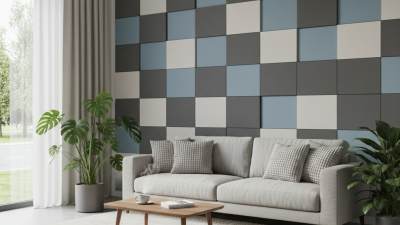
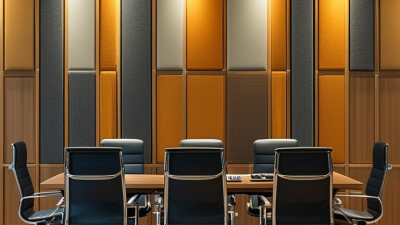
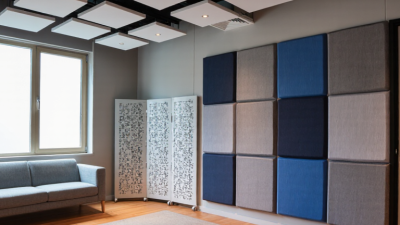
Broadband wall panels absorb mid and high frequencies, reducing sharp reflections near listening positions.
Bass traps target low-frequency buildup, especially in corners where bass can sound boomy.
Ceiling clouds absorb reflections from above a desk or seating area.
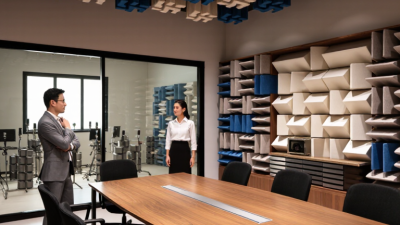
Diffusers scatter sound instead of absorbing it, helping a room feel lively without strong echoes.
Acoustic foam can reduce flutter echo and excess treble, but it rarely controls deep bass.
Portable acoustic gobos create a more controlled area for vocals or instruments.
Door seals limit sound leaks through gaps, though they do not make a room soundproof. Heavy acoustic curtains soften some high-frequency reflections near windows, but they have limited effect on bass.
Monitor isolation pads reduce vibration transferred from speakers to a desk.
Rugs and thick underlays can tame reflections from hard floors.
Placement matters: a panel beside a reflection point usually helps more than one hidden behind furniture.
Tips:
Clap once and listen for a ringing echo. Add treatment gradually, then listen again from your usual seat. In small rooms, I’ve found that moving a panel a few inches can change the result; it is easy to over-treat and make the space feel dull. Also, treatment improves sound inside a room, not the sound isolation between rooms.
Choose treatment by room use, not by a product’s advertised absorption number. Start with the room. In a small music room, broadband absorbers at early reflection points can reduce sharp echoes, while corner bass traps help control low-frequency buildup. For speech or video calls, prioritize a clear voice and an even decay; a few wall panels may help more than covering every surface. Diffusers can preserve a sense of spaciousness, but they need room to work and are rarely the first fix in a cramped space.
For core learning spaces up to 10,000 cubic feet, ANSI/ASA S12.60-2010 specifies a maximum background noise level of 35 dBA and a reverberation time of 0.6 seconds. These are classroom criteria, not universal targets for homes or studios. Still, they show why room size and purpose matter: a lively listening room may suit music, while a quieter, shorter decay can improve speech clarity. Measure before buying. A phone app can offer clues, but it is not a calibrated acoustic instrument.
For critical listening, treat first reflection points and bass problems, then reassess with familiar recordings. In a bedroom, thick curtains may soften high frequencies, but they will not solve deep bass modes. I would avoid promising that any single panel “fixes” a room; placement, furnishings, and listening position all change the result. Test changes one area at a time. Room acoustics can be stubborn.
Place acoustic treatment where sound problems begin, not wherever a wall looks empty. Sit in your usual listening or recording position and have someone move a mirror along each side wall. Where you can see a speaker or instrument in the mirror, a broadband absorption panel can reduce early reflections. Start near ear height. Small changes matter.
The ceiling above the listening position is often overlooked. A suspended absorber can soften reflections without filling the room with panels. In a bedroom studio, leave space around lights and vents, and use secure mounting. I have found that treating every surface can make a room feel unnaturally dull. More is not always better.
Low frequencies gather near corners and boundaries. Bass traps placed in vertical corners can help, though thin foam usually cannot control deep bass. A thick rug may reduce floor reflections, but it will not fix a bass buildup.
Listen to familiar music from the same seat, then adjust one area at a time. Clapping can reveal a sharp flutter between parallel walls; it is a useful clue, not a complete diagnosis. Measurements help, too, but room layouts are imperfect, and a treatment that works in one corner may disappoint in another.