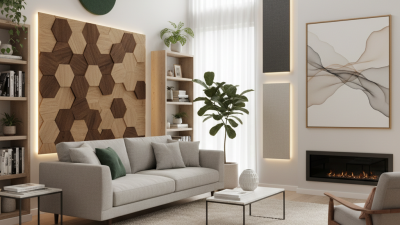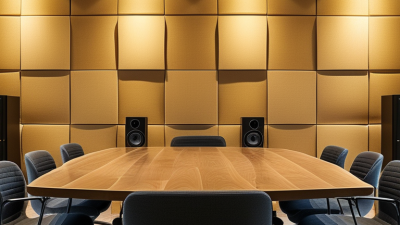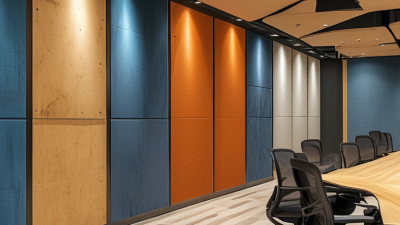
In 2026, the best interior panels are not simply the newest or most attractive options. They are materials that fit a project’s use, climate, budget, and maintenance plan. A kitchen wall near a sink faces different demands than a quiet bedroom feature wall. Scratches, humidity, cleaning products, and installation conditions all matter. So does the finish under real lighting. A sample that looks warm in a showroom may appear cooler beside a project’s flooring.
This guide compares popular panel types, including wood-based boards, decorative laminates, PVC panels, and mineral or fiber-cement options. It considers appearance, durability, moisture resistance, installation, and sourcing—not just price. No single panel suits every building. A lower-cost choice can work well in a dry, low-traffic room, yet disappoint in a damp space. That distinction is easy to miss. Buyers should check technical data, maintenance instructions, and applicable emissions or safety documentation for their destination market. Requirements can vary, and product names alone do not prove performance. Details count.
For global buyers, reliable evaluation starts with the intended application and continues through samples, specifications, and supplier verification. Compare like with like: thickness, core material, surface finish, and warranty terms can change the real value. This overview offers a practical starting point, not a universal ranking. Some trade-offs remain. A panel may be durable but difficult to repair, or visually convincing yet demanding to install. The right choice is the one whose documented performance matches the project—and whose limitations are understood before ordering.
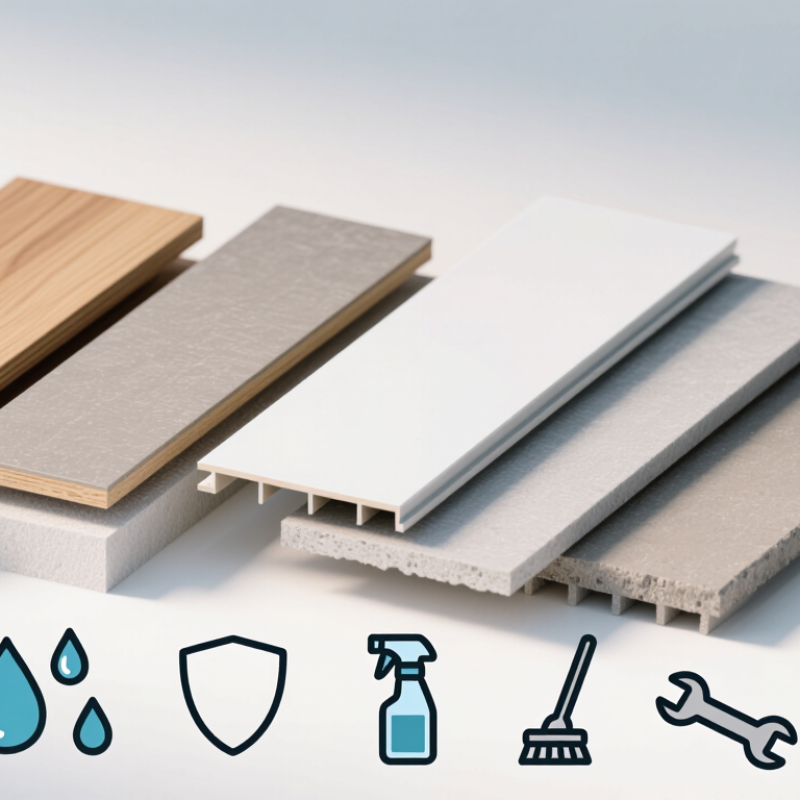
Interior panels serve different needs, so the best choice depends on the room and its daily use. MDF panels offer a smooth surface for painted walls, cabinetry, and decorative details. Plywood is valued for its layered structure and strength in furniture and wall linings. PVC panels handle humid areas well, such as laundry rooms, but check their heat and scratch resistance before choosing them. Moisture changes everything.
For living rooms and offices, wood veneer panels add visible grain without using a solid-wood face throughout. Acoustic panels can reduce echo in meeting rooms or busy home workspaces; their performance depends on placement and room layout. In kitchens and bathrooms, prioritize panels with suitable moisture resistance and easy-to-clean surfaces. A panel described as water-resistant is not automatically suitable for constant splashes. Check the technical data sheet, edge treatment, and installation requirements. Small details matter.
For global buyers, compare interior panels by measurable performance, not appearance alone. Check thickness tolerance, density, bending strength, screw-holding capacity, and edge durability. A cabinet door may feel solid in a showroom, yet chip around hinges after repeated use. Ask for test methods and results, not just broad claims such as “high strength.”
Moisture resistance matters in kitchens, bathrooms, and humid shipping routes. The USDA Forest Products Laboratory’s Wood Handbook explains how moisture changes affect wood’s dimensions and mechanical properties. For panel products, request conditioning and swelling data for the exact grade being quoted. Climate impact also deserves attention: UNEP and GlobalABC’s 2024 Global Status Report for Buildings and Construction estimates buildings account for 32% of global energy use and 34% of global CO₂ emissions. These figures describe the sector, not panels alone. Treat them as context.
Check formaldehyde emissions, fire performance, surface wear, and repair options against the project’s intended use. Compare results under equivalent test conditions; numbers from different methods may mislead. There is no universally best core. A lightweight board can ease installation, but may need stronger fixings. I would also inspect a cut edge and a drilled sample, because paperwork cannot show every production flaw.
Key Performance Criterion: Typical Panel Density
Density is a practical comparison for estimating panel weight, handling needs and transport loads. Bars show the midpoint of commonly reported approximate ranges; actual density varies by panel grade, construction and thickness. Check product specifications before purchasing.
Global buyers comparing interior panels in 2026 will find engineered wood, plywood, compact laminate, and mineral-based boards widely available. Each suits different rooms and installation conditions. Medium-density fibreboard offers a smooth face for painted finishes and detailed routing, but edges need careful sealing near moisture. Plywood provides layered strength and visible grain; veneer quality and core construction can vary.
Compact laminate resists everyday scuffs and is practical for busy corridors or wash areas. It can feel harder and less warm than wood. PET-faced boards offer a consistent finish and are often selected for cabinetry, though surface repairs may be noticeable. Mineral-based panels can suit projects prioritising dimensional stability, but weight and fixing methods deserve early review. There is no perfect panel.
Buyers should compare more than colour and price. Ask for current technical sheets, emissions information, cleaning guidance, and test records relevant to the complete panel assembly. Requirements vary by destination and application. Check thickness, edge treatment, substrate, and fixing details against the project specification. A small sample helps reveal texture, glare, and colour shifts under actual lighting. Still, samples rarely show how a full wall will feel; that limitation is easy to overlook when schedules are tight.
Choosing interior panels by room is more reliable than choosing by appearance alone. In kitchens and bathrooms, specify moisture-resistant panels with sealed edges and easy-clean finishes. Moisture matters. A decorative surface can still fail if water reaches its core. Bedrooms and living rooms allow more texture, including veneer or fiber panels, but check emissions and cleaning requirements. The U.S. EPA reports that levels of some indoor pollutants are often two to five times higher indoors than outdoors. Its indoor air quality guidance supports checking product emissions, not just the surface finish.
For offices, schools, and meeting rooms, acoustic panels can reduce reverberation; match their coverage to the room’s use and existing sound control. Perforated panels with an acoustic backing suit speech-heavy spaces, while smooth, washable panels may work better in corridors. The details matter. UNEP’s 2023 Global Status Report for Buildings and Construction estimates that buildings and construction accounted for 34% of global energy demand and 37% of energy- and process-related carbon emissions in 2022. That makes panel lifespan and material use relevant purchasing criteria. A beautiful sample can still disappoint at full scale, so review a larger mock-up under actual lighting. Check fire performance, maintenance needs, and installation conditions before specifying any panel.
A practical selection guide comparing common interior panel types by application, performance, and project considerations. Specifications vary by manufacturer and market.
| Panel Type | Typical Construction | Best-Fit Rooms and Uses | Key Advantages | Limitations and Checks | Project Matching Tip |
|---|---|---|---|---|---|
| Melamine-Faced Particleboard | Wood-particle core with a decorative melamine surface; commonly used for furniture and cabinetry components. | Bedrooms, wardrobes, home offices, dry-area kitchen cabinets, shelving, and retail fixtures. | Ready-finished surface; consistent appearance; easy to clean; economical for repeated furniture components. | Edges need suitable sealing or edge banding. Standard grades can swell if exposed to prolonged moisture. Check emissions documentation for the target market. | Choose for cost-conscious, dry interior fit-outs where a finished surface and efficient installation are priorities. |
| Moisture-Resistant MDF | Fine wood fibres bonded into a smooth, machinable board; moisture-resistant grades use moisture-resistant additives. | Painted cabinet fronts, wall panelling, decorative mouldings, and bathroom furniture outside direct wet zones. | Smooth face for paint or veneer; machines cleanly; suitable for routed profiles and detailed decorative work. | Moisture-resistant does not mean waterproof. Cut edges and faces still require appropriate sealing; verify the grade and intended exposure. | Use where a seamless painted finish or shaped detail matters, while keeping the panel away from standing water and direct shower spray. |
| Plywood | Thin wood veneers bonded in alternating grain directions; available in different face, core, and bonding grades. | Cabinet carcasses, wall linings, built-ins, furniture, and selected interior applications requiring a strong panel. | Good strength-to-weight performance; holds fixings well; veneer faces can provide a natural wood appearance. | Performance depends on veneer quality, core construction, and adhesive grade. Exposed edges may need finishing; confirm fire and emissions requirements where applicable. | Match the bonding and face grade to the exposure and finish; do not assume every plywood grade is suitable for wet or exterior conditions. |
| Gypsum Wallboard | Gypsum core faced with paper or another facing; standard, moisture-resistant, and fire-rated products are available. | Interior partitions and ceilings in living areas, bedrooms, offices, corridors, and many commercial interiors. | Widely used for smooth wall and ceiling finishes; readily cut and installed; tested system options are available for fire and acoustic performance. | Not a structural panel. Wet-area suitability depends on the product and assembly; tile backer requirements and local building codes must be checked. | Choose the board and complete wall or ceiling system to suit the required fire, acoustic, moisture, and finish performance. |
| Fibre-Cement Board | Cement-based panel reinforced with fibres; supplied in formats intended for specific wall, ceiling, or tile-backing applications. | Bathrooms, laundry areas, service spaces, and tile-backed walls where a more moisture-tolerant substrate is needed. | Dimensionally stable in humid conditions and suitable as a substrate for specified finishes when installed correctly. | Heavier and more difficult to cut than gypsum board. Dust controls, suitable fasteners, joint treatment, and waterproofing details may be required. | Use in the locations and assemblies listed by the manufacturer; a cement-based board alone does not make a shower waterproof. |
| High-Pressure Laminate (HPL) Compact Panel | Decorative resin-impregnated layers consolidated under heat and pressure into a dense, self-supporting panel. | Toilet partitions, lockers, laboratory or service-area furniture, and durable interior surfaces, subject to product suitability. | Hard-wearing, easy-to-clean surface; compact grades can be self-supporting and are available in a range of colours and patterns. | Higher material cost than many commodity boards; machining and fixing need compatible tools and details. Fire classification varies by product and assembly. | Consider for high-use interiors where impact resistance, cleanability, and a durable exposed surface justify the higher specification. |
| PVC Wall Panel | Rigid polymer panels, often supplied as hollow or cellular profiles or as solid sheets, depending on the product. | Selected utility rooms, wash areas, and decorative wall applications where the product is approved for the environment. | Lightweight and easy to wipe down; some systems are designed for quick installation and reduced routine surface maintenance. | Heat resistance, impact strength, fire performance, and appearance vary widely. Check product certification, joints, and suitability for the intended wet-area assembly. | Specify only after checking local fire rules and installation details; do not treat panel joints as a substitute for required waterproofing. |
Selection note: Confirm dimensions, tolerances, emissions, fire classification, moisture exposure limits, installation requirements, and applicable local codes with the product documentation. Fire and acoustic performance generally apply to a tested assembly, not to a panel in isolation.
For global buyers, the right interior panel depends on its location and use. Wall cladding in a dry office has different needs from cabinetry near a sink. Compare options such as plywood, medium-density fibreboard, and compact laminate by checking their core, surface, and edge treatment. Ask how each panel handles moisture, impact, cleaning, and repeated use. There is no universal winner.
Request current test reports for emissions, fire performance, and other project requirements. Standards and documentation needs vary by destination, so confirm them with the project team before ordering. Check thickness and dimensional tolerances, too. A few millimetres can complicate door gaps or trim alignment. Samples help, but they can mislead. Inspect a full-size piece where possible, and compare colour under the lighting used in the finished room.
Supplier checks matter just as much as panel specifications. Ask about production capacity, minimum order quantities, lead times, packaging, and replacement procedures for damaged goods. Clarify whether colour and texture can vary between batches. Freight can also affect edges and corners; request protective packing details and inspect a trial shipment when practical. A tidy sample is reassuring, but it cannot prove every production run will match. Keep written specifications and approved samples for reference, while allowing time for one more review.