+1 877-337-9312 | sale@sflbuild.com

Blog

Top 10 Types of Building Panels for Global Buyers

Choosing the right building panels is rarely a simple matter of comparing prices. Global buyers must examine structure, insulation, fire performance, moisture resistance, surface finish, and shipping weight. A panel that performs well in a dry warehouse may fail in a humid coastal project. Small details matter. Think of a cold metal wall, a warm roof cavity, or a delivery delayed by heavy rain.

This guide introduces ten widely used types of building panels for international construction projects. It considers insulated sandwich panels, structural insulated panels, fiber cement boards, gypsum panels, metal panels, plywood, oriented strand board, magnesium oxide boards, PVC panels, and composite panels. Each type offers practical benefits, but none is perfect. Core materials, joining methods, local codes, and installation quality can change the final result. A low-cost panel may demand more maintenance. A lightweight option may need stronger framing. That trade-off deserves attention.

Carl Elefante, a respected architect and former president of the American Institute of Architects, said, “The greenest building is the one that is already built.” His point also applies to panel selection. Durable building panels can reduce replacement work, material waste, and disruption over time. However, durability should not be assumed from a product brochure alone. Buyers should request test reports, technical data sheets, warranty terms, and project references. Certification helps. Proper installation matters more than many buyers expect. This overview offers a practical starting point, while acknowledging an uncomfortable truth: the best panel depends on the building, climate, budget, and people installing it.
Top 10 Types of Building Panels for Global Buyers

Building Panels Explained: 10 Types, Materials, and EN 14509 Scope

Building panels vary by core, facing, moisture resistance, and load capacity. The ten common groups are EPS, PUR, PIR, mineral wool, glass wool, XPS, calcium silicate, fiber-cement, OSB, and structural insulated panels. EPS is economical and light. PIR offers strong thermal performance. Mineral wool supports fire-resistance strategies, but it adds weight. Fiber-cement and calcium-silicate panels suit durable interior or exterior applications. OSB provides a structural wood-based option. Each choice needs verified testing, not only a brochure claim.

EN 14509 is narrower than many buyers assume. It mainly covers factory-made, double-metal-faced sandwich panels with an insulating core. These panels serve roofs, walls, and ceilings, with declared thermal and mechanical properties. EPS, PUR, PIR, and mineral wool cores may fall within this scope when the complete panel meets the standard. A bare cement board or single-skin metal sheet does not automatically qualify. Check the declared product configuration, reaction-to-fire classification, thermal conductivity, tolerances, and fixing design.

Energy performance deserves practical attention. The 2023 UNEP Global Status Report for Buildings and Construction reported that buildings represented about 37% of global energy-related and process CO2 emissions in 2022. The IEA also identifies building envelopes as a major efficiency opportunity. A cold warehouse wall makes this visible: weak joints create condensation, heat loss, and mold risk. Site experience still matters. Laboratory values can disappoint when installers compress joints or leave gaps. That uncomfortable detail deserves more attention. Personally, I would compare tested assemblies, climate exposure, maintenance needs, and end-of-life plans before selecting the cheapest panel.

Structural Panels: OSB, Plywood, and SIPs Tested Under ASTM E72

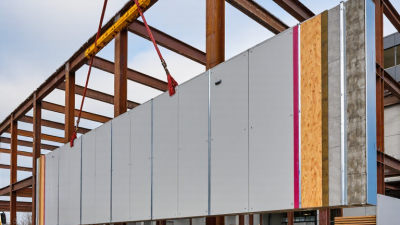
Structural panels are not interchangeable under ASTM E72. The test examines racking, axial, transverse, and concentrated-load performance, depending on the specimen setup. OSB usually offers consistent strand orientation and efficient shear resistance. Plywood often provides cleaner screw holding and better performance around openings. SIPs behave differently because foam cores and skins work as one assembly.

The USDA Forest Products Laboratory’s Wood Handbook, 2021 edition, identifies panel thickness, density, moisture content, and grain or strand alignment as major strength variables. These details matter on site. A damp OSB edge can swell beside a window opening. A plywood panel can split when fasteners sit too close to its edge. SIP testing must include skins, adhesive joints, splines, and connections—not only the foam core. ASTM E72 results therefore need careful interpretation.

Look beyond one impressive number. A 2023 structural insulated panel market report from Grand View Research projected continued market growth through the decade, driven by energy efficiency and faster construction. Growth does not remove testing gaps. Laboratory racking results may not reflect a windy corner, uneven foundations, or poorly tightened screws. Global buyers should request specimen dimensions, moisture conditions, fastener spacing, failure photographs, and test-laboratory accreditation. Ask for repeat tests. One result can mislead.

Insulated Panels: PIR, PUR, EPS, and Mineral Wool by U-Value

Insulated panels remain a practical choice for warehouses, cold rooms, workshops, and commercial buildings. Their U-value shows how much heat passes through the panel. Lower values usually indicate better thermal insulation. However, thickness, joints, fasteners, and moisture can change real performance.

PIR panels often achieve very low U-values with moderate thickness, making them useful where interior space matters. PUR offers similar insulation, but performance varies by density and production quality. EPS panels are usually economical and easy to handle. They may need greater thickness to match the U-value of PIR or PUR. Mineral wool panels generally require more thickness, yet provide strong fire resistance and sound absorption. That difference matters in schools, factories, and buildings with strict fire requirements.

Check the complete wall or roof assembly, not only the core material. Site inspections often reveal gaps around doors, damaged edges, or poorly tightened fasteners. Small defects can create thermal bridges. They can also cause condensation near panel joints. Ask suppliers for tested U-values, declared thickness, fire data, and installation tolerances. Compare results under the same calculation method and temperature conditions. Local building rules must guide the final selection. A lower advertised U-value is not always the better purchase. I have seen projects focus on insulation numbers while overlooking drainage and workmanship. That mistake is easy to repeat.

Top 10 Types of Building Panels for Global Buyers

Indicative U-values of common insulation panel and core materials at 100 mm thickness

Lower U-values indicate better thermal insulation. PIR and phenolic panels generally provide the lowest U-values at the same thickness, while mineral wool, EPS, wood fibre, cellular glass, and calcium silicate offer different balances of fire resistance, moisture performance, sustainability, and cost. Values are indicative for 100 mm panels and can vary according to density, facing materials, joints, moisture, and complete wall or roof assembly design.

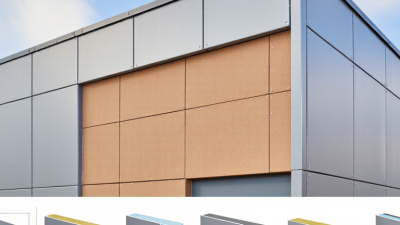
Exterior Panels: Fiber Cement, ACP, and Metal by EN 13501-1 Ratings

Exterior panel selection becomes serious when a facade faces flame spread, smoke, and falling droplets. EN 13501-1 measures reaction to fire through classes A1 to F, plus smoke and droplets. A1 gives the highest reaction-to-fire performance; A2 allows limited contribution. The suffix s1 indicates limited smoke, while d0 means no flaming droplets. These details matter near windows, balconies, and escape routes. NFPA’s Fire Loss in the United States During 2023 recorded about 1.39 million fires and nearly 23 billion dollars in direct losses. This is not a European forecast, but it exposes the cost of casual assumptions.

Fiber-cement panels commonly achieve A2-s1,d0 or higher, depending on formulation, thickness, coating, and joints. Do not transfer a certificate between products. ACP requires closer scrutiny because polyethylene and mineral-filled cores can change classification dramatically. One panel may achieve A2-s1,d0, while another reaches B-s1,d0. Metal panels often perform strongly, yet paints, insulation, cavities, and sealants can alter results. The tested build-up matters. EN 13501-1 evidence should identify the substrate, fixings, cavity barriers, and installation orientation.

The 2024 Global Status Report for Buildings and Construction states that buildings consumed 32% of global energy in 2022. Buyers should balance fire performance with embodied carbon and service life. I would request the full classification report, not a marketing leaflet. Independent laboratory scope and installation supervision deserve equal attention. There is room for doubt. A high rating on paper can fail when joints are poorly detailed or damaged onsite.

Top 10 Types of Building Panels for Global Buyers - Exterior Panels: Fiber Cement, ACP, and Metal by EN 13501-1 Ratings

No. Panel Type Main Material / Core Common Thickness Typical Exterior Applications Indicative EN 13501-1 Class Fire-Reaction Characteristics Key Buyer Considerations
1 Fiber Cement Board Cement, cellulose fibers, mineral fillers, and water 6–16 mm Rainscreen façades, soffits, balcony screens, and wall cladding A2-s1,d0
(often)
Generally non-combustible or very limited contribution to fire, depending on formulation and coating. Good moisture resistance and dimensional stability; heavier than ACP and requires suitable subframing.
2 Aluminium Composite Panel with Mineral Core Aluminium skins with a mineral-filled core 3–6 mm Commercial façades, column covers, parapets, canopies, and signage backgrounds A2-s1,d0 or B-s1,d0 Improved fire performance compared with polymer-core ACP; exact classification depends on core percentage and surface finish. Lightweight, flat, and easy to fabricate; verify the complete façade assembly and joint details.
3 Aluminium Composite Panel with Polyethylene Core Aluminium skins with a polyethylene-based polymer core 3–4 mm Low-rise façades, interior applications, fascias, and decorative cladding D-s2,d0
(commonly)
Polymer cores can make a significant contribution to fire growth; classification varies by core design and assembly. Cost-effective and lightweight; check local façade regulations before using on multi-storey buildings.
4 Solid Aluminium Sheet Non-combustible aluminium alloy sheet with protective coating 1.5–4 mm Cassette façades, soffits, roof edges, parapets, and architectural features A1
(metal substrate)
The metal substrate is non-combustible; organic coatings may require separate assessment. Very low weight and high corrosion resistance when correctly coated; allow for thermal movement.
5 Steel Façade Panel Galvanized or metallic-coated steel with factory-applied finish 0.5–1.2 mm Industrial buildings, warehouses, agricultural structures, and ventilated façades A1
(steel substrate)
Steel is non-combustible; paint or laminate systems can influence the declared classification. Strong and economical; specify corrosion protection according to exposure, humidity, and cut-edge conditions.
6 Insulated Metal Sandwich Panel with Mineral-Wool Core Steel facings with a stone-wool or glass-mineral-wool core 50–ายน 250 mm Fire-rated industrial walls, logistics facilities, cold stores, and modular buildings A2-s1,d0
(often)
Mineral-wool cores provide very limited combustibility and can support high fire-resistance periods in tested systems. Excellent fire and acoustic performance; heavier than polymer-core panels and requires careful joint sealing.
7 Insulated Metal Sandwich Panel with PIR Core Steel facings with rigid polyisocyanurate insulation 40–200 mm Factories, warehouses, refrigerated areas, and energy-efficient envelope systems B-s1,d0 or B-s2,d0 Can achieve improved fire reaction compared with EPS, but remains a combustible polymer insulation and must be tested as a complete panel. High thermal efficiency at moderate thickness; verify fire-stopping, joints, and insurer or code requirements.
8 Insulated Metal Sandwich Panel with EPS Core Steel facings with expanded polystyrene insulation 40–200 mm Agricultural buildings, workshops, storage areas, and low-rise industrial envelopes E or B-s1,d0
(product-dependent)
Combustible insulation; fire performance depends strongly on density, additives, facings, joints, and test configuration. Low cost and good thermal value; not suitable for every building height or fire-safety category.
9 Exterior High-Pressure Laminate Panel Thermosetting resin-impregnated cellulose layers with a decorative surface 6–13 mm Ventilated façades, balcony cladding, school buildings, and rainscreen systems B-s1,d0 or B-s2,d0 Organic resin content means the panel is combustible, although some formulations achieve good smoke and flame ratings. Wide design range and good impact resistance; provide rear ventilation and follow tested fixing arrangements.
10 Exterior Wood-Based Panel Wood fibers, strands, or veneers bonded with structural resin 8–25 mm Timber façades, soffits, screened elevations, and architectural feature walls D-s2,d0
(commonly)
Wood-based products are combustible; treatment, density, thickness, coating, and mounting can improve or reduce the classification. Renewable appearance and easy machining; require weather protection, edge sealing, drainage, and regular maintenance.
Important classification note: EN 13501-1 reaction-to-fire ratings are product- and configuration-specific. The indicative classes above are general market ranges, not a substitute for the manufacturer’s Declaration of Performance, classification report, or assessment of the complete façade assembly, including insulation, membranes, subframe, cavities, joints, coatings, and fixings.

Global Buyer Metrics: Thickness, Fire Class, U-Value, and EN 15804 EPDs

Global buyers comparing the top ten building-panel types should begin with measurable performance, not attractive product names. Thickness affects strength, thermal resistance, weight, and transport volume. Yet thicker is not always better. A 120 mm panel may outperform a 150 mm panel when its core conducts less heat.

The International Energy Agency reports that buildings consume about 30% of global final energy and create roughly 26% of energy-related emissions. U-value therefore deserves early attention. Lower U-values usually indicate better thermal insulation, but results depend on declared conditions, joints, moisture, and installation quality. Check the tested assembly, not only the core material. Small gaps matter.

Fire classification should follow EN 13501-1, including reaction-to-fire class and smoke or flaming-droplet ratings. A panel listed as “non-combustible” may still require careful review of facings, adhesives, and fixings. EN 15804 environmental product declarations add another layer. The declaration should identify life-cycle modules, declared thickness, service life assumptions, and product-specific data. The European Commission’s Level(s) framework also encourages life-cycle thinking in building assessment. EPD figures can look precise, but they are not automatically comparable across different PCR rules. Procurement teams should request the full document and verify boundaries. That step is often missed.