+1 877-337-9312 | sale@sflbuild.com

Blog

How to Choose Noise Reduction Panels in 2026?

Choosing noise reduction panels in 2026 requires more than comparing colors, prices, and product photos. A panel that softens a sharp meeting-room echo may perform poorly against low-frequency machinery noise. The right decision begins with the room’s purpose, dimensions, surfaces, and dominant sound sources.

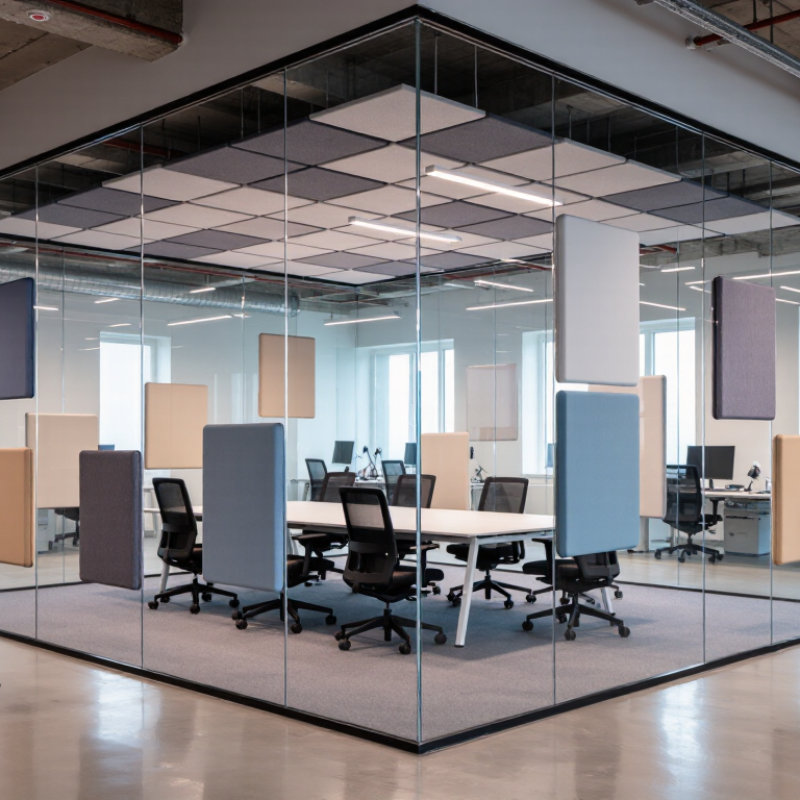
During an office renovation, measure the space before selecting materials. Note whether voices bounce from glass walls, concrete floors, or exposed ceilings. Then review tested acoustic data, including absorption performance across different frequencies. A high rating can be useful, but it does not guarantee comfort in every room. Ask for independent test reports, installation guidance, and documented fire-safety information. Reliable manufacturers should explain these details clearly.

Placement also matters. Mounting panels behind speakers, near reflective walls, or above busy workstations can change the result. Thickness, air gaps, density, and coverage area influence performance. For open offices, combine ceiling treatments with wall panels and practical sound management. For studios or classrooms, prioritize balanced absorption instead of making one area extremely quiet.

Small details matter.

In real projects, budgets often encourage compromises. Cheaper panels may look similar but offer weaker testing, fragile edges, or inconsistent density. That does not make every affordable option unsuitable. It means the evidence deserves closer attention. My own recommendation is to test a sample in the actual room, if possible, before ordering hundreds of units. Human hearing, room geometry, and daily use can expose problems that product sheets miss. This guide explains how to compare noise reduction panels with a practical, evidence-based approach for 2026.
How to Choose Noise Reduction Panels in 2026?

Set the Acoustic Goal: NRC (0–1.0) for Absorption, STC for Isolation

How to Choose Noise Reduction Panels in 2026?

Set the acoustic goal before choosing a panel. NRC measures sound absorption, not sound blocking. Under ASTM C423, the NRC value averages absorption at 250, 500, 1,000, and 2,000 Hz. A panel rated NRC 0.80 can absorb much of the reflected mid-frequency sound. It may reduce echoes in a meeting room, classroom, or podcast space. It will not stop voices through a wall.

STC measures airborne sound isolation. ASTM E413 uses laboratory transmission-loss results to assign an STC rating. Higher values usually mean less speech passes through the tested construction. The 2018 WHO Environmental Noise Guidelines recommend keeping road-traffic noise below 45 dB Lnight outdoors. That target is useful context, but STC does not directly equal indoor decibels. Flanking paths, doors, glazing, and ceiling gaps can defeat a high-rated wall.

Measure the problem first. Stand beneath the hard ceiling. Listen for a sharp clap that keeps returning. Use a calibrated sound meter when possible, not only a phone. A room with excessive reverberation needs absorption. A neighboring-room problem needs isolation work. Sometimes it needs both. I once saw a room receive thick wall panels while its hollow door remained the loudest path. The result improved, but not enough. Product ratings also depend on mounting, air gaps, thickness, and frequency. Treat catalog figures as controlled-test evidence, not a guarantee for your room.

Compare Frequency Performance: Panel Ratings from 125 to 4,000 Hz

How to Choose Noise Reduction Panels in 2026?

Panel ratings from 125 to 4,000 Hz reveal more than a single absorption score. In a meeting room, speech mainly occupies about 250 to 4,000 Hz. However, traffic rumble and ventilation noise often sit near 125 or 250 Hz. A panel performing well at 2,000 Hz may leave low-frequency problems almost untouched. Always request octave-band or third-octave test data, not only an average rating.

For practical comparison, inspect absorption at 125, 250, 500, 1,000, 2,000, and 4,000 Hz. Thick porous panels usually improve lower-frequency absorption, especially with a clear air gap behind them.

A 50-millimeter panel mounted directly on a wall can behave differently from the same panel installed 100 millimeters away. Installation changes the result. It matters.

I once evaluated a bright office where conversation remained tiring, despite many wall panels. The products absorbed upper-mid frequencies, but the ceiling and hard floor still created strong reflections. That experience changed my selection process. I now measure room use, noise sources, panel thickness, spacing, and placement together.

Do not trust a polished chart alone. Test data can also vary with laboratory methods and mounting conditions. A small sample in a quiet room may not predict a crowded workplace. Sometimes, the honest answer is uncertain. Use measurements, site observations, and qualified acoustic advice before choosing.

Check Safety Specs: Class A Fire Rating, VOC Limits, and Durability

How to Choose Noise Reduction Panels in 2026?

Safety should guide panel selection, not only absorption ratings. Under ASTM E84 or UL 723, Class A generally means a flame-spread index of 0–25 and a smoke-developed index of 0–450. However, Class A does not mean non-combustible. Ask for the complete test report, including substrate, facing, adhesive, and installation method. A panel tested alone may perform differently on a wall or ceiling.

VOC control also deserves careful checking. The U.S. Environmental Protection Agency reports that indoor VOC concentrations can be two to five times higher than outdoor levels, sometimes much higher. Choose products with chamber-test results, declared VOC limits, and formaldehyde data. Confirm the testing method, because “low VOC” is not a universal measurement. A sharp chemical smell after installation is a warning sign.

Durability is less glamorous, but it affects safety and cost. Inspect corners, seams, mounting points, and surface cleaning instructions. In humid rooms, request moisture-resistance data and evidence of dimensional stability. Panels near doors may face repeated impacts. They need stronger edges. Standards such as ISO 16000 can support indoor-emission testing, while project specifications should address cleaning and replacement cycles. The overlooked issue is maintenance: a cleanable panel may protect air quality better than a softer panel with higher initial absorption. Verify every claim against the actual certificate. Clearance labels can be confusing.

Size Coverage Correctly: Start with 15–30% of Reflective Wall Area

How to Choose Noise Reduction Panels in 2026?

Size Coverage Correctly: Start with 15–30% of Reflective Wall Area

Begin by measuring the room’s reflective wall area, not the entire floor space. A practical starting point is covering 15–30% of those walls with acoustic panels. For example, a 20-square-metre reflective wall area may need three to six square metres of treatment. This range can reduce harsh echoes while preserving some natural room energy. More panels are not always better.

Walk around the room and clap once. Listen for a sharp ring, especially near bare walls, glass, or polished furniture. Place panels at ear height near the first reflection points. In larger rooms, add treatment behind speakers or opposite the main sound source. Panel thickness also matters. Thin panels may soften high frequencies but leave low-frequency buildup untouched. That limitation is easy to miss.

Tips: Measure twice. Mark reflection points with removable tape. Leave some wall exposed. After installation, record the same short speech before and after treatment. Compare clarity, echo length, and bass balance. If the room sounds dull, coverage may be excessive. If voices still feel distant, the panels may be too thin or poorly positioned. The 15–30% guideline is useful, but every room behaves differently. Be willing to adjust it.

Evaluate 2026 Value: Cost, EPD Data, Recycled Content, and Lifespan

How to Choose Noise Reduction Panels in 2026?

In 2026, acoustic panels deserve more than a price comparison. Check the full cost over the panel’s working life. A low-cost panel may need replacement after five years. A durable panel can reduce labor, disposal, and maintenance expenses. The 2024 UNEP Global Status Report for Buildings and Construction states that buildings consume about 32% of global energy. Material choices still matter, even for small interior products.

2024 UNEP Global Status Report Buildings consume about 32% of global energy.

Ask suppliers for a current Environmental Product Declaration, or EPD. ISO 14025-based EPDs show climate impact, energy use, water use, and production stages. Compare the global warming potential value, measured in kilograms of CO2 equivalent per square meter. Recycled content also needs careful checking. “Recycled” may include pre-consumer waste, not only recovered consumer materials. The U.S. Environmental Protection Agency’s sustainable materials guidance supports recycled inputs, but it also stresses transparent, verifiable claims. Lifespan data remains imperfect. I would question any panel claiming decades of service without testing details.

Tips:

Request the EPD, recycled-content percentage, fire rating, cleaning method, and expected service life. Compare these figures in one spreadsheet. Test sound absorption in the actual room, not only in a showroom. The 2023 ISO 12999-2 guidance explains that laboratory absorption results may not match installed performance. Leave room for doubt. Installation gaps, hard floors, and changing furniture can alter results substantially. A cheaper panel may perform better when placed correctly.