What Is a Stainless Steel Door Hinge?
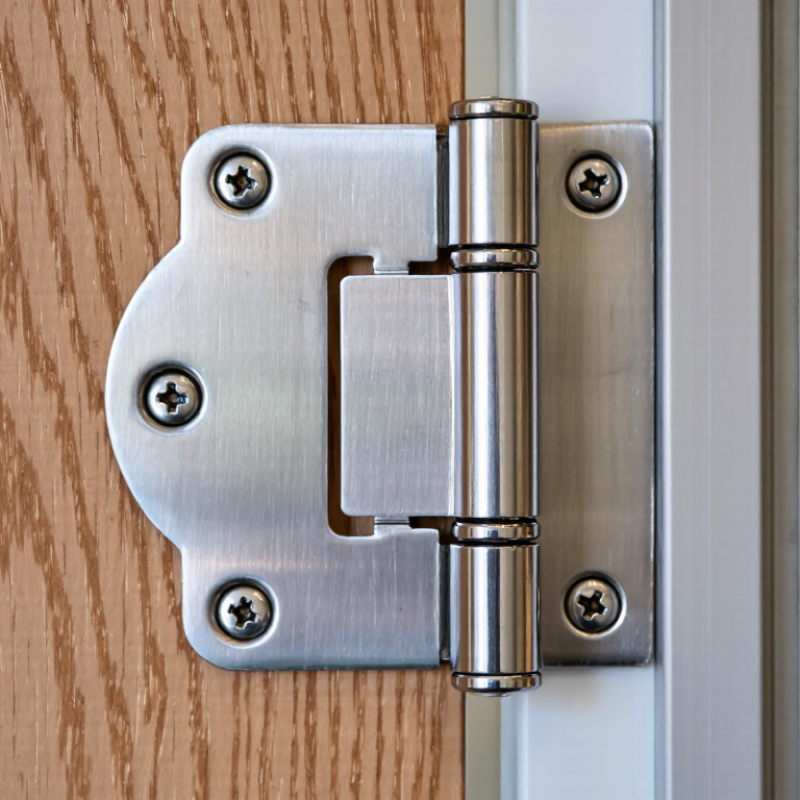
A stainless steel door hinge is a mechanical fitting that connects a door to its frame and allows controlled movement. The phrase “Door Hinge Stainless Steel” usually describes a hinge made from stainless steel, rather than a coating applied to ordinary steel. Its value appears in demanding spaces, including kitchens, hospitals, coastal buildings, workshops, and public entrances.
Lori Greene, AHC/CDC, a respected architectural hardware consultant, offers a useful principle: “Hardware should support the door’s function, not complicate it.” That idea fits stainless steel hinges well. A suitable hinge should carry the door’s weight, match its opening frequency, and resist moisture around the knuckles and pin. Small details matter. A loose screw can cause uneven gaps. A dry pin can create a sharp, irritating squeak.
Common grades include 304 stainless steel and 316 stainless steel. Grade 304 suits many indoor applications. Grade 316 offers stronger resistance in salty or chemically exposed environments. Still, stainless steel is not invincible. Poor cleaning practices, trapped debris, or contact with incompatible metals may produce staining or corrosion. This is where product selection becomes less simple than it first appears.
A reliable evaluation should consider hinge size, bearing type, door weight, frame material, fasteners, and traffic levels. Ball-bearing hinges often support heavier or frequently used doors. Plain-bearing models may suit lighter interior doors. The correct choice depends on the installation, not only the product label.
This guide explains how stainless steel hinges work, where they perform best, and what their limitations deserve closer attention. Good hardware is quiet, steady, and easy to overlook. That is often the real sign of success.
What Is a Stainless Steel Door Hinge?
What Is a Stainless Steel Door Hinge?
A stainless steel door hinge is a mechanical joint that connects a door to its frame. It allows controlled opening and closing around a fixed pin. Unlike painted steel, stainless steel contains chromium that forms a protective oxide layer. This layer can repair itself after minor surface damage. Common hinge grades include 304 and 316 stainless steel. Grade 316 generally offers stronger resistance to salt and chloride exposure.
World Stainless reported approximately 58.4 million tonnes of global stainless steel production in 2023. That scale reflects its wide use in construction, transportation, and hygienic environments. However, more steel does not automatically mean better hinge performance. Hinge thickness, pin design, bearing quality, screw strength, and door weight all matter. A thin hinge may look polished but still sag under a heavy timber door. It happens.
In practical installation, I would check the environment before selecting the material. Indoor office doors usually face lower corrosion risks. Coastal entrances, commercial kitchens, and swimming-pool areas require more careful specification. ISO 9223 identifies humidity, airborne salt, and pollution as key factors affecting atmospheric corrosivity. Regular cleaning also matters. Salt deposits can remain around the knuckles and create staining, especially when dissimilar metals touch. The Nickel Institute notes that stainless steel accounts for roughly 70% of global nickel use, but nickel content alone does not guarantee durability. Poor alignment, loose fasteners, and excessive door loads can shorten service life. Specification should match the real site, not only the appearance.
Common Types of Stainless Steel Door Hinges
What Is a Stainless Steel Door Hinge?
Common Types of Stainless Steel Door Hinges
A stainless steel door hinge joins the door leaf to its frame. It also controls alignment, movement, and long-term load transfer. Stainless steel commonly appears in 304 and 316 grades. Grade 316 offers stronger resistance in coastal or chemical environments. The International Stainless Steel Forum reported roughly 58 million tonnes of global stainless steel production in 2023. That scale supports wide material availability, but it does not guarantee hinge quality.
Butt hinges remain the most common type for residential and commercial doors. Ball-bearing butt hinges reduce friction on heavy doors and frequent-use entrances. Continuous hinges run along the door height. They spread the load and help limit frame twisting. Spring hinges can close doors automatically, although their tension needs careful adjustment. Concealed hinges hide inside the door and frame, creating a cleaner appearance. Pivot hinges carry weight through top and bottom pivot points. They suit larger or distinctive door designs.
Not every hinge fits.
ANSI/BHMA A156.1 defines performance requirements for butt hinges, while EN 1935 includes durability classes reaching 200,000 test cycles. These figures help buyers compare tested performance, not installation results. A practical inspection should check screw seating, barrel alignment, door weight, and visible corrosion. Small details matter. A frequent mistake is choosing 304 stainless steel near salt spray without checking exposure conditions. Even 316 can stain when contamination, poor drainage, or incompatible fasteners remain. In my view, hinge selection should consider cycles, door mass, environment, and maintenance together. A lower-cost hinge may work, but that assumption deserves review.
How to Choose and Maintain a Stainless Steel Door Hinge
What Is a Stainless Steel Door Hinge?
How to Choose and Maintain a Stainless Steel Door Hinge
A stainless steel door hinge connects the door to its frame while allowing smooth, controlled movement. Its corrosion resistance makes it useful for entrances, kitchens, bathrooms, and coastal buildings. However, “stainless” does not mean maintenance-free. Moisture, salt, dust, and poor installation can still cause staining or premature wear.
Choose a hinge according to door weight, width, traffic, and opening angle. A lightweight interior door needs less capacity than a solid entrance door. Grade 304 stainless steel suits many indoor applications. Grade 316 offers better resistance in salty or highly humid environments. Check the manufacturer’s load rating, screw size, leaf thickness, and bearing design. The hinge should match the frame and door material. A mismatched screw can create rust marks around the fixing points.
Installation accuracy matters more than many people expect. Keep the hinge leaves flush with the surfaces, and tighten screws evenly. A sagging door often points to poor alignment, not a weak hinge. I once corrected a noisy hinge by realigning the door instead of adding more lubricant. That simple fix worked better. Still, my first inspection missed a loose frame screw. Small oversights matter.
Wipe the hinge with a soft cloth and mild soap. Remove salt deposits quickly, then dry the surface completely. Avoid steel wool and harsh chlorine cleaners, which may damage the passive surface. Apply a small amount of suitable hinge lubricant when movement becomes stiff. Inspect screws, gaps, and unusual sounds every few months. Keep records for high-traffic doors.
What Is a Stainless Steel Door Hinge? - How to Choose and Maintain a Stainless Steel Door Hinge
Stainless steel door hinges use corrosion-resistant steel to support and rotate a door. The chart compares representative chromium and nickel content in commonly used stainless steel grades. Higher chromium helps form a passive protective oxide layer, while nickel generally improves corrosion resistance, toughness, and formability. Grade 316 is often selected for coastal or high-chloride environments, while grades 304 and 430 may be suitable for less aggressive indoor conditions. Keep hinges clean, remove surface contaminants promptly, and lubricate the knuckle and pin with a suitable non-staining lubricant.