What Is Binder for Screen Printing?
Binder For Screen Printing is the material that helps pigment stay attached to a printed surface. In textile inks, the binder forms a flexible film as the ink dries or cures. It can affect softness, opacity, wash durability, and the feel of the finished print. The right choice depends on the fabric, ink system, and curing process—not just the label on the container.
A useful way to think about binder is as the part that holds the color in place. Screen-printing educator Thomas Trimingham is a recognized industry voice, but no source was provided to verify a direct quotation from him. Rather than inventing one, this introduction uses a practical principle: “A good print depends on matching the ink system to the substrate and curing it correctly.” That distinction matters. A test print on a fabric swatch can reveal cracking, tackiness, or a stiff hand before a full run begins.
Small details count. Record the mesh, squeegee pressure, ink ratio, and curing conditions for each test. Then inspect the print after washing, not only under the press lights. Binder is not a cure-all; too much can change the hand, while poor curing can weaken adhesion. Results vary, and sometimes a promising first print needs another adjustment. Start with the product’s technical data sheet and confirm performance on the actual material.
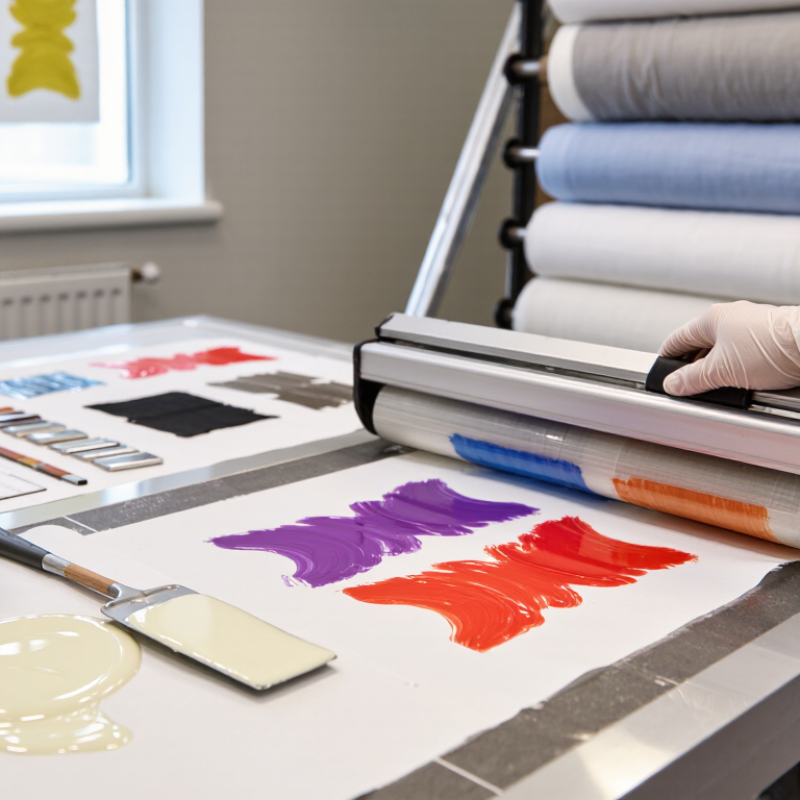
What a Screen Printing Binder Is
What Is Binder for Screen Printing?
What a Screen Printing Binder Is
A screen printing binder is the part of some inks that helps pigment stay attached to fabric. Pigment supplies the color; the binder forms a thin film around it and grips the fibers after proper curing. Without enough binder, a print may look bright at first but shed color or crack after washing.
Think of it as a clear, flexible bridge between color and cloth. In a water-based pigment ink, binder is typically a polymer ingredient, though the exact formula varies. It is not the same as the pigment, and it does not create color by itself. A small test print can reveal practical clues: the ink should pass through the mesh evenly, and the cured image should feel secure rather than dusty or brittle. Not magic.
The term can be used loosely, which makes product labels worth reading carefully. Some inks already contain binder; others may call for an additive. Adding more is not automatically better. Too much can change the ink’s feel, flow, or hand, while inadequate curing can leave even a well-formulated print weak. Fabric type, ink instructions, and actual dryer conditions all matter. A surface that feels dry may still need more time or heat to cure fully. I would not judge durability by touch alone.
How Binders Bond Ink to Fabric
In screen printing, a binder helps pigment stay attached to fabric after the ink dries. In many water-based inks, it is a polymer that forms a thin film around pigment particles. As the printed layer cures, the binder particles join together and grip the textile surface. The pigment supplies the color; the binder does much of the holding. That distinction matters.
Fabric is not a smooth sheet. Under magnification, cotton fibers look like tiny ridges and loose ends. Ink can settle around them, and the binder film helps lock pigment in place as it cures. Heat, time, and airflow all affect that bond. If the print is undercured, it may crack or fade after washing.
Too much heat can make the print feel stiff, especially on a lightweight shirt. The result is rarely perfectly even. Fabric blends, ink thickness, and curing equipment can all change the finish, so a small test print is useful. Stretch it gently. Wash it. Look closely. A print may seem dry while its binder still needs proper curing.
Common Types of Screen Printing Binders
Common Types of Screen Printing Binders
A binder holds pigment together and helps it adhere to fabric after curing. For water-based inks, acrylic binders are common. They can leave a soft feel, especially when the ink layer is thin. Polyurethane binders offer more flexibility and abrasion resistance, making them useful on stretchy garments. Results depend on the formula, fabric, and cure conditions. One binder rarely suits every job.
Plastisol inks use a resin system that fuses when heated; they often create a more substantial print. Discharge bases work differently: they reduce certain fabric dyes while depositing pigment, usually on suitable cotton garments. Their color and hand can vary with the fabric’s dye, so test prints matter. A clean-looking sample is not always a reliable prediction for a full run.
Tips: Check the ink maker’s technical sheet for cure temperature and time. Print a small test, then wash it before production. Feel the cured print, too. A mistake I still see is choosing by color alone; stretch and wash durability deserve equal attention. Dryer settings can vary, so verify the fabric reaches the required temperature.
How Binders Affect Print Performance
A binder is the film-forming part of many screen-printing inks. As it dries and cures, it helps hold pigment to the fabric. Its formulation can change how a print feels, stretches, and withstands washing. A softer binder may leave a flexible hand, while a firmer one can create a more noticeable surface. Neither is automatically better; the fabric and intended use matter. A light cotton shirt and a stretchy performance knit can respond quite differently.
Binder choice also affects color and production consistency. If the binder does not suit the ink system or fabric, a print may feel tacky, crack when stretched, or lose color after washing. Curing matters too. Follow the ink supplier’s technical guidance, and check the actual print temperature rather than relying only on the dryer setting. Small changes matter. In practice, a test swatch can reveal problems before a full run, though one successful sample does not guarantee every garment will behave the same.
Tips: Print a small swatch on the actual fabric. Let it cool, stretch it gently, and inspect the surface. Wash a sample before approving a repeat job. Record the ink mix, fabric, and curing conditions. There is no perfect hand for every project, and that can be easy to forget when judging a print by touch alone.
Choosing and Using a Screen Printing Binder
What Is Binder for Screen Printing?
Choosing and Using a Screen Printing Binder
A screen printing binder holds pigment particles together and anchors them to fabric after curing. Choosing one means matching its chemistry to the fiber, print feel, and production setup. For cotton, a water-based binder can create a softer hand, but it may dry in the screen during pauses. Synthetic fabrics may need a formulation designed for better adhesion. Read the technical sheet, then test on the actual garment. Small differences matter.
A practical trial is simple: print a small swatch, cure it as directed, and inspect the surface for cracking or tackiness. Wash and stretch the sample before approving a run.
AATCC TM8 evaluates color transfer through a crocking test, using a 1-to-5 rating scale; it offers one useful check, though it does not replace wash testing. The Grand View Research report Screen Printing Market Size, Share & Trends Analysis estimated the global market at USD 3.7 billion in 2023 and projected 5.8% annual growth from 2024 to 2030. That market context makes repeatable testing worthwhile, but it cannot identify the right binder for your fabric.
One easy detail to miss: a successful first print is not proof of durable adhesion. Recheck after washing.