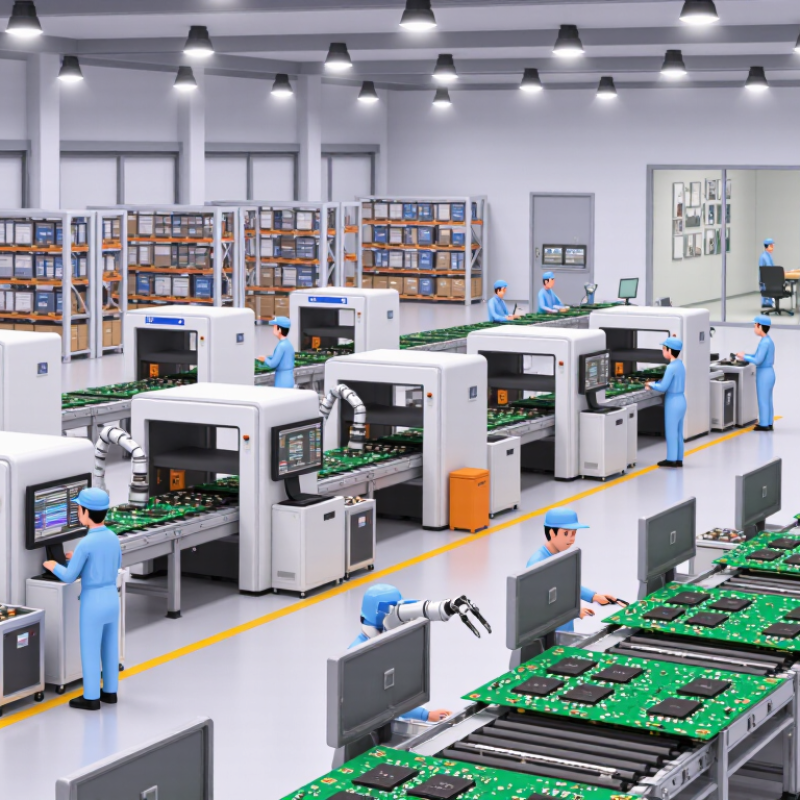
Choosing the top Printing Circuit Boards manufacturers worldwide requires more than comparing factory size or annual revenue. A strong supplier must combine engineering expertise, stable production, quality control, and dependable communication. These factors matter when a circuit board carries signals through medical equipment, automotive systems, or industrial control panels. Small details matter. Copper thickness, drilling accuracy, surface finish, and inspection records can influence performance long after shipment.
This guide examines leading manufacturers through practical, evidence-based criteria. It considers fabrication capabilities, multilayer and flexible board expertise, prototype support, production capacity, and delivery consistency. Certifications such as ISO 9001, IATF 16949, and relevant IPC standards may offer useful assurance, but certificates alone cannot prove everyday reliability. Factory audits, sample testing, traceability, and customer feedback provide stronger evidence. Real performance counts.
No ranking is perfect. Market data changes, regional strengths differ, and public information may remain incomplete. A manufacturer praised for automotive production may not suit a low-volume aerospace prototype. Another supplier may offer excellent pricing but limited engineering support. That distinction is easy to miss. The following overview aims to create a balanced starting point for sourcing decisions, not a permanent verdict. Readers should verify capabilities directly, request current documentation, and test samples before approving long-term production. Practical judgment remains essential.
What Defines a Leading Printed Circuit Board Manufacturer?
A leading printed circuit board manufacturer offers more than low prices. It controls material quality, drilling accuracy, plating thickness, and final inspection. A 2024 global market assessment valued the PCB industry at approximately US$89.7 billion in 2023. It also forecast steady growth through 2030. This expansion increases pressure on suppliers to deliver stable performance, not just higher volume.
Strong manufacturers provide traceable production records and measurable process controls. They should report yield rates, defect levels, testing coverage, and delivery performance. Certifications such as ISO 9001 and IATF 16949 can support credibility, but certificates alone prove little. Experienced buyers should examine audit results, sample consistency, and corrective-action records. IPC technical standards also help define acceptable workmanship for complex boards. However, standards cannot replace practical engineering judgment. Some suppliers still hide weak controls behind impressive documents.
Tips: Ask for cross-section images, impedance reports, and solderability results. Check whether the factory tests every board or only selected batches. Review how it handles design changes and urgent failures. A reliable manufacturer explains limitations clearly. That honesty may matter more than a polished sales presentation.
Global PCB production is concentrated in East Asia, where mature supply chains support high-volume and advanced board manufacturing. Dense industrial clusters provide quick access to copper foil, laminates, drilling equipment, and assembly services. Engineers can often move from prototype review to production with fewer logistical delays. However, regional strength does not guarantee the right technical fit.
Southeast Asia has become an important hub for capacity expansion and supply-chain diversification. Its factories commonly serve consumer electronics, automotive systems, and industrial controls. Europe remains influential in high-reliability applications, especially where traceability, engineering support, and strict process control matter. North America focuses strongly on prototypes, defense-related infrastructure, medical electronics, and specialized low-volume production. India is also developing broader capabilities, supported by growing electronics demand and improving domestic supply networks.
Selecting a manufacturer requires more than comparing prices. Review layer capability, impedance control, inspection methods, delivery records, and material traceability. Ask for process evidence, not polished promises. Factory audits can reveal practical details, such as storage conditions, cleanliness, and operator training. The imperfect part is capacity planning. A supplier may perform well during normal demand but struggle during a sudden volume increase. Local regulations, shipping risks, and engineering communication also deserve careful attention. In some cases, a slightly higher regional cost may reduce delays and redesign work. That trade-off should be measured, not assumed.
Market presence matters more than a simple revenue ranking. It reflects production capacity, regional facilities, delivery consistency, certifications, and customer support. According to Prismark’s 2024 industry review, Asia-Pacific represents more than 90% of global PCB production. This concentration gives regional manufacturers strong supply-chain advantages. However, geographic scale does not automatically guarantee reliable quality.
Grand View Research estimates the global printed circuit board market will continue growing through 2030, supported by electric vehicles, data centers, and advanced electronics. Leading manufacturers usually operate multiple production lines and support rigid, flexible, and high-density interconnect boards. Their practical strength appears in measurable details: stable impedance control, clean drilling, trace accuracy, and documented corrective actions. IPC industry data also shows that qualification standards remain essential for reducing field failures. A ranking can still mislead. Public market data may combine factories, subsidiaries, and contract production.
Tips: Compare annual capacity, factory locations, certification scope, inspection equipment, and on-time delivery records. Ask for recent quality data, not only promotional claims. Check whether engineering support exists near your production region. Small gaps matter. A low quoted price may hide longer tooling cycles, weaker traceability, or limited backup capacity. Manufacturers with broad market presence can offer resilience, but they may not fit every technical requirement. Supplier selection should balance scale, engineering depth, responsiveness, and verified performance.
Top Printing Circuit Boards Manufacturers Worldwide?
PCB Technologies, Production Capabilities, and Industry Applications
Leading circuit board manufacturers compete through process control, not only factory size. Their capabilities often include rigid, flexible, rigid-flex, HDI, and high-layer-count multilayer boards. Fine-line routing supports compact devices, while controlled-impedance structures protect high-speed signals. Thermal management also matters. Heavy copper layers, metal-core substrates, and carefully designed vias help move heat away from power components.
Production quality depends on disciplined details. Engineers review stack-ups before fabrication, checking dielectric thickness, copper weight, and drill tolerances. Automated optical inspection detects pattern defects. Electrical testing verifies continuity and isolation. For demanding products, manufacturers may add microsection analysis, solderability checks, and traceability records. A reliable supplier should explain these methods clearly, provide capability data, and discuss realistic tolerances. Paper specifications can look impressive. Stable production is harder.
Different industries require different board strategies. Automotive control units need vibration resistance, thermal cycling, and consistent supply. Medical equipment emphasizes cleanliness, documentation, and dependable signal performance. Industrial controllers often require long service life and resistance to electrical noise. Communication hardware may depend on low-loss materials and precise impedance control. Consumer electronics prioritize thin profiles, fast production, and cost discipline. These goals can conflict. A smaller prototype may pass inspection, while larger batches reveal warpage, plating variation, or assembly delays. That uncomfortable gap deserves attention before production begins.
| Manufacturing Region | Production Strength | Common PCB Types | Technology Capability | Typical Production Parameters | Key Industry Applications | Common Materials | Quality and Compliance Focus |
|---|---|---|---|---|---|---|---|
| East Asia | High-volume manufacturing with extensive supply-chain integration, automated assembly support, and broad product coverage from standard rigid boards to advanced interconnect designs. | Rigid multilayer HDI Flexible Rigid-flex | Laser-drilled microvias, sequential build-up, fine-line circuitry, embedded components, and high-density interconnect structures. | Commercial multilayer production commonly ranges from 2 to more than 30 layers; copper finishes include ENIG, immersion tin, immersion silver, and OSP. | Smartphones, computers, telecommunications equipment, consumer electronics, automotive electronics, and industrial controls. | FR-4, high-Tg epoxy laminates, polyimide, low-loss laminates, and halogen-free materials. | IPC-A-600, IPC-6012, IPC-6013, ISO 9001, and sector-specific automotive or medical requirements. |
| Southeast Asia | Growing capacity for high-volume rigid boards, flexible circuits, assembly-linked production, and regional supply-chain diversification. | Double-sided Multilayer Flexible Metal-core | Standard through-hole and surface-mount-compatible designs, controlled impedance, copper-filled vias, and selected HDI processes. | Typical offerings include 1–20 layer rigid boards, aluminum-backed thermal boards, and thin flexible circuits for compact electronics. | Consumer devices, LED lighting, automotive modules, networking hardware, power electronics, and industrial equipment. | FR-4, polyimide, aluminum metal-core laminates, copper substrates, and high-frequency materials. | ISO 9001, ISO 14001, IPC standards, RoHS, REACH, and customer-specific reliability testing. |
| North America | Strong focus on advanced, low-to-medium volume production, rapid prototyping, defense electronics, aerospace systems, and high-reliability applications. | High-reliability rigid RF/microwave Flex Rigid-flex | Controlled impedance, RF/microwave fabrication, sequential lamination, high-layer-count designs, backdrilling, and advanced inspection. | Capabilities commonly include fine-pitch features, heavy copper from approximately 3 to 12 oz, and high-layer-count boards for demanding systems. | Aerospace, defense, medical devices, data centers, test equipment, telecommunications, and transportation systems. | High-Tg FR-4, PTFE-based RF laminates, polyimide, low-loss materials, and thermally enhanced laminates. | IPC Class 3, AS9100, ISO 13485, ITAR-controlled production where applicable, and extensive traceability requirements. |
| Europe | Specialized production emphasizing automotive, industrial, medical, aerospace, energy, and environmentally regulated electronics. | Automotive rigid Power boards Flex RF boards | High-reliability multilayer fabrication, thermal management, fine-line circuitry, high-frequency routing, and specialized power electronics construction. | Typical products range from simple two-layer boards to complex multilayer designs with controlled impedance, thermal vias, and copper coin or heavy-copper structures. | Electric vehicles, driver-assistance systems, factory automation, renewable energy, medical instruments, and aerospace equipment. | FR-4, high-Tg laminates, IMS aluminum substrates, polyimide, ceramic-filled RF materials, and halogen-free materials. | IATF 16949, ISO 13485, AS9100, IPC standards, RoHS, REACH, and strict environmental controls. |
| South Asia | Expanding domestic and export-oriented capacity, particularly for prototypes, standard rigid boards, electronic assemblies, and selected industrial applications. | Single-sided Double-sided Multilayer LED boards | Through-hole plating, surface-finish processing, conventional multilayer fabrication, rapid-turnaround prototyping, and growing SMT integration. | Common production includes 1–12 layer rigid boards, aluminum LED boards, and prototype-to-medium-volume manufacturing. | Consumer electronics, telecommunications, lighting, industrial controls, power supplies, and educational or laboratory equipment. | FR-4, CEM-1, aluminum-backed laminates, and halogen-free epoxy materials. | ISO 9001, IPC workmanship standards, RoHS, REACH, and customer-specific inspection plans. |
| Japan and Advanced Industrial Markets | Precision-focused production for high-reliability, miniaturized, automotive, semiconductor, and advanced electronic systems. | High-density rigid Rigid-flex IC substrate Automotive PCB | Very fine-line processing, microvia technology, package substrates, high-precision registration, and low-defect manufacturing. | Selected products support sub-100-micrometer laser microvias, thin dielectric structures, and advanced multilayer interconnect architectures. | Automotive control units, cameras, semiconductor packaging, robotics, precision instruments, and high-end consumer electronics. | High-Tg laminates, low-loss materials, ABF-type package substrate materials, polyimide, and specialized copper foils. | IATF 16949, ISO 9001, IPC standards, stringent process capability monitoring, and advanced reliability testing. |
| Global Prototype and Quick-Turn Segment | Rapid engineering support, small-batch production, design-for-manufacturing feedback, and scalable transition from prototype to series production. | Prototype PCB Rigid Flex HDI samples | Online design review, automated optical inspection, electrical testing, impedance verification, and fast fabrication of standard stack-ups. | Typical quick-turn orders cover 1–12 layers, 0.1–3.2 mm finished thickness, and standard copper weights from 0.5 to 2 oz. | Product development, research laboratories, university projects, industrial automation, IoT devices, and startup hardware programs. | FR-4, high-Tg FR-4, polyimide, aluminum, and selected high-frequency laminates. | IPC-6012, IPC-A-600, electrical continuity testing, AOI, flying-probe testing, and documented material traceability. |
| High-Reliability Specialty Segment | Dedicated manufacturing for extreme temperature, vibration, moisture, electrical stress, safety, and long-service-life conditions. | Heavy copper RF/microwave Ceramic PCB Metal-core | Thermal management, high-current routing, low-loss transmission lines, ceramic processing, copper coin integration, and advanced reliability screening. | Heavy-copper designs may use approximately 3–12 oz copper or more in selected areas; thermal boards use aluminum, copper, or ceramic substrates. | Power conversion, electric mobility, radar, satellite systems, industrial drives, renewable energy, and medical equipment. | Metal-core laminates, ceramic substrates, PTFE-based RF materials, high-Tg FR-4, and polyimide. | IPC Class 3, thermal cycling, humidity testing, dielectric testing, vibration testing, and application-specific qualification. |

Note: The capabilities and parameters shown are representative industry ranges for anonymous manufacturing segments rather than specifications of any individual company or brand.
Comparing global PCB manufacturers requires more than checking unit prices. Start with the board itself: layer count, copper weight, impedance needs, surface finish, and expected production volume. A supplier that excels at simple two-layer boards may struggle with dense multilayer designs. Ask for sample reports, cross-section images, and test records before approving a large order.
Review the manufacturer’s process control closely. Reliable suppliers should explain material traceability, solder-mask inspection, electrical testing, and defect handling. Check recognized quality certifications, but do not treat certificates as proof of perfect performance. Request recent audit results or a controlled sample run. Lead time also needs evidence. Compare quoted schedules with capacity, holiday closures, shipping routes, and backup production plans. Small details matter.
Tips: Send identical files to every supplier. Compare engineering questions, not only prices. Ask how they handle a failed test. A clear answer builds confidence. Verify communication speed during development, because slow replies often become costly delays. Evaluate packaging too; moisture protection and edge protection can prevent damage before assembly. I would also keep a scoring sheet for quality, cost, delivery, support, and risk. It feels slightly excessive, but memory is unreliable. A low quote can hide tooling fees, inspection charges, or repeated revisions. Review those assumptions carefully before selecting a long-term partner.
Comparing regional production concentration is a practical first step when evaluating global PCB suppliers. Asia remains the dominant manufacturing base, while Europe and North America are often selected for regional supply, shorter logistics routes, and specialized compliance requirements.
Estimated share of worldwide PCB production value, rounded for comparison. The figures represent regional industry output rather than individual companies or brands, based on publicly reported industry market estimates and regional PCB manufacturing summaries.