
+1 877-337-9312 | sale@sflbuild.com

Blog

2026 Top Steel Threaded Lifting Socket Types?

Choosing among the 2026 Top Steel Threaded Lifting Socket Types requires more than comparing load ratings. These components transfer lifting forces through precast concrete, so thread design, anchorage length, steel grade, and installation quality all matter. A Steel Threaded Lifting Socket may look small on site, yet it can carry serious temporary loads during panel rotation or placement.

This guide examines internally threaded sockets, high-capacity threaded anchors, recessed lifting sockets, and corrosion-resistant options. It considers working load limits, safety factors, compatible lifting clutches, and concrete strength at lifting time. Field experience shows that matching the socket to the clutch is essential. Small mismatches can create poor engagement, visible thread damage, or uneven loading. Fit matters.

Reliable selection begins with verified manufacturer data, clear engineering calculations, and inspection records. Product labels alone are not enough. Engineers should confirm the lifting direction, edge distance, reinforcement arrangement, and actual concrete condition. A socket rated for vertical lifting may not suit angled forces without additional design review. That detail is often missed.

No single socket type is best for every project. Coastal exposure, repetitive handling, thin panels, and limited access can change the preferred choice. Some published comparisons also simplify real jobsite conditions. They deserve careful review. This overview combines practical observations with technical selection criteria, while recognizing that final approval belongs to a qualified engineer and the responsible lifting team. Always verify current specifications before use.
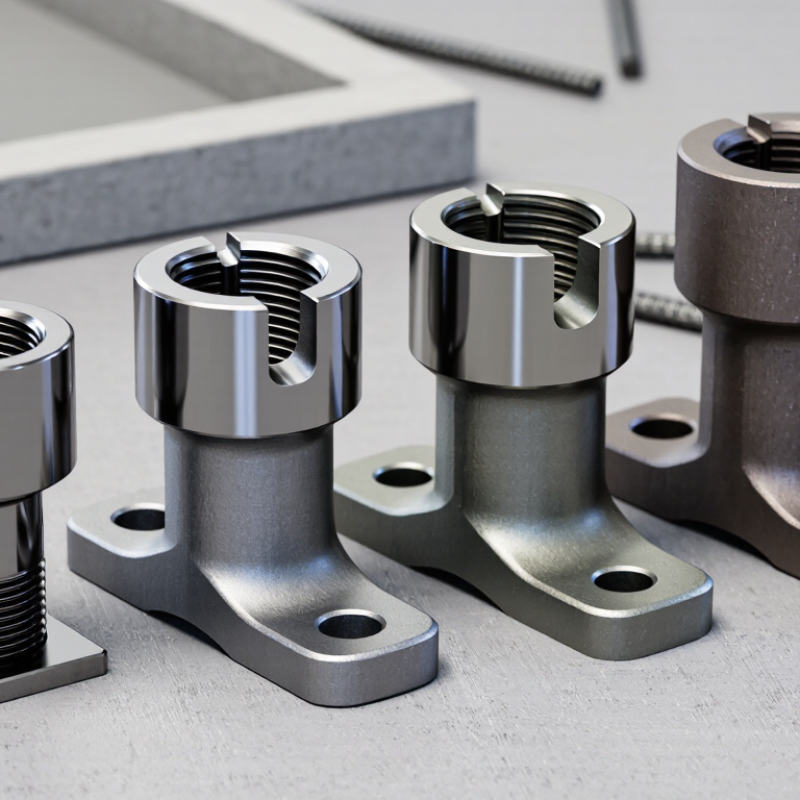
2026 Top Steel Threaded Lifting Socket Types?

What Is a Steel Threaded Lifting Socket?

2026 Top Steel Threaded Lifting Socket Types?

A steel threaded lifting socket is a load-bearing insert installed inside concrete or another structural material. It provides a strong, reusable connection for threaded lifting hardware. During lifting, the socket transfers force through its steel body, reinforcement, and surrounding concrete. Common types include straight sockets, flared sockets, plate sockets, and long-bar sockets. Each design suits different embedment depths, load directions, and reinforcement layouts. A socket is not simply a metal hole. Its performance depends on thread quality, steel strength, concrete grade, and correct installation.

Field inspections often show small mistakes with serious effects. The socket may sit too close to an edge. Reinforcement may block the intended position. Concrete can also collect inside the thread. These details reduce confidence during a lift. Engineers should check the working load, safety factor, embedment depth, thread condition, and lifting angle. Independent testing and traceable material records add reliability. A larger socket is not automatically safer. Selection must match the complete lifting system.

Tips: Keep the internal thread clean and capped before use. Confirm alignment before concrete placement. Inspect for cracks, deformation, rust, and damaged threads. Use calibrated lifting equipment and follow the socket manufacturer’s technical data. When the design seems uncertain, pause the lift and request an engineering review. Small doubts deserve attention.

2026 Top Steel Threaded Lifting Socket Types: What Is a Steel Threaded Lifting Socket?

A steel threaded lifting socket is a load-bearing insert with an internal thread. It is installed in concrete, precast elements, or engineered lifting assemblies so that a compatible threaded lifting device can transfer loads during lifting, positioning, and temporary handling.

Common configurations include flush sockets for concealed installations, plate-base sockets for improved load distribution, angled sockets for directional lifting, and long-body sockets for deeper anchorage. The chart uses standardized ISO metric coarse-thread tensile-stress areas as a dimensional reference. These values are not lifting-socket working-load limits; the actual safe working load depends on the socket design, steel grade, embedment, concrete strength, edge distance, loading angle, and the manufacturer's tested system.

Flush Socket
Low-profile installation with a concealed or nearly concealed finish.
Plate-Base Socket
Uses a base plate to distribute forces into the surrounding element.
Angled Socket
Designed for controlled directional load transfer during lifting.
Long-Body Socket
Provides greater anchorage length where embedment depth is available.

How Steel Threaded Lifting Socket Types Are Classified

Steel threaded lifting sockets are classified by thread geometry, anchorage design, load direction, and service environment. Geometry comes first. Internal-thread sockets receive a lifting bolt or threaded clutch. Their pitch and diameter must match the approved lifting device. Straight sockets suit axial loading, while footed, plate, or looped sockets improve anchorage inside precast concrete. The visible shape can mislead.

Anchorage creates the main functional difference. Short sockets depend heavily on concrete strength and edge distance. Longer sockets transfer force deeper into the element. Some designs use welded plates, reinforcing bars, or expanded ends to resist pull-out and shear. EN 13155 and CEN/TR 15728 stress compatibility, rated capacity, inspection, and safe use of lifting attachments. These standards do not make different socket types interchangeable. Working load depends on the complete system, not steel strength alone.

Material and exposure provide another classification layer. Carbon-steel sockets fit ordinary indoor production. Alloy-steel versions may support higher strength requirements. Zinc-coated or stainless options suit humid, coastal, or washdown environments. The World Steel Association’s 2024 World Steel in Figures reports about 1.9 billion tonnes of crude steel production in 2023. That scale does not guarantee reliable lifting hardware. A practical weakness remains common: catalog labels often hide thread wear, corrosion, or poor embedment. Check markings, thread engagement, concrete strength, edge distance, and inspection records before selection. Small details decide performance.

2026 Top Steel Threaded Lifting Socket Types? – How Steel Threaded Lifting Socket Types Are Classified

Steel threaded lifting sockets are commonly classified by their embedded anchor geometry, thread arrangement, load direction, installation method, and intended precast-concrete application. The configurations below describe widely used design categories rather than specific brands.

Socket Type Primary Classification Typical Geometry Main Load Direction Common Thread Arrangement Typical Applications Selection Consideration
Straight Threaded Socket Anchor shape
Simple cylindrical body
Steel sleeve with an internal female thread and a straight external surface; may include an end plate or anti-rotation feature. Mostly axial tension; limited resistance to lateral loading unless the surrounding concrete design provides it. Internal metric or unified thread, selected to match the lifting clutch, eye bolt, or threaded lifting device. Precast wall panels, beams, slabs, pipes, and general-purpose concrete units. Requires adequate embedment depth, concrete strength, edge distance, and reinforcement detailing.
Footed or Flanged Threaded Socket Anchor base
Enlarged bearing end
Threaded socket with a forged or welded foot, flange, or enlarged base that transfers force into a larger area of concrete. Axial tension with improved resistance to pull-out compared with a plain straight body. Usually an internal thread; thread size and socket length vary with the design load and concrete member thickness. Heavy precast elements, panels, beams, and components where a short anchorage zone is preferred. Foot size, concrete breakout capacity, reinforcement, and minimum edge distance are critical.
Plate-Anchor Threaded Socket Load-distribution method
Attached steel plate
Threaded socket welded or mechanically connected to a flat steel plate embedded in the concrete. Axial tension; the plate distributes force over a broad bearing area. Internal female thread with a plate sized for the required anchorage and reinforcement arrangement. Thin precast panels, façade units, architectural concrete, and applications with limited embedment depth. Plate stiffness, weld quality, concrete cover, local reinforcement, and panel thickness must be checked.
Rebar-Connected Threaded Socket Reinforcement integration
Socket joined to rebar
Threaded socket supplied with bars, loops, or reinforcement connectors that become integrated with the precast reinforcement cage. Axial tension and, when properly detailed, improved transfer into the reinforcement system. Internal lifting thread; the reinforcing bars are normally not the lifting thread itself. Precast panels, columns, beams, and units requiring a controlled load path into reinforcement. Bar anchorage, bend geometry, bar congestion, corrosion protection, and concrete cover require engineering review.
Loop-End Threaded Socket Connection end
Reinforcing loop
Threaded socket combined with a looped steel bar or wire-rope-style anchorage for embedment in concrete. Axial tension; the loop provides mechanical anchorage and load transfer through the surrounding concrete. Internal thread at the accessible end; the loop remains embedded. Precast concrete elements where the lifting point must be connected to an internal anchorage loop. Loop diameter, bend radius, steel grade, concrete strength, and clearance for the lifting accessory are important.
Swivel or Articulated Threaded Socket Load orientation
Adjustable connection
Threaded socket or lifting insert designed to accommodate controlled angular movement through a swivel or articulated attachment. Axial loading with a defined range of permitted angular loading. Internal thread matched to the removable lifting accessory; the articulation mechanism is separate from the thread. Panels and precast units lifted from changing orientations or with a controlled tilting operation. Permitted angle, side-load limitation, locking method, and compatibility with the lifting device must be verified.
Flush or Recessed Threaded Socket Installation position
Surface-access design
Socket installed flush with, or inside a small recess in, the concrete surface to reduce projection after demoulding. Normally axial tension; recess geometry can also provide clearance for the lifting accessory. Internal thread protected by a cap, plug, or temporary insert during casting and finishing. Architectural panels, finished surfaces, façade elements, and products where protruding hardware is undesirable. Thread protection, recess dimensions, cover depth, grout or patching requirements, and access for cleaning must be considered.
Heavy-Duty Threaded Lifting Socket Capacity class
Higher design demand
Large-diameter or extended-length socket with increased steel section, anchorage area, or reinforcement connection. Axial tension and, where specifically designed, controlled shear or combined loading. Large metric or unified internal thread; the exact size is determined by the complete lifting system. Large beams, bridge components, utility structures, heavy panels, and industrial precast units. Capacity must be based on certified testing and calculations for steel failure, concrete breakout, pull-out, and reinforcement failure.
Temporary Threaded Lifting Insert Service purpose
Removable lifting point
Embedded steel socket intended to receive a removable threaded lifting eye, bolt, or compatible lifting attachment. Usually axial tension during demoulding, handling, storage, or installation. Reusable internal thread, commonly protected during casting by a removable plug or cap. Precast products that require lifting points during handling but a clean finished surface after installation. Inspect thread condition, corrosion, deformation, cleanliness, and compatibility before every lift.
Technical note: A socket type does not by itself define a safe working load. The allowable lifting capacity depends on the complete system, including steel grade, thread engagement, socket geometry, embedment depth, concrete strength and age, reinforcement, edge distance, load angle, dynamic effects, and the applicable design or certification requirements. Metric threads are commonly specified using ISO metric thread conventions such as ISO 261 and ISO 262, while unified threads may follow ASME B1.1; the selected lifting accessory and socket must use matching thread specifications.

Key Design Features and Load-Bearing Mechanisms

2026 Top Steel Threaded Lifting Socket Types?

Cast-in, weld-on, flush-mounted, and swivel threaded sockets remain common in precast lifting systems. Their performance depends on load transfer, not appearance. The threaded eye or lifting bolt carries tension into the socket body. The socket shoulder then spreads force into surrounding concrete or a welded steel plate. Adequate thread engagement is essential. A larger thread is not automatically safer.

Designers should check steel grade, thread shear, shoulder bearing, weld capacity, and concrete breakout separately. Angled lifting introduces side loading, which can sharply reduce the working load limit. The socket should also resist rotation during installation. Galvanized or corrosion-resistant steel helps, but coating damage still matters. I have seen clean-looking sockets fail inspection because rust reached the thread root.

The ILO and WHO joint estimates report nearly 3 million work-related deaths globally each year, reinforcing the need for controlled lifting practices. The U.S. Bureau of Labor Statistics recorded 1,075 fatal work injuries in private construction during 2023. These figures do not isolate threaded sockets, but they show why conservative design matters. Proof testing, traceable batch records, and visual inspection should support the stated working load limit. ASME B30.26 and applicable precast standards also require attention to rated capacity, loading direction, and hardware condition. Field assumptions remain a weakness. Each lift needs verified concrete strength, correct thread engagement, and a realistic sling angle.

How to Choose the Right Lifting Socket for Each Application

2026 Top Steel Threaded Lifting Socket Types?

Choosing the right lifting socket starts with the load path, not the socket diameter. Straight sockets suit common vertical lifting in precast concrete. Flared sockets can improve anchorage where concrete depth is limited. Plate-ended and long-leg designs may help distribute force near heavily reinforced zones. The correct type depends on load direction, working load limit, concrete strength, and available embedment depth.

Check the thread size and pitch against the lifting clutch or eye bolt. Confirm the rated capacity from tested technical data. Never estimate capacity from diameter alone. A socket for vertical lifting may not suit angled loading. Side pull changes the force quickly. Leave enough concrete cover and edge distance, then position the socket according to the installation drawing. Keep the opening clean and sealed during casting.

Small details matter.

Inspect threads, welds, corrosion, and deformation before every lift. A socket can look sound while having poor surrounding concrete. Check for cracks, voids, exposed reinforcement, or grout loss. A recurring site lesson is simple: installation quality can matter as much as steel strength. We sometimes focus on the component and overlook alignment. That is a mistake worth challenging. When the application is unusual, have a qualified engineer verify the lifting arrangement, temporary loads, and safety factor before use.

Safety Standards, Inspection Methods, and 2026 Industry Trends

Steel threaded lifting sockets support many precast and structural lifting applications. Common types include straight sockets, plate sockets, and long-thread sockets. Each design transfers force differently through concrete or steel.

The correct selection depends on load direction, embedment depth, thread size, and surrounding reinforcement. Never judge capacity by appearance alone. Review the rated load, installation drawing, material certificate, and applicable lifting standard before use. In 2026, competent inspectors increasingly expect traceable records, controlled installation, and documented worker training. Local requirements may differ, so engineering approval remains essential.

Inspection should begin before installation. Check threads for crushed sections, contamination, distortion, and visible corrosion. Confirm the socket sits at the specified depth and angle. After casting, inspect the surrounding concrete for cracks, voids, exposed steel, or unusual movement. A clean thread is not enough. Test the lifting accessory for proper engagement and fit, then record the result with photographs and batch information. One weakness remains: visual checks can miss internal damage. Periodic non-destructive testing may be justified in demanding environments.

Industry trends are moving toward digital inspection logs, corrosion-resistant materials, and clearer load-status markings. Some systems may use data tags to connect each socket with its installation history. Helpful, but not perfect. Tags can be damaged or ignored. Experienced teams still combine records, physical checks, and conservative judgment. That human review matters when site conditions differ from the original drawing.