
Blog
China Top 10 FOC Motor Controller Manufacturers
Electric mobility and automation are raising expectations for compact, efficient motor control. The International Energy Agency’s Global EV Outlook 2024 reports nearly 14 million electric car sales worldwide in 2023, with China accounting for almost 60 percent. These figures describe vehicles, not controller shipments, but they show the scale of China’s electric-drive ecosystem. A Foc Motor Controller helps regulate motor torque and speed through field-oriented control, making design quality important in applications ranging from scooters to industrial equipment.
This introduction to China’s top 10 FOC motor controller manufacturers considers practical factors: product range, stated voltage and current ratings, protection features, documentation, and support. Buyers should compare specifications against their actual motor, load, cooling method, and operating environment. A polished datasheet is useful, but it cannot prove real-world reliability. That distinction matters. Manufacturer claims should be checked against test records, certifications, and application references where available. Public information is uneven, and company rankings can change with product launches or business conditions. The list should therefore be treated as a starting point for supplier research, not a definitive performance verdict. Shortlist carefully.
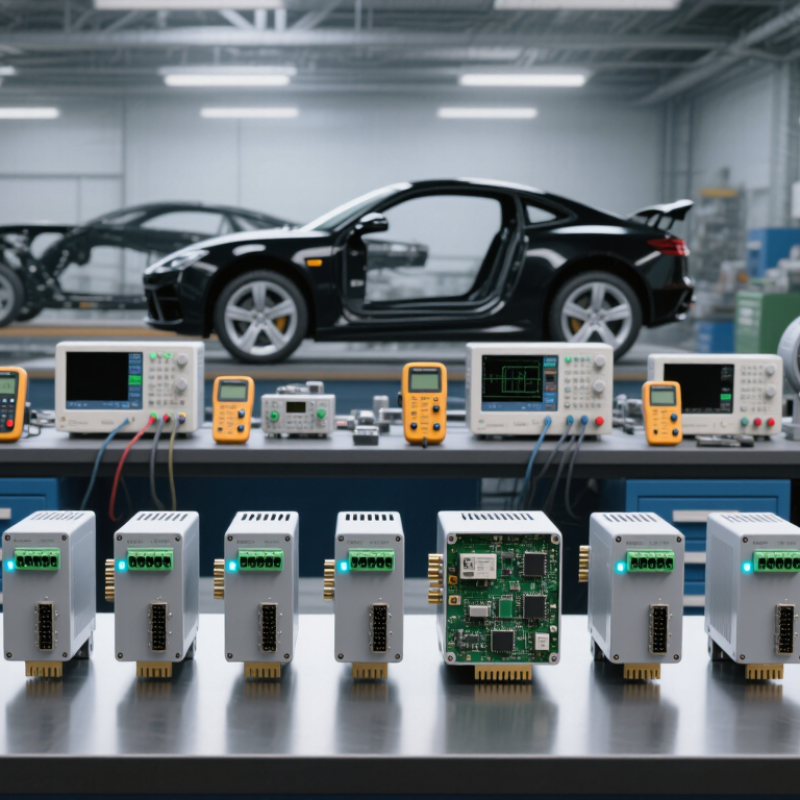
FOC Motor Controllers: d-q Vector Control for Three-Phase PMSM and BLDC Motors
Field-oriented control (FOC) regulates three-phase motor current as two rotating-axis components: d and q. A controller transforms phase-current measurements into this d-q frame, then adjusts voltage to manage magnetic flux and torque separately. For a PMSM, d-axis current usually supports flux control, while q-axis current produces most of the torque. BLDC motors can also use FOC, though their back-EMF shape and winding design affect tuning. The result can be smoother low-speed motion and quieter operation. Not magic.
The IEA’s Global EV Outlook 2024 reports nearly 14 million electric cars were sold worldwide in 2023, about 18% of all car sales. That growth raises demand for compact, efficient motor drives across vehicles and equipment. When comparing controllers, check continuous and peak current ratings, DC-bus voltage, encoder compatibility, and thermal limits. A high peak-current figure means little if the controller cannot sustain it inside a warm enclosure.
Commissioning reveals the real trade-offs. Engineers may need to tune current-loop bandwidth, motor parameters, and sensorless estimation across the speed range. A small mismatch in resistance or inductance can produce rough torque, especially at low speed. Wiring layout matters too: long phase leads can increase electrical noise. Test with a loaded motor, not only on a bench. Data sheets rarely capture every installation detail.
China Top 10 FOC Motor Controller Manufacturers - FOC Motor Controllers: d-q Vector Control for Three-Phase PMSM and BLDC Motors
The table compares ten common FOC controller product segments, not ranked companies or verified supplier-specific products. Voltage and phase-current figures are indicative market ranges; actual ratings, cooling requirements, and compatibility depend on the product design.
| No. | Controller segment | Typical DC bus voltage | Indicative continuous phase current | Motor compatibility | Position feedback options | Common applications | Typical FOC considerations |
|---|---|---|---|---|---|---|---|
| 1 | Compact low-voltage controller | 12–24 V | 5–20 A | Small three-phase PMSM and BLDC motors | Hall sensors or sensorless estimation | Pumps, fans, small actuators, and compact equipment | Compact MOSFET power stages; thermal limits can constrain continuous output. |
| 2 | Portable-tool controller | 18–60 V | 10–60 A | High-speed PMSM and BLDC motors | Sensorless estimation; Hall or encoder feedback on some designs | Cordless tools and portable machinery | Fast current response and overcurrent protection are important under variable loads. |
| 3 | Light electric-vehicle controller | 24–72 V | 20–100 A | Traction PMSM or BLDC motors | Hall sensors, encoder, or sensorless control depending on speed range | Electric scooters, small utility vehicles, and mobility equipment | Battery current and motor phase current are different ratings and should be checked separately. |
| 4 | E-bike and compact traction controller | 36–72 V | 15–80 A | Hub or mid-drive PMSM and BLDC motors | Hall sensors or sensorless estimation; some systems add an encoder | Electric bicycles and compact two-wheelers | Low-speed starting performance depends on motor-position information and control tuning. |
| 5 | Mobile-robot drive controller | 24–96 V | 10–100 A | PMSM and BLDC wheel or drivetrain motors | Encoder, Hall sensors, or sensorless estimation | Automated guided vehicles, service robots, and mobile platforms | Smooth torque control and communication integration support coordinated motion. |
| 6 | Industrial low-voltage servo controller | 24–96 V | 5–60 A | Three-phase PMSM servo motors | Incremental or absolute encoder; resolver on suitable systems | Automation axes, precision stages, and small machinery | Encoder resolution, feedback interface, and position-loop performance affect system accuracy. |
| 7 | High-power traction controller | 96–400 V | 50–300 A | Traction PMSM and BLDC motors | Resolver, encoder, or sensorless methods depending on the drive | Electric commercial platforms and higher-power mobile equipment | Power-stage cooling, isolation, DC-link protection, and fault handling are central design requirements. |
| 8 | HVAC and appliance motor controller | Approximately 310–565 V DC, depending on AC input | 5–80 A | PMSM and BLDC compressors, fans, and pumps | Often sensorless; Hall or other feedback may be used for startup or specific designs | Air conditioners, heat pumps, fans, and pumps | Rectified 220–240 V AC commonly produces about 311–339 V DC; 380–400 V AC about 537–566 V DC before operating variations. |
| 9 | Industrial inverter-drive controller | Approximately 310–800 V DC | 10–200 A | Three-phase PMSM; some platforms support additional motor types | Encoder, resolver, or sensorless control, subject to drive configuration | Industrial machinery, process equipment, and variable-speed drives | IGBT or MOSFET power stages are selected according to bus voltage, switching frequency, and power requirements. |
| 10 | Integrated motor-and-controller module | 24–400 V, depending on the application | 5–150 A | Matched three-phase PMSM or BLDC motor | Internal Hall sensors, encoder, or sensorless estimation | Compact pumps, fans, actuators, and embedded drives | Integrated packaging can simplify wiring, but thermal management and service access should be assessed. |
FOC controls the motor’s stator current in rotating d-q coordinates: the d-axis current primarily relates to flux, while the q-axis current primarily relates to torque. PMSM and BLDC motors can both be driven with field-oriented control when the controller, motor parameters, sensing method, and tuning are compatible.