
+1 877-337-9312 | sale@sflbuild.com

Blog

China Top 10 Rubber Dust Boot Suppliers for Global Buyers

Choosing a dependable rubber dust boot supplier requires more than comparing catalog prices. Global buyers must examine compound quality, dimensional control, sealing performance, and production consistency. A boot that looks smooth may still crack around a shaft after months of heat, dust, and repeated movement.

China has become an important sourcing base for molded rubber components. Its leading manufacturers serve agricultural machinery, automobiles, construction equipment, and industrial drives. However, supplier capability can vary sharply. Some factories operate automated inspection lines. Others still depend heavily on manual trimming. That difference matters.

Rubber technology author John S. Dick offers a useful practical reminder: “Material choice must follow service conditions.” This principle guides the companies reviewed in this article. Their materials may include NBR, EPDM, silicone, or fluoroelastomer. Each option responds differently to oil, temperature, ozone, and abrasion.

The ranking considers manufacturing experience, mold development, testing capacity, export support, and customization ability. Sample evaluation remains essential. A drawing alone cannot reveal compression behavior or sealing pressure. Buyers should request material certificates, inspection records, and realistic endurance data.

No supplier list is flawless. Factory strengths change over time. A large catalog does not guarantee reliable production. Some promising vendors also provide limited technical documentation, which deserves closer questioning. This guide highlights ten Chinese rubber dust boot suppliers that appear suitable for global buyers, while encouraging independent audits and product testing before long-term orders. The right partner should deliver more than parts. It should provide stable dimensions, responsive communication, and confidence under demanding working conditions.
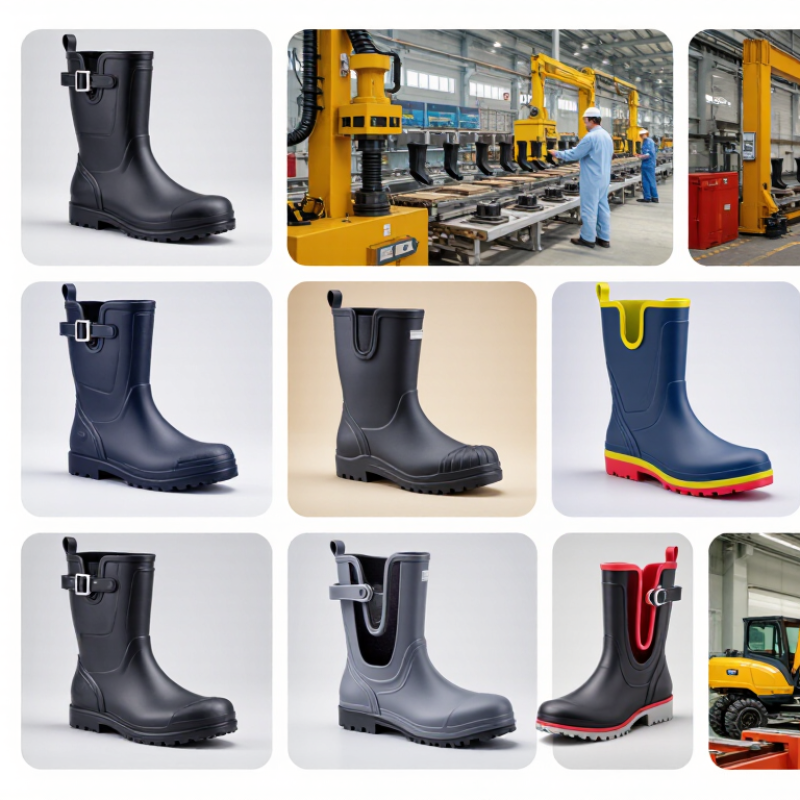
China Top 10 Rubber Dust Boot Suppliers for Global Buyers

What Rubber Dust Boots Are and Why Global Buyers Need Them

Rubber dust boots are flexible protective covers fitted over moving joints, shafts, bearings, and steering components. Their bellows-shaped walls expand during movement while blocking dust, water, grit, and road salt. Inside, grease stays cleaner, reducing friction and premature wear. A small split can cause expensive damage.

Global buyers need these boots because machines often work in harsh and changing environments. Agricultural equipment faces mud and fertilizer. Construction vehicles meet sharp stones and heavy vibration. Passenger vehicles experience heat, cold, and road moisture. The right boot must match shaft diameter, travel range, rubber compound, and mounting method. NBR suits oil exposure, while EPDM performs better against weather and ozone. Material choice needs testing, not guesswork.

For buyers comparing Chinese suppliers, practical evidence matters more than attractive catalogs. Request dimensional drawings, hardness reports, sample approvals, and batch traceability. Check the lip seal after repeated compression, not only its appearance. A boot may fit perfectly but crack under low temperatures. This detail is easy to miss. Packaging also deserves attention, because folded rubber can deform during long shipping. No specification is perfect; field feedback should refine the design after installation. Reliable suppliers explain these limits clearly and support consistent quality control.

How China’s Top 10 Rubber Dust Boot Suppliers Are Selected

Selecting China’s top 10 rubber dust boot suppliers requires more than checking online catalogs. The process should combine factory evidence, product testing, and export performance.

China ranked 19th among 139 economies in the World Bank’s 2023 Logistics Performance Index. This supports efficient shipping, but logistics alone cannot prove product quality.

ISO 9001’s 2022 survey recorded more than 1.2 million certified organizations worldwide, showing the value of structured quality systems.

A reliable selection begins with material verification.

Buyers should request rubber compound specifications, hardness results, tensile strength data, and aging tests. ISO 9001’s 2022 survey recorded more than 1.2 million certified organizations worldwide, showing the value of structured quality systems. Still, certification is only a starting point.

Auditors should inspect molding lines, trimming stations, storage areas, and batch records. A dusty warehouse can reveal more than a polished showroom.

Samples should fit real shafts and withstand repeated compression, oil exposure, heat, and road debris.

Supplier scoring should include defect rates, mold accuracy, response speed, packaging control, and documented inspection records.

Customs data can help verify export activity, although rubber dust boots are often grouped under broader HS 4016 categories. That limitation matters. It makes supplier comparisons less precise.

I would also review at least three recent production batches instead of trusting one excellent sample.

Small details count: uneven lips, trapped air marks, and loose packaging may become field failures.

The final list should favor manufacturers that explain weaknesses clearly, not those promising perfect performance.

Product Types, Materials, and Manufacturing Capabilities

China Top 10 Rubber Dust Boot Suppliers for Global Buyers

When comparing China’s top ten rubber dust boot suppliers, product type should match the working environment. CV joint boots need flexible bellows and strong tear resistance. Tie-rod and steering boots require precise sealing around small shafts. Hydraulic dust covers often need thicker walls and higher compression recovery. For motorcycles, compact boots must survive vibration, mud, and repeated bending.

Material choice changes service life. EPDM performs well against water, ozone, and weather. Nitrile rubber suits oils and many automotive fluids. Chloroprene offers balanced resistance for outdoor applications. Thermoplastic elastomers can reduce weight and improve automated assembly. The International Rubber Study Group reported global rubber demand at about 31 million tonnes in 2023, showing the scale of material competition and supply pressure. Buyers should request compound data, not rely on “premium rubber” claims.

Manufacturing capability separates a catalog seller from a dependable supplier. Strong factories usually provide compression molding, injection molding, trimming, flash control, and mold-flow review. Ask for hardness results, tensile strength, elongation, and low-temperature testing. ISO 9001 systems help, but they do not replace sample inspection. The Freedonia Group has identified automotive components as a major driver of molded rubber demand, while tighter vehicle packaging increases dimensional demands. Small defects matter. A boot with uneven ribs may crack early. No supplier profile is perfect. Pilot batches, PPAP-style documents, and real vehicle testing reveal what polished quotations hide.

Quality Standards, Customization, Pricing, and Export Services

China Top 10 Rubber Dust Boot Suppliers for Global Buyers

Selecting China’s top ten rubber dust boot suppliers requires more than comparing quotations. Industry reports from Smithers indicate that global demand for rubber components continues to rise with vehicle production and industrial maintenance. Buyers should verify ISO 9001 systems, material traceability, and dimensional controls under ISO 3302-1. For automotive applications, IATF 16949 experience is valuable. ASTM D2000 testing can also clarify resistance to heat, oils, and ozone. Ask for compound data, not vague “premium rubber” claims.

Customization affects both performance and price. A supplier may adjust wall thickness, bellows geometry, hardness, color, and mounting rings. However, a new mold can add meaningful costs and several weeks. Small orders often carry higher unit prices.

Smithers’ rubber industry analysis also highlights pressure on manufacturers from energy, raw material, and logistics costs. Therefore, compare complete landed costs, including tooling, inspection, packaging, freight, and export documentation. The cheapest quotation is rarely the safest choice.

Look for suppliers providing pre-production samples, batch records, and inspection photographs. Export teams should understand Incoterms, pallet protection, carton labeling, and customs paperwork. Global trade data from the International Trade Centre shows the importance of accurate product classification for smoother cross-border transactions. Still, documents can contain errors. Review them carefully. My practical concern is often overlooked: a boot may pass laboratory tests but fail after repeated bending in dusty, cold conditions. Request application-based validation before approving mass production.

How Global Buyers Can Compare and Choose the Right Supplier

Global buyers comparing China’s rubber dust boot suppliers should begin with application details, not catalogue photos. Confirm shaft diameter, operating temperature, movement range, rubber compound, and expected service life. A supplier who asks precise questions usually understands the product better. A low quote can still mislead.

Request production samples from the same tooling used for mass orders. Check wall thickness with a gauge, then inspect the lip for cuts, uneven edges, and weak bonding. Ask for test data covering compression set, tensile strength, ozone resistance, and temperature performance. Independent testing adds confidence, especially when reports lack sample numbers or test dates. Small details matter.

Evaluate factory capability beyond price. Review mold control, incoming material checks, batch identification, and final inspection records. Confirm minimum order quantity, tooling ownership, lead time, packaging, and replacement procedures in writing. Clear communication is valuable when dimensions change late. It also reveals weak planning. Ask for photos or videos of actual production, but do not treat images as proof. A live video audit or third-party inspection offers stronger evidence. Compare at least three suppliers using the same checklist. Consider total cost, not only the unit price, because rejected batches and delayed shipments can erase an apparent saving. Even a careful checklist has limits. Recheck assumptions before signing.

China Top 10 Rubber Dust Boot Suppliers for Global Buyers - How Global Buyers Can Compare and Choose the Right Supplier

Anonymous Supplier Profile Typical Material Capability Common Product Range Customization Capability Typical MOQ Typical Production Lead Time Quality Documentation to Request Relevant Standards and Compliance Best Fit for Global Buyers Key Verification Point Buyer Score
Profile 01
High-volume molded-parts supplier
NBR EPDM NR
Shore A 50–90
Automotive CV-joint, steering, actuator and cable dust boots; standard and custom geometries 3D drawing review, mold design, gate optimization, color matching and dimensional revisions 1,000–5,000 pieces per size 25–45 days after tooling approval Material TDS, lot traceability, dimensional report, hardness report and sample approval record ISO 3302-1 dimensional tolerances; REACH and RoHS declarations when applicable OEM replacement programs and repeat export orders Confirm cavity count, mold ownership and process-capacity evidence ★★★★☆
Profile 02
Small-batch customization supplier
NBR CR Silicone
Shore A 40–80
Low-volume protective boots, bellows, grommets and non-standard sealing covers Strong prototype support; rapid drawing changes; compression-molded and transfer-molded options 200–1,000 pieces per size 20–35 days for samples; 30–50 days for production Prototype inspection report, first-article report, material certificate and test samples ISO 9001 commonly requested; confirm application-specific chemical restrictions Engineering trials, aftermarket launches and mixed-size orders Check whether prototype tooling fees are separate from production tooling ★★★★☆
Profile 03
Automotive-focused supplier
NBR HNBR EPDM
Oil- and heat-resistant compounds
Driveshaft, CV-joint, rack-and-pinion and suspension dust boots Application-based compound selection, dynamic testing and fitment validation 2,000–10,000 pieces per part number 35–60 days after approved samples PPAP-style documentation, material batch records, capability data and endurance-test results IATF 16949 may be available; verify current certificate scope and validity Automotive distributors and structured aftermarket programs Request temperature, oil-resistance and flex-fatigue test conditions ★★★★★
Profile 04
Export-oriented standard-range supplier
NR NBR EPDM
Standard black compounds
Catalog dust boots for common mechanical assemblies and industrial equipment Limited geometry changes; private packaging and size assortment options 500–3,000 pieces per size 15–30 days for stocked items; 30–45 days for new orders Product specification sheet, packing list, inspection checklist and certificate of origin REACH and RoHS statements should be confirmed per material formulation Importers seeking competitive pricing and short replenishment cycles Verify actual stock levels, carton dimensions and export packing performance ★★★★☆
Profile 05
Precision-tolerance supplier
NBR FKM EPDM
Shore A 60–90
Small-diameter boots, precision seals, sensor covers and compact actuator protection Tight dimensional control, automated inspection and custom lip or groove profiles 1,000–5,000 pieces per size 35–55 days including tooling and sample validation Full dimensional layout, hardness mapping, visual standards and batch traceability ISO 3302-1 tolerance class must be agreed in the purchase specification Applications where sealing performance and repeatability are critical Review measurement-system capability and critical-dimension records ★★★★★
Profile 06
Heavy-duty industrial supplier
EPDM NBR CR
Reinforced and thicker-wall options
Hydraulic rod boots, industrial linkages, construction equipment and outdoor machinery Thick-wall designs, fabric reinforcement, venting features and high-abrasion formulations 500–2,500 pieces per size 30–50 days after design confirmation Tensile and elongation data, abrasion results, hardness report and environmental test records ISO 37 test methods are commonly used for tensile properties; confirm test laboratory details Construction, agricultural and industrial equipment applications Verify compression set, abrasion and ozone-resistance results for the intended environment ★★★★☆
Profile 07
Rapid-sampling supplier
NBR TPU Silicone
Prototype-friendly elastomers
Prototype dust boots, development parts and short-run protective covers Fast 3D quotation, soft tooling, 3D-printed master patterns and sample iteration 50–500 pieces for development orders 7–15 days for prototypes; 20–35 days for production Prototype measurement report, material identification and sample approval form Confirm whether prototype material matches the intended production compound R&D teams and buyers validating new product designs Check production-equivalent tooling, material and curing conditions before approval ★★★★☆
Profile 08
Material-specialist supplier
FKM HNBR Silicone
High-temperature and chemical-resistant options
Dust boots for elevated-temperature, fuel, lubricant and chemically demanding applications Compound formulation support, specialty colors and application-specific performance testing 1,000–5,000 pieces per size 40–65 days, depending on compound availability Compound data sheet, temperature range, chemical-resistance data and batch certificate Application-specific compliance must be confirmed; do not assume all compounds meet the same regulations Engine compartments, industrial chemicals and demanding operating environments Validate long-term compatibility with the exact fluid, temperature and exposure cycle ★★★★★
Profile 09
Private-label packaging supplier
NR NBR EPDM
Standard aftermarket compounds
Retail-ready dust boot kits, assorted sizes and replacement-service packages Custom labels, barcodes, instruction sheets, kits and export carton design 500–2,000 kits or pieces per SKU 25–45 days, excluding packaging artwork approval Barcode verification, packing inspection, product specification and final inspection report Packaging, labeling and market-specific documentation should be approved before shipment Automotive parts distributors, e-commerce sellers and retail chains Confirm kit contents, labeling language, barcode ownership and packaging drop-test expectations ★★★★☆
Profile 10
Integrated molding and assembly supplier
NBR EPDM CR
Rubber and metal-plastic assembly capability
Dust boots supplied with clamps, retaining rings, grease packs or mounting components Subassembly design, component sourcing, automated or manual assembly and kit consolidation 1,000–5,000 complete kits 35–60 days after component approval Assembly inspection, component certificates, torque records and finished-kit traceability Confirm supplier responsibility for all components and applicable material declarations Buyers seeking a single-source finished repair kit Audit incoming-component controls and verify assembly-line error-proofing methods ★★★★☆

Buyer note: The quantities, lead times and technical ranges shown are indicative industry benchmarks for China-based rubber dust boot sourcing, not claims about any individual company. Buyers should verify current quotations, certifications, test conditions, tooling terms, material formulations and export capabilities directly before placing an order.