
Sourcing an Aniaml Specimen for education is not simply a matter of finding an attractive object. A classroom may need a durable teaching aid, while a museum may require documented scientific provenance. The right choice depends on learning goals, student age, storage conditions, and institutional policy. Start with a clear purpose. A preserved fish, insect, or mammal skull can support different lessons, but each requires suitable handling and care.
Reliable sourcing begins with traceable information. Ask suppliers how specimens were obtained, whether collection and trade are permitted, and what records accompany each item. Request invoices, origin details, and relevant permits when applicable. Rules vary by location and species, so check with your institution and the appropriate authorities before purchasing. Avoid items with unclear origins or claims that cannot be verified. That uncertainty matters.
Consider animal welfare and conservation, too. Prefer ethically sourced, legally documented specimens, such as responsibly managed educational collections or materials from established institutions. Check preservation chemicals, packaging, and safety instructions before bringing an item into a classroom. A low price is not enough. Neither is a polished product description.
There is no perfect option in every setting. Some specimens may be unsuitable for younger learners, and digital models may serve a lesson better. Compare cost, durability, accessibility, and maintenance needs. Keep records of the decision and review them as teaching needs change. Careful sourcing protects learners and supports trustworthy education.
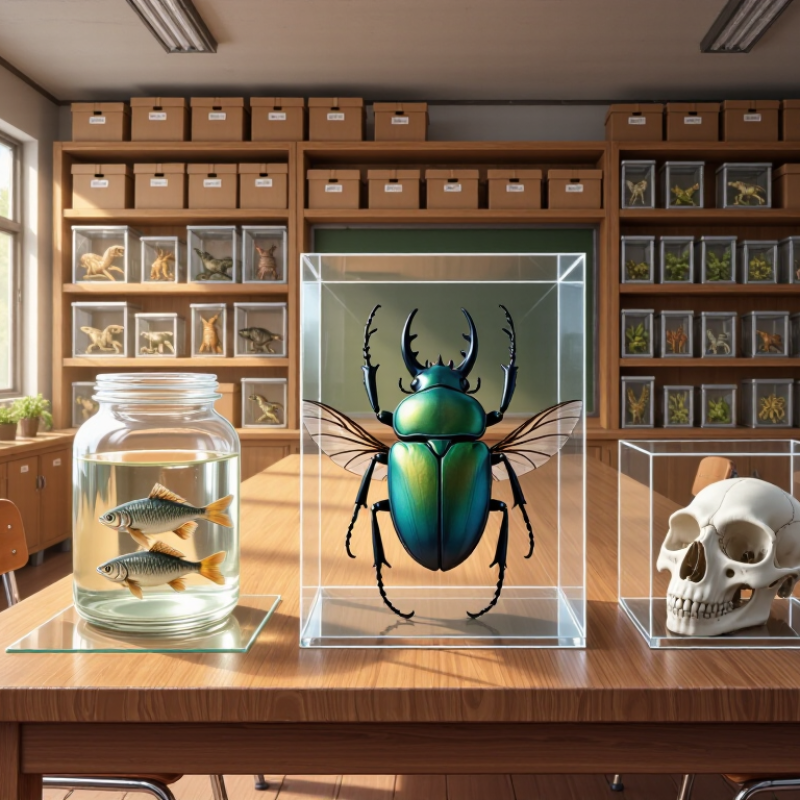
Before requesting any animal specimen, write down what learners should observe or practice. A unit on skeletal adaptation may need a labeled bone, while a lesson on feather structure may work better with a small, intact sample. Keep the learning goal specific. “Show biodiversity” is too broad to guide a useful purchase or donation request. Start with the classroom activity.
List the required features: species or broad group, body part, size, condition, preservation method, and number of pieces. Decide whether students will handle the item or view it behind glass. A fragile insect may need a sealed display; a durable replica can support repeated handling. Check storage space, ventilation needs, and age-related safety concerns before selecting preserved material. Small details matter.
Ask potential suppliers for collection history, identification notes, and documentation showing responsible sourcing. Prefer specimens from established educational collections, approved donations, or other traceable sources; avoid unclear origins. Match documentation to your institution’s policies and local requirements. A planning mistake is choosing an impressive specimen before confirming its teaching value. The urge is understandable. If the purpose remains uncertain, pause and consult a curator or qualified educator. The better choice may be a photograph or model.
Choose specimens around the lesson, not the display case. A dry-mounted skull or ethically sourced feather can teach visible structure without fluid storage. For soft anatomy, a professionally prepared, fluid-preserved specimen retains features that drying can distort. Use sealed, compatible containers, clear labels, and storage conditions recommended by a qualified collections professional. Labels matter. Record the specimen’s identity, source, date, and preservation method; incomplete records weaken its educational value.
The 2022 Living Planet Report found an average 69% decline in monitored vertebrate population sizes since 1970. This measures population trends, not species lost, but it is a strong reason to avoid unnecessary collection. Prefer documented teaching collections, responsible institutional sources, or high-quality replicas when a specimen’s origin is uncertain. One trade-off is easy to miss: a polished dry mount may be durable, yet it cannot show the texture or internal detail students need. No single method preserves everything.
Tips: Match method to lesson. Choose dry preparations for external form and fluid-preserved examples for soft tissues. Check labels before class, and use replicas or images when provenance is unclear. Keep it simple. Rotate fragile specimens out of repeated handling, and follow your institution’s storage and safety guidance.
Choose suppliers who document where each specimen came from and how it was obtained. Request the scientific name, collection or acquisition date, source type, and a traceable invoice. Ask for evidence. Depending on the species and location, confirm that required permits and transport documents are in place, including CITES documentation where applicable. The IUCN Red List’s October 2024 summary recorded 163,040 assessed species, of which 45,300 were threatened. That is a strong reason to screen species carefully, not rely on a seller’s “common” label.
Prefer documented captive-bred material or specimens recovered through lawful, verifiable channels. Check that the supplier’s records match the specimen label; a neat label alone proves little. WWF’s Living Planet Report 2024 found an average 73% decline in monitored vertebrate wildlife populations between 1970 and 2020. The figure does not measure specimen trade, but it reinforces the need to avoid poorly documented wild collection. Keep copies of records with teaching materials, and review them when specimens change hands. Paperwork can still be incomplete. If origin or legal status cannot be verified, pause the purchase and ask an institutional compliance officer or relevant wildlife authority before proceeding.
Before ordering an animal specimen, ask how it was obtained and who handled it. Request a dated provenance record that identifies the species, source, collection location, and transfer history. For wild-origin material, verify which collection, transport, import, or display permits apply in each relevant jurisdiction. Ask the supplier to provide copies, not just verbal assurances. Paperwork can look complete and still leave gaps.
Request health documentation from a qualified veterinarian or appropriate authority. It should describe the specimen’s condition, preservation method, and any relevant treatment or handling precautions. Check that labels match the records and that packaging arrives sealed and intact. If details conflict, pause use and keep the specimen away from students while you clarify the discrepancy. Small mismatches matter.
Tips: Keep a checklist with permit numbers, dates, and contact details for the issuing authority. Store records alongside the specimen, but separately from chemicals or wet-preservation materials. If a document is unclear, ask for written clarification. I have found that this step can feel slow, yet guessing is worse. Do not accept a specimen when its origin or safe handling cannot be reasonably verified.
Verify provenance, permits, and health documentation before acquisition.
Checklist counts summarize the suggested checks shown: provenance (source, acquisition record, and chain of custody); permits (applicable permits and restrictions); health documentation (veterinary records, health screening, and handling or preservation information); and transport (shipping records and applicable transport conditions). This is a planning framework, not a statement of legal requirements. Requirements vary by species and jurisdiction; verify them with the relevant authorities.
Choose specimens with traceable provenance and clear handling records. Ask the supplier for preservation details, container requirements, and any known hazards. If the history is unclear, pause the purchase. A low price is not worth an undocumented risk.
Plan the journey before dispatch. Use a rigid, leak-resistant secondary container, cushioning, and a clear handling label; follow the supplier’s instructions and the carrier’s requirements. Keep specimens away from food, direct sunlight, and temperature swings.
On arrival, check for damage without opening the container, then record its condition and storage location. Keep it boring. Store items in a secure, clearly labeled area, using the temperature and humidity guidance provided for that specimen.
For lessons, display specimens behind a sealed barrier when possible, and explain their origin and care. NIOSH’s Preventing Asthma in Animal Handlers reports that up to 33% of workers exposed to laboratory animals develop allergies. That figure concerns live-animal workplaces, not preserved teaching specimens, but it supports minimizing dust and unnecessary handling.
Use gloves when the supplier’s instructions call for them, and wash hands after activities. Less handling is better. A label can be incomplete; check it rather than assuming.