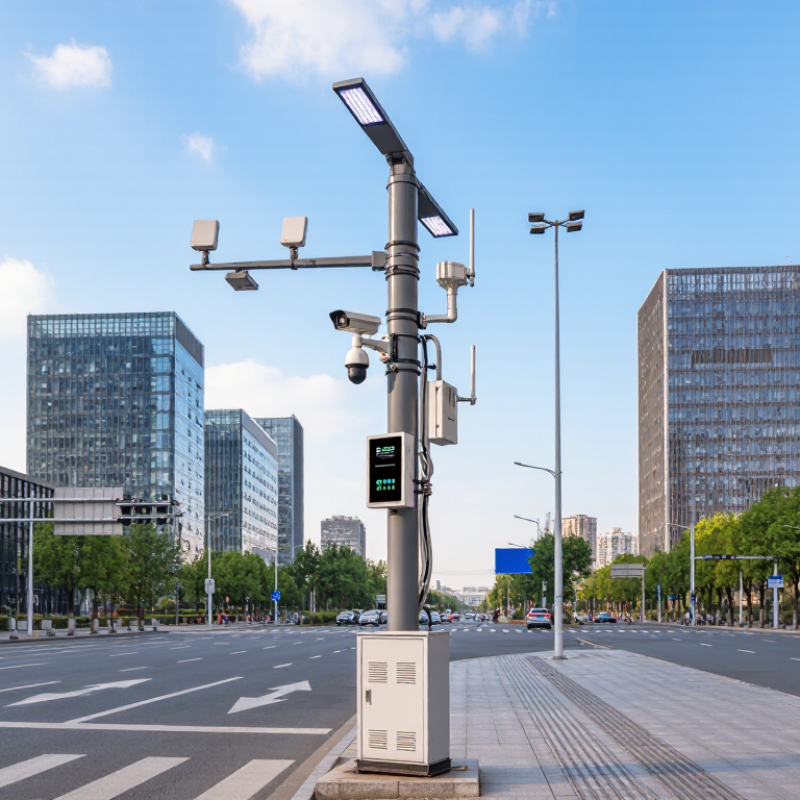
| 1. Detection | The pole collects measurements or events from its surroundings and connected equipment. | Possible equipment includes light sensors, motion or presence sensors, environmental sensors, cameras, and electrical meters. | A light sensor reports ambient brightness; a power meter reports energy use or an electrical condition. | Sensors and capabilities vary by installation. Camera use can require privacy safeguards and appropriate authorization. |
| 2. Data Collection | A controller gathers sensor readings and equipment status, often with timestamps and device identifiers. | Embedded controllers, communication interfaces, and status signals from connected lights or other devices. | Readings are organized into events or periodic measurements for local processing or transmission. | Sampling frequency, data format, and retention depend on the system design and operating requirements. |
| 3. Communication | The pole shares selected data with a local controller or a remote management platform and can receive commands in return. | Wired or wireless links, such as Ethernet, cellular, or other network technologies selected for the deployment. | A status update is sent to an operator interface, or a control instruction is delivered to a compatible device. | Coverage, latency, reliability, security, and network availability affect communication performance. |
| 4. Analysis | Rules or software evaluate readings against configured thresholds, schedules, or operating conditions. | Controller logic, management software, historical measurements, and configured operating rules. | The system may identify that ambient light is low, a device is not responding, or a reading needs review. | Automated decisions depend on data quality and configuration; an alert does not by itself confirm the cause of a fault. |
| 5. Response | When a configured condition is met, the system can adjust a compatible device or notify an operator. | Dimmable lighting controls, switching equipment, alarm functions, and operator notification tools. | Street lighting may be dimmed or brightened according to a schedule or sensor input; a detected fault may generate an alert. | Actions must follow local requirements and be supported by the installed equipment and control configuration. |
| 6. Verification and Feedback | The system checks subsequent status or measurements to determine whether a command appears to have taken effect. | Device acknowledgements, updated status reports, meter readings, and maintenance records. | A successful status update can close an event; a missing response can trigger another alert or a service request. | Feedback can reveal a communication or equipment issue, but inspection may still be needed to diagnose it. |
| System Purpose | An intelligent pole is a street or area-lighting pole equipped with connected technologies that can support monitoring, communication, and control. | Depending on the project, it may combine lighting controls with communications equipment or environmental and traffic-related sensors. | One pole can provide several infrastructure functions, subject to its installed equipment and network connection. | There is no single standard configuration; features differ between deployments. |