
+1 877-337-9312 | sale@sflbuild.com

Blog

How to Find a Top China Aluminum Composite Panel Exporter?

Finding a reliable Aluminum Composite Panel Exporter requires more than comparing prices on a product page. The right supplier should demonstrate stable production, verified materials, export experience, and clear technical documentation. Fire performance matters, especially for façade projects, where panel core selection can affect safety, approvals, and insurance requirements.

Market research shows strong demand, but published figures are not identical. Grand View Research estimated the global aluminum composite panels market at approximately USD 6.3 billion in 2023, with continued growth expected through 2030. Fortune Business Insights reported a lower 2023 value, reflecting different market definitions and research methods. That difference deserves attention. It reminds buyers to question attractive claims and examine the original report scope.

Look beyond the catalogue.

Heidi Brock, President and CEO of The Aluminum Association, has stated, “Aluminum is infinitely recyclable.” This principle supports long-term material value, but recyclability alone does not prove product quality. A capable Aluminum Composite Panel Exporter should provide alloy details, coating specifications, core composition, and batch-level quality records. Buyers should also request fire-test evidence, such as EN 13501-1 or ASTM-related documentation, when applicable to the destination market.

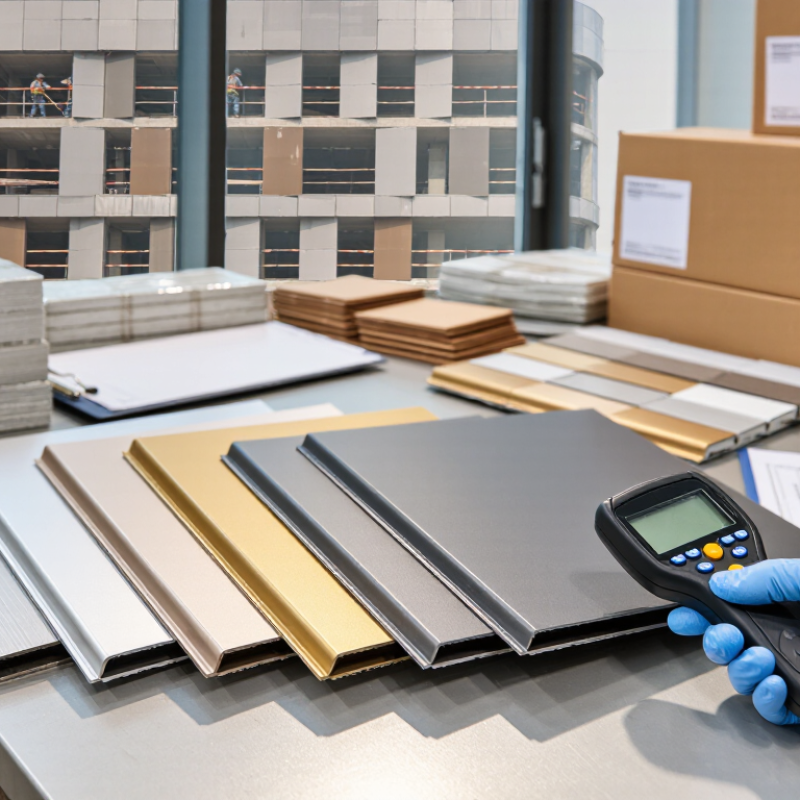
A practical evaluation includes factory photographs, sample checks, coating thickness testing, and references from comparable building projects. Ask how the exporter handles color consistency, packaging damage, replacement panels, and delivery delays. Small details often reveal operational maturity.

No supplier is perfect.

Therefore, this guide examines how to verify manufacturing capability, assess certificates, compare quotations, and identify warning signs before signing an international purchase agreement.
How to Find a Top China Aluminum Composite Panel Exporter?

Define the Role of a China Aluminum Composite Panel Exporter

How to Find a Top China Aluminum Composite Panel Exporter?

A China aluminum composite panel exporter is more than a seller with overseas shipping access. The exporter connects factories, architects, contractors, and importers through one accountable process. In practice, this role includes material selection, production coordination, inspection, packaging, documentation, and delivery tracking. A reliable exporter should explain core details clearly, such as panel thickness, aluminum skin gauge, coating type, fire-performance data, and available surface finishes.

Ask how quality is checked before shipment. Experienced exporters can provide batch photographs, inspection records, sample approvals, and packing details. They should also understand container loading, moisture protection, and destination-port procedures. A useful exporter will not promise that every project is effortless. Some specifications may need adjustment after reviewing drawings, climate conditions, or installation methods. That honesty matters. I have seen attractive samples fail when the protective film, edge treatment, or color tolerance was ignored.

Tips: Request a physical sample and technical datasheet before ordering. Compare the approved sample with production panels, not only digital images. Confirm tolerance ranges, warranty conditions, replacement procedures, and export documents in writing. Ask for a realistic production schedule. Fast answers are helpful, but accurate answers are better. Also, verify whether the exporter can coordinate custom colors, standard sizes, and small trial quantities. A dependable partner communicates early when a problem appears, even if the update is uncomfortable. That is part of professional export service.

Verify Product Quality, Certifications, and Manufacturing Standards

How to Find a Top China Aluminum Composite Panel Exporter?

A reliable exporter should prove product quality with clear, current documentation. Request technical data for aluminum thickness, panel dimensions, coating type, core composition, and peel strength. Do not rely on attractive samples alone. Compare the sample with the stated specifications, then check surface flatness, color consistency, edge quality, and protective film adhesion.

Ask for test reports from qualified, independent laboratories. Fire performance may follow standards such as EN 13501-1 or ASTM E84, depending on the destination market. Confirm the report matches the exact panel structure, not a similar model. Verify ISO 9001 certification through the issuing organization, including its scope and expiration date. Environmental and occupational certificates can also reveal how seriously the factory manages production.

Visit the manufacturing site when possible, or arrange a live video inspection. Look for automated coating lines, controlled curing temperatures, core bonding equipment, and organized storage. Ask how each batch receives a production code and how complaints are recorded. A professional supplier should explain its incoming material checks and final inspection process without hesitation. Still, certificates are not proof of perfect shipments. I once overlooked packaging details because the test file looked complete. The panels arrived with damaged corners. Request loading photos, moisture protection, corner guards, and a pre-shipment inspection. Small checks matter.

Assess Export Experience, Capacity, and International Market Coverage

Finding a reliable China aluminum composite panel exporter requires more than comparing online prices. Assess proven export experience through shipment records, product documentation, and client references from different regions. Ask for evidence. A polished website is not proof.

Review the exporter’s production capacity carefully. Check whether its lines can maintain stable panel thickness, coating color, core quality, and flatness during large orders. Request a realistic production schedule, not an attractive promise. Factory videos help, but a live inspection or independent audit offers stronger evidence. Examine sample panels for surface consistency, edge quality, protective film adhesion, and packaging strength. Small defects often become expensive after installation.

International market coverage also reveals operational maturity. An experienced exporter should understand regional packaging needs, port procedures, labeling rules, and common building specifications. Confirm its ability to provide export documents, inspection reports, technical data sheets, and secure container loading photos. Ask how it handles damaged goods, delayed vessels, and replacement decisions. The answer may expose weaknesses. Do not rely only on years in business; compare recent orders, repeat customers, available capacity, and communication records. A dependable supplier explains limitations clearly and keeps specifications consistent from sample approval to final shipment.

How to Find a Top China Aluminum Composite Panel Exporter? - Assess Export Experience, Capacity, and International Market Coverage

Assessment Dimension Measurable Indicator Recommended Screening Benchmark Evidence to Request Suggested Weight
Export Experience Years of documented aluminum composite panel exports At least 5 consecutive years of verifiable export activity Redacted bills of lading, customs records, export invoices, and customer references 15%
Export Order Consistency Regularity of international shipments Documented shipments in at least 3 of the previous 4 quarters Quarterly shipment summaries with customer and commercial details masked 10%
Production Capacity Annual panel production capacity and utilization Capacity should exceed forecast demand by approximately 20% to 30% Production-line list, capacity statement, utilization data, and recent audit report 15%
Product Configuration Panel thickness, aluminum skin thickness, core type, and coating system Common configurations should include 3 mm, 4 mm, and 6 mm panels, subject to project requirements Technical datasheets, cross-section drawings, material declarations, and approved samples 10%
Quality Management Documented quality-control system Valid ISO 9001 certification or an equivalent independently audited system Current certificate, certification scope, audit date, and corrective-action records 10%
Fire Performance Fire classification appropriate for the destination market Test documentation should reference the applicable standard, such as EN 13501-1 or ASTM E84 Reports from accredited laboratories identifying the exact panel construction tested 15%
International Market Coverage Number and diversity of regularly served export regions Active sales or shipment history across at least 3 major regions Redacted shipping records, regional compliance files, and destination-specific packaging examples 10%
Logistics Capability Ability to manage export packaging, documentation, and delivery terms Clear support for standard Incoterms such as FOB, CIF, and DAP, where commercially suitable Sample commercial invoice, packing list, certificate-of-origin process, and packaging specification 5%
Lead-Time Reliability Production and dispatch performance against confirmed orders Documented on-time shipment rate of at least 95% over the latest 12-month period Anonymized order-performance report and references from comparable buyers 5%
After-Sales Support Handling of claims, replacement panels, and technical inquiries Written claim procedure, defined response time, and traceable batch records Warranty terms, quality-claim form, corrective-action example, and batch-traceability procedure 5%
Total Evaluation Weight 100%
Evaluation note: Treat the benchmarks as supplier-screening thresholds rather than company claims. Verify every figure against current, product-specific documents and independent laboratory or audit records.

Compare Pricing, Customization, Packaging, and Delivery Services

How to Find a Top China Aluminum Composite Panel Exporter?

Price comparison should begin with equal specifications, not attractive headline figures. Request quotes for the same panel thickness, aluminum skin gauge, coating type, core grade, color, and order quantity. A reliable exporter explains what each cost includes, such as tooling, sampling, export packing, and inland transport. A low quote can hide thinner aluminum or weaker surface protection. Not every bargain is a bargain.

Customization also deserves careful checking. Ask whether the exporter can match color references, panel dimensions, folding requirements, and cutting tolerances. Request a physical sample before approving mass production. Keep drawings, tolerances, and inspection standards in writing. Small details matter. A missed edge requirement may delay installation and create unnecessary waste.

Tips: Compare packaging photos and loading plans, not only promises. Strong export cartons, corner protection, moisture barriers, and labeled bundles reduce damage during handling. Confirm delivery schedules using production time, port congestion, and customs documents. Ask for a realistic shipping window rather than a perfect date. Independent pre-shipment inspection can improve confidence, although it adds cost. Evaluate communication, too. Slow replies today may become serious delays after payment. A detailed quotation and clear corrective process often reveal more than polished sales language.

How to Find a Top China Aluminum Composite Panel Exporter

Use these practical procurement weights to compare exporters objectively. Pricing, customization, packaging, and delivery should be assessed together rather than evaluated by unit cost alone.

Evaluate Communication, Contracts, Samples, and After-Sales Support

How to Find a Top China Aluminum Composite Panel Exporter?

Communication reveals more than a polished website. Ask for written replies within an agreed time. Check whether technical questions receive precise answers. A reliable exporter should confirm alloy, panel thickness, core type, coating, color tolerance, and fire-performance requirements. The International Aluminium Institute reported about 70.6 million tonnes of primary aluminum production in 2023. Large supply does not guarantee consistent panel quality.

Contracts should describe every measurable detail. Include dimensions, tolerances, packaging, inspection methods, delivery terms, and remedies for defects. Request recent test reports from independent laboratories. Verify that the reports match the proposed panel structure. Sample evaluation matters too. Cut one sample edge. Inspect coating uniformity, flatness, protective film, and bonding. Compare samples from different production batches when possible. A perfect sample can hide inconsistent manufacturing.

After-sales support needs evidence, not promises. Ask who handles claims, how quickly responses begin, and which documents are required. Request a realistic case procedure for dents, color variation, or delamination. The World Bank Commodity Markets Outlook has repeatedly highlighted commodity price volatility, which can pressure material choices and delivery planning. Confirm whether substitutions require written approval. In my own checks, I once focused too heavily on price and overlooked packaging details. That mistake was expensive. Leave room for doubt. A dependable exporter accepts questions, records changes, and keeps responsibility visible after shipment.