
+1 877-337-9312 | sale@sflbuild.com

Blog

How to Choose the Right Inverter Outlet for Global Sourcing?

Choosing the right Inverter Outlet for global sourcing requires more than comparing prices and product photos. Buyers must match the outlet with local voltage, frequency, plug configuration, grounding, and expected load. A model designed for a 120-volt market may perform poorly in a 230-volt environment. Small details matter, too. Check terminal quality, housing material, heat resistance, and protection against overloads or surges.

Experience shows that product specifications often look clearer than they are. Some suppliers list maximum output without explaining continuous performance. Others provide attractive samples but weak packaging or inconsistent assembly. Ask for technical datasheets, wiring diagrams, test reports, and traceable quality records. Independent laboratory testing can help verify safety and performance claims. Supplier audits also reveal practical issues, such as loose terminals, unclear labels, or poor carton protection.

Never rely on one document.

The sourcing decision should also consider installation conditions. A workshop, hotel room, vehicle, and outdoor cabinet may require different outlet designs. Confirm IP ratings where moisture or dust is present. Review temperature limits, cable compatibility, and user instructions before placing a large order. Regional certification expectations must be checked with qualified local professionals, because requirements differ across markets and product categories. A compliance mark alone does not prove every claim.

A lower quotation may still be useful, but only after its risks are understood. Even experienced buyers can miss a hidden limitation during a fast sourcing cycle. Build a sample-testing stage, record acceptance criteria, and negotiate corrective actions in writing. The best Inverter Outlet is not simply the cheapest option. It is the one that remains safe, reliable, and supportable across its intended market.
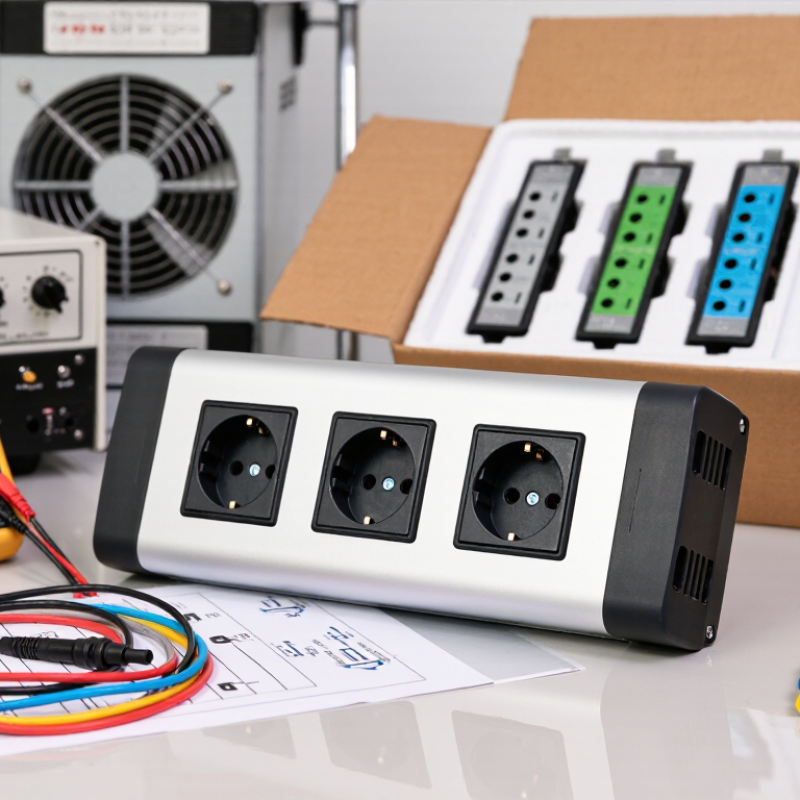
How to Choose the Right Inverter Outlet for Global Sourcing?

Define the Inverter Outlet’s Intended Application and Operating Environment

Before sourcing an inverter outlet, define what it must power and where it will operate. A portable backup unit may serve laptops and lights, while a workshop outlet may face motor surges and continuous loads. The required voltage, frequency, rated current, waveform, and grounding method must match the connected equipment. A convenient socket can still be unsuitable.

The operating environment is equally important. Outdoor solar systems may face rain, dust, salt air, ultraviolet exposure, and wide temperature swings. Check the enclosure rating under IEC 60529, not just the product description. Also verify derating above the stated temperature and altitude.

Small details matter. A loose connection can become a hot connection.

Global demand makes this decision less theoretical. IRENA’s Renewable Capacity Statistics 2024 reported 1,419 GW of installed solar capacity worldwide at the end of 2023. IEA PVPS also reported more than 400 GW of new photovoltaic capacity in 2023. These systems operate across homes, farms, vehicles, and remote facilities. Their outlet requirements are not interchangeable.

For sourcing, request test records, continuous-load data, surge capability, ingress protection, and temperature limits. One overlooked issue is compatibility between the inverter’s neutral configuration and the destination electrical system. It deserves confirmation before purchase. A supplier’s datasheet may omit practical installation limits, so sample testing under the real load remains valuable.

Verify Voltage, Frequency, Current, and Power Compatibility

How to Choose the Right Inverter Outlet for Global Sourcing?

Verify Voltage, Frequency, Current, and Power Compatibility

When sourcing an inverter outlet, start with the destination country’s voltage and frequency. An outlet designed for 120 volts may damage a 230-volt appliance. Frequency matters too. Motors, timers, and some chargers can behave poorly when 50 hertz replaces 60 hertz.

Check the outlet’s continuous current rating, not only its maximum label. Calculate power with this formula: watts equals volts multiplied by amps. Leave practical headroom for startup surges from pumps, compressors, and power tools. A 1,000-watt load may briefly demand much more power. It happens quickly.

In one sourcing review, the listed wattage looked sufficient, but the inverter’s surge rating was missing. That gap delayed testing. Do not rely on a product title alone. Request the datasheet, wiring diagram, temperature limits, and test reports. Confirm whether the stated output is continuous or peak power. Also inspect the plug configuration, grounding method, and protection against overload or overheating.

Test a production sample under the real load. Measure voltage and frequency with calibrated instruments, then repeat the test after warming the unit. Small fluctuations may appear. I once treated a stable idle reading as proof of compatibility; that was too optimistic. Ask an independent laboratory or qualified electrical engineer to review uncertain results, especially when local certification requirements differ.

Compare Outlet Standards, Plug Types, and Regional Requirements

How to Choose the Right Inverter Outlet for Global Sourcing?

Selecting an inverter outlet starts with the destination market, not the product catalogue. Outlet standards differ in shape, voltage, frequency, grounding, and safety requirements. A plug that fits physically may still operate incorrectly or create overheating risks. Check the target country’s approved voltage range and frequency before discussing samples with suppliers. Some regions use 100–120 volts, while others commonly use 220–240 volts. Frequency may also vary between 50 and 60 hertz. These details affect inverter performance, connected appliances, and testing procedures. Do not assume one universal outlet will satisfy every market.

Plug types also deserve practical attention. Compare pin layout, grounding method, shutter protection, cable entry, and outlet depth. In commercial sourcing, ask for dimensional drawings and independent test reports. Confirm whether the outlet needs a fused design, child protection, weather resistance, or a specific enclosure rating. Regional certification marks and import documentation should match the selling destination. Requirements can change, and online summaries may be incomplete. I have seen projects delayed because the plug fitted the socket but failed local inspection. That mistake is expensive.

Tips: Build a country-by-country comparison sheet. Record voltage, frequency, plug type, approval requirements, and packing labels. Request a working sample, then test it under realistic loads. Check heat after extended use. Leave room for uncertainty. Local testing advice is worth the extra cost.

Assess Safety Features, Certifications, Materials, and Durability

Global inverter demand is rising quickly. The International Energy Agency’s Renewables 2024 report recorded about 510 GW of new renewable capacity in 2023. That growth increases demand for reliable inverter outlets in homes, workshops, and outdoor installations.

Safety should guide supplier screening. Ask for test evidence against IEC 60884-1 for plugs and socket outlets. Inverter systems may also require IEC 62109 safety testing. A certificate alone is not proof. Verify the exact model, factory, voltage range, and test date. Confirm protection against overload, overheating, reverse connection, and accidental contact. Check whether the design includes shutters, grounding continuity, and strain relief. Small details matter.

Materials reveal long-term risk. Look for flame-retardant polycarbonate or PA66 housings, preferably with documented UL 94 ratings. Copper-alloy contacts should resist loosening after repeated plugging. For outdoor use, review the IP rating under IEC 60529, plus UV and moisture testing. The rating may not cover the entire assembled product. That is often missed. Durability claims should include cycle tests, temperature exposure, salt spray, and vibration results. IEC 60884-1 testing can provide a useful reference for mechanical endurance, but local conditions may be harsher. I would request production samples, inspect terminal pressure, and repeat basic load tests before placing a large order. Paperwork helps. Physical evidence decides.

How to Choose the Right Inverter Outlet for Global Sourcing? - Assess Safety Features, Certifications, Materials, and Durability

Assessment Dimension What to Check Recommended Benchmark or Evidence Global Sourcing Relevance Priority
Output Voltage Confirm the rated AC output voltage and allowable tolerance. The outlet rating must match the target market, such as approximately 100–127 V or 220–240 V AC, as specified for the destination country. Incorrect voltage can damage connected equipment or create an electric-shock and fire risk. Critical
Frequency Compatibility Check whether the outlet supplies 50 Hz, 60 Hz, or selectable frequency. Verify the inverter specification against the destination grid convention and the frequency requirements of the intended loads. Motors, clocks, transformers, and some appliances can operate incorrectly when the frequency is unsuitable. Critical
Outlet Configuration Select the plug and socket configuration required by the destination market. Confirm pin arrangement, grounding contact, rated current, shutter design, and compatibility with the applicable national plug standard. A mechanically compatible outlet may still be legally unsuitable or unsafe if grounding and local configuration requirements differ. Critical
Overload Protection Determine whether the inverter limits or disconnects output during excessive load. Look for documented overload shutdown, automatic recovery behavior, and a clearly stated continuous and peak power rating. Prevents overheating when connected loads exceed the outlet or inverter capacity. Critical
Short-Circuit Protection Check for electronic current limiting, circuit-breaker protection, or fuse protection. Request test results showing safe response to short-circuit conditions and confirmation that protective devices are correctly rated. Reduces the likelihood of conductor, outlet, and inverter damage during wiring or equipment faults. Critical
Grounding and Leakage Control Verify protective earth, neutral configuration, insulation, and leakage-current controls. Require wiring diagrams, dielectric-strength testing, insulation-resistance results, and a clear explanation of whether the output is floating or referenced to earth. Inverter output grounding may differ from utility power and can affect residual-current protection and connected equipment. Critical
Safety Shutters and Child Protection Check whether live contacts are inaccessible when the outlet is not correctly engaged. Choose a shuttered design where required by the target-market standard and verify finger-probe or equivalent access testing. Important for household, hospitality, educational, and public-use products. High
Applicable Certifications Identify the legal and market-access requirements for the destination country. Request certificates and test reports from an accredited laboratory. Depending on product type and market, relevant frameworks may include IEC 60884-1 for plugs and socket-outlets, IEC 62109 for power-converter safety, and regional conformity requirements. A certificate for a component does not automatically certify the complete inverter assembly; verify scope, model, ratings, and current validity. Critical
Housing Material Assess the enclosure and outlet faceplate material for heat, impact, and flame behavior. Prefer documented material specifications, suitable flammability performance, stable dimensions, and resistance to cracking under the intended temperature range. Material quality affects insulation, fire performance, mechanical safety, and service life. High
Contact Material Review the conductor and contact construction, including plating and spring retention. Check contact resistance, temperature-rise results, corrosion resistance, terminal tightness, and suitability for the rated current. Poor contacts can create localized heating, intermittent operation, and premature failure. Critical
Ingress Protection Match the enclosure and outlet protection to indoor, outdoor, dusty, or damp use. Use an IP rating only when the complete assembled product has been tested to the relevant ingress-protection requirements; a cover alone does not establish the rating. Outdoor and vehicle applications need better resistance to water, dust, condensation, and contamination. High
Temperature and Ventilation Check operating temperature, derating, cooling method, and clearance around the outlet. Require a thermal test report or specification showing continuous operation at the intended ambient temperature and load. Heat reduces component life and can loosen or degrade outlet contacts over time. High
Mechanical Durability Evaluate plug insertion and withdrawal endurance, impact resistance, and mounting strength. Request results for endurance cycling and mechanical-impact tests applicable to the outlet and complete product enclosure. Frequent plugging, transport vibration, and accidental impacts are common failure causes in portable equipment. High
Power Quality Determine whether the outlet supplies pure sine-wave or modified-wave output. Review waveform, total harmonic distortion, voltage regulation, and transient-response data under specified loads. Sensitive electronics, induction motors, medical equipment, and audio systems may require cleaner output. High
Markings and Documentation Verify ratings, warnings, wiring diagrams, installation instructions, and traceability. Labels should show voltage, frequency, current or power, polarity or grounding information where applicable, model identification, and required warnings. Complete documentation supports customs clearance, installation, after-sales service, and regulatory audits. High
Quality-Control Plan Confirm incoming-material inspection, production testing, sampling method, and shipment release criteria. Specify 100% functional and electrical-safety checks where appropriate, plus documented sampling based on an agreed quality standard and acceptance limit. A repeatable inspection plan reduces variation between production batches and destination-market returns. Important
Note: Applicable standards and certification requirements depend on the complete inverter design, intended installation, voltage system, outlet configuration, and destination market. Always confirm requirements with the relevant authority or an accredited testing laboratory before production or import.

Evaluate Supplier Capability, Customization, Quality Control, and Cost

How to Choose the Right Inverter Outlet for Global Sourcing?

Evaluate Supplier Capability, Customization, Quality Control, and Cost

Choosing an inverter outlet starts with the supplier, not the catalog photo. Ask about production capacity, engineering staff, tooling, and export experience. A capable supplier should explain current ratings, heat resistance, terminal design, and compatibility with your inverter system. Request recent inspection records and production samples. Small details matter. A loose terminal can create heat, noise, or failure after installation.

Customization may include socket shape, cable length, housing material, labeling, packaging, and plug configuration. Confirm which changes require new tooling and how they affect lead time. Quality control should cover incoming materials, assembly checks, electrical testing, insulation performance, and final inspection. Ask for traceable batch records. You should also verify testing against the destination market’s applicable standards. Documents alone are not enough. Inspect samples independently when the order is important.

Tips: Compare suppliers using the same checklist. Calculate landed cost, not only unit price. Include tooling, testing, freight, packaging, and possible rework. Visit the factory or arrange a third-party audit when practical. I have seen low quotations become expensive after repeated sample changes. A perfect comparison is rarely possible. Still, written specifications reduce avoidable surprises. Leave room for a pilot order before committing to large-volume production.

How to Choose the Right Inverter Outlet for Global Sourcing

Supplier evaluation benchmark across capability, customization, quality control, and cost competitiveness

The benchmark uses a 0–100 evaluation scale. Quality control receives the highest score because electrical safety, consistency, and compliance are essential for global sourcing. Supplier capability and customization indicate production flexibility, while cost competitiveness reflects pricing efficiency after considering quality and supply reliability.