
+1 877-337-9312 | sale@sflbuild.com

Blog

How to Choose a Graphite Clay Crucible?

Choosing a Graphite Clay Crucible is a practical decision, not a simple price comparison. The right vessel must suit the metal, furnace temperature, heating method, and pouring frequency. A crucible that works well for aluminum may perform poorly with copper or high-temperature alloys. Small differences matter. Wall thickness matters. Porosity matters too.

Dr. Hiroshi Tanaka, a refractory-materials engineer, offers a useful reminder: “A crucible should be selected for the process, not merely for the furnace.” This principle guides the questions explored in this article. What is the crucible made from? How much graphite does it contain? Was the clay properly bonded and fired? These details affect thermal shock resistance, oxidation behavior, heat transfer, and service life.

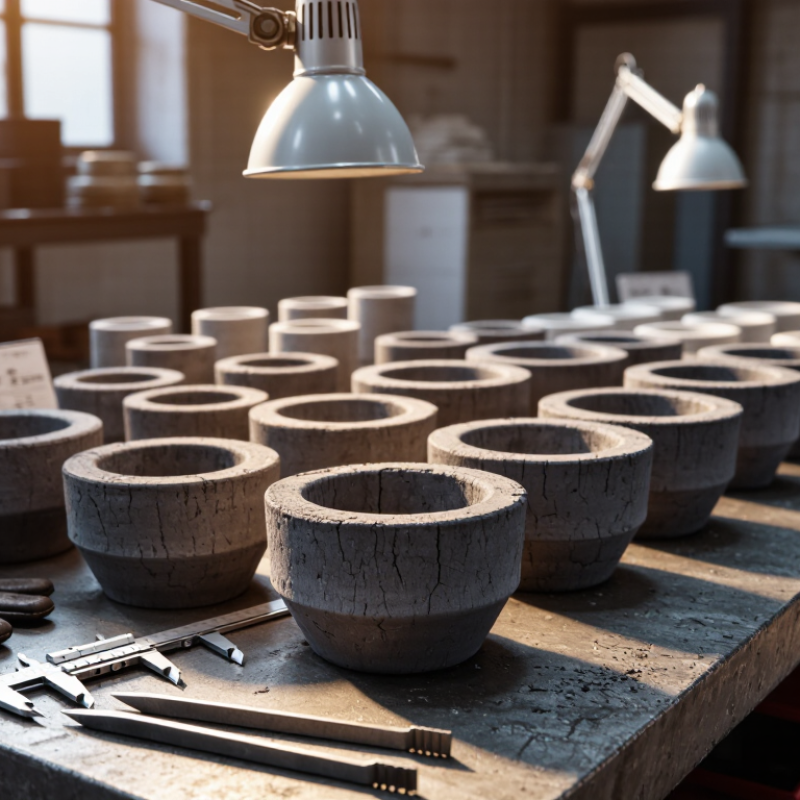
Look closely at the surface. A sound Graphite Clay Crucible usually has a dense, even finish without deep cracks, loose particles, or severe warping. Ask the supplier for maximum operating temperature, recommended metal types, heating limits, and storage instructions. Reliable manufacturers should provide consistent specifications and traceable quality information.

Still, no selection guide can remove every uncertainty. Actual performance depends on furnace atmosphere, operator habits, flux use, and repeated heating cycles. Even a premium crucible can fail when heated too quickly. That is easy to overlook.

A careful buyer compares technical data with real operating experience. Begin with a modest trial when conditions are unfamiliar. Record heating time, melt quality, surface changes, and cooling behavior. Those observations often reveal more than a brochure.
How to Choose a Graphite Clay Crucible?

Understanding Graphite Clay Crucible Composition and Properties

Choosing a graphite clay crucible starts with understanding its composition. Most crucibles combine graphite flakes with refractory clay, while some include silicon carbide or other mineral additives. Graphite provides thermal conductivity and helps metal heat evenly. Clay binds the structure and improves resistance to deformation at high temperatures.

Composition changes performance. Higher graphite content often improves thermal shock resistance and heat transfer. However, it can also increase oxidation risk in air. Dense clay may reduce metal penetration, but excessive density can make the crucible less tolerant of sudden heating. Porosity matters too. A porous wall may absorb flux or molten metal, causing contamination and early failure.

Look closely at the working temperature, heating rate, and metal being melted. Copper alloys, for example, need strong thermal cycling resistance. Aluminum requires a surface that limits wetting and buildup. Check the manufacturer’s data for apparent porosity, bulk density, chemical resistance, and recommended atmosphere. Specifications can be incomplete. That deserves caution.

In practical furnace work, gradual preheating reduces cracking. A dry crucible should never meet an intense flame immediately. I once underestimated heating speed. The crucible survived, but its surface developed fine cracks. That small mistake changed how I judge thermal shock claims. Inspect the interior after each cycle. Hairline cracks, swollen graphite, and unusual discoloration are useful warnings. Fitness depends on the entire process, not composition alone.

Matching Crucible Size and Shape to Your Melting Application

A graphite clay crucible should fit the melting job, not merely the furnace opening. Match its working volume to the charge, leaving 15–20% free space for metal expansion, stirring, and surface movement. A narrow crucible suits small, deep melts and reduces heat loss. A wider shape improves access for tongs and skimming. Measure the furnace chamber, lid clearance, and pouring path before ordering.

Shape also affects thermal stress. A rounded base distributes heat more evenly than sharp internal corners. Thick walls improve durability, but they slow heating and increase weight. For non-ferrous alloys, choose a size that keeps the melt compact and limits oxidation exposure. The U.S. Geological Survey reported about 1.6 million metric tons of natural graphite mine production in 2023, showing the material’s broad industrial supply. However, graphite quality varies, so the report alone cannot predict crucible life.

For repeated melts, calculate capacity by metal density, not by water volume. A five-liter crucible will not hold five kilograms of every alloy. Aluminum, copper, and zinc create different loading limits. Leave enough room for safe pouring. Too much empty space wastes energy. Too little invites splashing. In practice, a slightly smaller crucible often gives better control, although this is easy to overlook. Record wall wear, heating time, and pouring comfort after each cycle. My own preference is not always correct; operator technique can change the ideal shape more than expected. Sources: U.S. Geological Survey, Mineral Commodity Summaries 2024; ASTM refractory-material testing guidance.

Selecting Materials for Temperature and Chemical Compatibility

How to Choose a Graphite Clay Crucible?

Material compatibility begins with temperature, atmosphere, and the molten charge.

NIST thermochemical data places graphite sublimation near 3,915 K, or about 3,642°C, under standard pressure. This figure is not a safe working temperature. In air, graphite can oxidize rapidly above approximately 500–600°C, according to thermal-material guidance in the ASM Handbook. A clay matrix can slow oxidation, but it cannot replace a controlled atmosphere.

For repeated heating, check the furnace oxygen level, heating rate, and holding time. Atmosphere matters.

Chemical behavior is equally important. Graphite generally handles many non-oxidizing molten metals, yet oxidizing salts, fluorides, borates, and alkaline compounds may attack the clay binder or graphite. Chloride-rich residues can also create unexpected corrosion paths.

The U.S. Geological Survey’s Mineral Commodity Summaries 2025 estimates global natural graphite mine production at about 1.6 million metric tons in 2024, but purity still varies by source and processing.

Ask for ash content, apparent porosity, and maximum recommended temperature. I would not choose from temperature alone. A crucible rated for 1,600°C may fail earlier with oxygen, moisture, or aggressive flux.

Run a small compatibility trial first. It is slower, but safer.

Evaluating Manufacturing Quality, Density, and Thermal Shock Resistance

Choosing a graphite clay crucible requires more than checking its advertised temperature range. Manufacturing quality often appears in small details. Inspect the rim, base, and inner wall under strong light. Look for consistency. Fine cracks, uneven joins, or rough patches may indicate weak forming or poor firing. A reliable supplier should provide batch records, dimensional tolerances, and testing information.

Density is equally important because it affects strength, permeability, and service life. A crucible with excessively low density may absorb molten material or oxidize faster. Excessive density can reduce thermal shock tolerance. Ask how density is measured, not only the reported value. Comparing several samples from one batch can reveal unwanted variation. In practice, I prefer weighing and measuring test pieces before approving a large order. My judgment is not perfect, especially when moisture affects results.

Thermal shock resistance deserves a practical evaluation. Heat an unused crucible gradually, then observe its behavior during controlled cooling. Avoid sudden temperature changes during the first use. A test piece should show no visible splitting, deep crazing, or permanent distortion. Repeated heating and cooling provides better evidence than one dramatic test. Check the crucible after several cycles, including its rim and pouring area. Laboratory data helps, but actual furnace conditions remain different. That gap deserves attention. Temperature, flame direction, loading speed, and handling technique can change performance significantly.

How to Choose a Graphite Clay Crucible? — Evaluating Manufacturing Quality, Density, and Thermal Shock Resistance
Evaluation Grade Manufacturing Quality Apparent Density
(g/cm³)
Graphite Content
(% by mass)
Apparent Porosity
(%)
Maximum Recommended Service Temperature
(°C)
Thermal Shock Screening
(Cycles)
Dimensional Tolerance Wall Thickness Variation Typical Application Overall Assessment
Premium Manufacturing Quality Uniform forming, well-controlled firing, continuous protective coating, no visible laminations 1.85–1.95 35–45 18–24 1,400–1,600 8–12 ±0.5% ≤8% Frequent melting of aluminum, copper alloys, and other non-ferrous metals Best balance of service life, thermal stability, and process consistency
Standard Manufacturing Quality Consistent forming and firing, minor surface variation permitted, coating generally continuous 1.70–1.84 25–34 22–30 1,300–1,450 6–8 ±1.0% ≤12% Routine foundry use with controlled heating and cooling rates Suitable for general-purpose operations with moderate duty cycles
Economy Manufacturing Quality Greater variation in forming density, occasional pinholes or uneven coating, stricter inspection required 1.55–1.69 15–24 28–36 1,200–1,350 3–5 ±1.5% ≤18% Intermittent, low-frequency melting where purchase cost is the primary concern Acceptable only when operating conditions are mild and replacement is manageable
Selection guidance: Higher density and lower open porosity generally indicate better compaction and improved resistance to molten-metal penetration. Higher graphite content usually improves thermal conductivity and thermal-shock resistance, but oxidation protection and firing quality must also be verified. Thermal-shock values are comparative screening results based on repeated heating to approximately 800°C followed by controlled air cooling; actual service life depends on alloy, furnace atmosphere, heating rate, flux use, and handling practice.

Comparing Service Life, Cost, and Supplier Reliability

Choosing a graphite clay crucible requires more than comparing purchase prices. Service life, cost per melt, and supplier reliability usually decide the real value. USGS Mineral Commodity Summaries 2024 reported about 1.6 million metric tons of natural graphite production in 2023. The IEA Global Critical Minerals Outlook 2024 also describes graphite supply as highly concentrated. Raw material disruption can therefore affect availability, lead times, and pricing.

Measure performance by heats completed, not by days in storage. Record charge weight, alloy temperature, furnace atmosphere, and visible cracking after every cycle.

For example, a 100-dollar crucible lasting 40 heats costs 2.50 dollars per heat. A 140-dollar crucible lasting 70 heats costs only 2 dollars per heat.

That calculation changes quickly when one early failure contaminates a full melt. Small details matter.

Uneven wall thickness often appears harmless until thermal shock exposes it.

Supplier reliability needs evidence, not confident promises. Request batch-level chemical analysis, dimensional tolerances, recommended operating temperatures, and documented thermal-shock testing. Check whether replacement stock is held locally. Ask for recent delivery performance, not only an advertised lead time. In practice, a supplier with slightly higher prices may reduce furnace downtime and emergency freight. I would still avoid trusting laboratory figures alone. Actual service life can fall sharply with poor preheating, excessive flux, or rough handling. A controlled trial using two or three production batches gives a more honest comparison.