What is a Brinell Hardness Tester and How Does It Work?
The Brinell Hardness Tester plays a crucial role in materials testing. This device measures the hardness of metals through an indentation test. According to the latest industry reports, the global hardness testing equipment market is projected to reach $1.5 billion by 2026. This growth highlights the increasing demand for reliable testing methods.
Renowned expert Dr. Samuel Hines states, “Understanding hardness is vital for ensuring material quality.” His insights reflect the industry's reliance on precise measurement tools. The Brinell Hardness Tester stands out for its ability to test a variety of materials, from metals to composites.
With the rise of advanced materials, the need for accurate measurements cannot be overstated. Each test performed with a Brinell Hardness Tester offers detailed insights into material properties. However, imperfections in the testing process can lead to inconsistent results. Addressing these issues remains a key challenge in the field.
What is Brinell Hardness Testing?
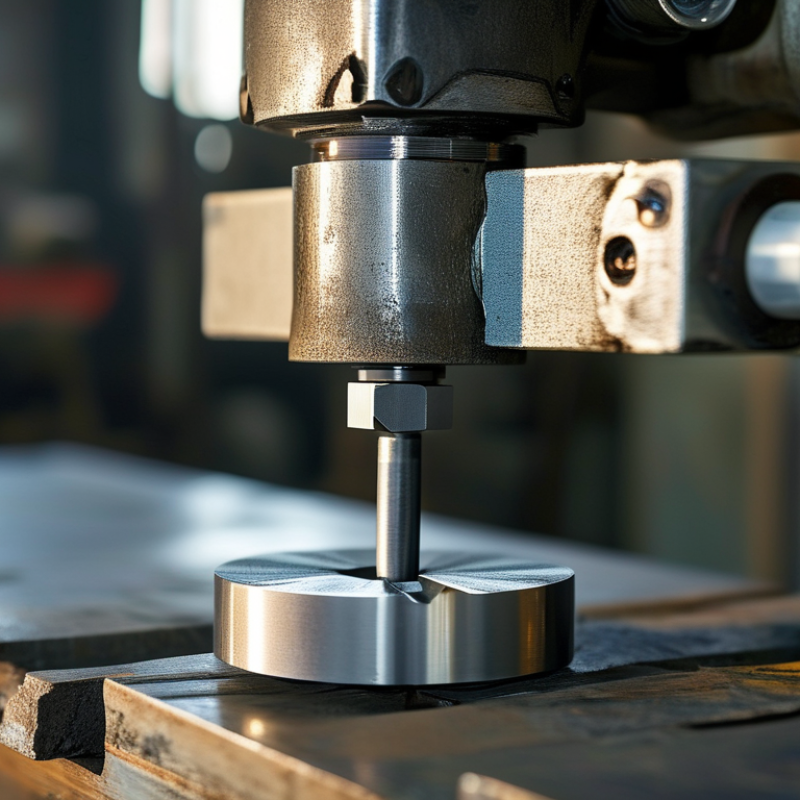
Brinell hardness testing is a widely used method for measuring the hardness of materials. This technique is crucial in industries where material strength plays a significant role. It assesses how resilient a material is under pressure. The process involves indenting a material with a hardened steel or carbide ball. The size of the resulting indentation is then measured. This measurement indicates the hardness of the material being tested.
The Brinell test is particularly useful for large and rough samples. It can provide reliable readings for materials with varying structures. However, one limitation is that it may not work well on very hard or very thin samples. The results can be affected by factors such as surface conditions and sample preparation. Operators must be skilled in handling the equipment to ensure accuracy. It demands attention to detail and an understanding of material properties.
Despite its effectiveness, some challenges arise with Brinell testing. Accurate measurements depend on proper technique and equipment calibration. Variations in indentation size can lead to misinterpretation of material properties. Users should approach results critically, reflecting on both the results and the testing conditions. Being aware of these nuances allows for better application of the data in real-world scenarios.
The Principle Behind Brinell Hardness Measurement
The Brinell hardness test is a widely utilized method in material science. It works by pressing a hard steel or carbide ball into the surface of a material. The depth and diameter of the resulting indentation are measured. This process yields a simple numerical value, known as the Brinell Hardness Number (BHN), which indicates the material's hardness.
The principle behind Brinell hardness measurement is straightforward yet effective. When a consistent force is applied, the indentation left on the surface enables quantifiable analysis. Research indicates that the Brinell hardness test is particularly effective for materials with coarse or uneven structures. According to industry reports, this method is ideal for castings and forgings, where other hardness tests might fail to provide accurate results. However, the test has limitations. For very hard materials, the indent may not be measurable, complicating assessments.
Brinell testing typically involves using a 10mm diameter ball and applying a force of 500 to 3000 kg. The outcome can vary based on material properties and external conditions. Studies suggest that inconsistencies in techniques can lead to variable results. Therefore, professionals must consider these factors to ensure reliability in their hardness measurements.
Components of a Brinell Hardness Tester
A Brinell Hardness Tester is crucial for measuring material hardness. The components of this tester play a vital role in its function. A hardened steel or carbide ball serves as the indenter. This sphere is pressed into the material's surface. The force applied creates an indentation. The size of this indentation determines the hardness value.
The main components include a load cell, which measures the force applied during the test. The load cell provides accurate readings, ensuring reliable results.
Another significant part is the optical microscope. It allows for precise measurement of the indentation's diameter. This measurement is essential for calculating hardness.
Another component is the control unit. It manages the testing process and displays results. The tester also includes a base, which stabilizes the entire setup. However, the design can be complex. Users may face challenges understanding all functions. Some testers may require adjustments or calibration, leading to discrepancies. Overall, each component contributes to the testing accuracy, yet understanding their functions may take time and practice.
Step-by-Step Process of Conducting a Brinell Hardness Test
The Brinell hardness test is a widely used method for measuring the hardness of materials. This test involves a specific step-by-step process. Begin by selecting a metal sample that requires testing. Ensure it is flat and clean. Any irregularities can affect the results.
Next, choose the appropriate ball indenter based on the material's properties. This indenter is usually made from hardened steel or carbide. Apply a specific load to the indenter, pressing it into the material for a predetermined time. The load must be consistent; variations can lead to unreliable results.
Once the indenter is removed, measure the diameter of the indentation left on the material's surface. This step requires precision. Calculate the hardness value using the diameter and the applied load. It's important to note that environmental factors, like temperature, can also influence test outcomes. Regular calibration of the testing equipment is crucial for maintaining accuracy. The Brinell hardness test, while effective, has its limitations and requires careful execution.
What is a Brinell Hardness Tester and How Does It Work? - Step-by-Step Process of Conducting a Brinell Hardness Test
| Test Parameter | Description | Typical Values |
| Indentation Diameter | The diameter of the indentation left after the test | 1.0 - 10.0 mm |
| Load Applied | The force exerted on the test material | 500 - 3000 kgf |
| Ball Diameter | Diameter of the hard steel ball used during the test | 2.5 - 10.0 mm |
| Material Types | Common materials tested using Brinell hardness | Steel, Aluminum, Copper |
| Hardness Scale | Scale used to represent the hardness value | HB (Brinell Hardness) |
| Testing Procedure | Overview of the test steps | Prepare sample, apply load, measure indentation |
| Accuracy | Precision of the hardness measurements | ± 3% of reading |
Interpreting Brinell Hardness Test Results
Interpreting Brinell Hardness Test results requires a clear understanding of the readings obtained. The Brinell hardness test uses a hard ball indenter pressed into the material surface. The diameter of the indentation is measured after the test. This measurement allows for the calculation of hardness. A higher indentation diameter indicates a softer material.
The hardness value is expressed in HB (Brinell Hardness Number). For metals, lower HB values indicate softer materials. For example, a steel with an HB value of 200 is harder than one with an HB of 150. Understanding this scale is vital for quality control and material selection.
Tips: Always ensure proper calibration of the Brinell hardness tester. This affects accuracy. Also, when comparing materials, consider the context of your application. Not every material with a higher HB value will outperform a softer material in every scenario.
After conducting a hardness test, check the results against industry standards. Sometimes, unexpected results arise due to surface conditions or testing errors. Always document your procedure and findings. Reflection on the testing method is crucial for accurate interpretations.
Brinell Hardness Test Results