
Blog
2026 Best Quartz Reactor Types for Global Buyers?
Choosing the right Quartz Reactor in 2026 requires more than comparing photographs or advertised temperatures. Global buyers must examine reactor geometry, quartz purity, thermal uniformity, pressure conditions, and maintenance access. A vessel that performs well in a laboratory may become inefficient in continuous production.
This guide introduces key reactor types, including single-wall vessels, jacketed designs, coil reactors, and customized systems. Each option suits different processes, such as controlled heating, photochemical reactions, vapor treatment, or high-purity material synthesis. Small details matter. A 3-millimeter wall, a polished joint, or an improperly positioned thermocouple can influence stability and product consistency.
Reliable purchasing decisions should connect technical specifications with real operating experience. Buyers should request material certificates, dimensional drawings, temperature records, leak-test results, and clear warranty terms. Supplier expertise also matters, especially when a reactor must integrate with pumps, controllers, gas lines, or automated platforms. Regional standards and shipping conditions can vary, so documentation deserves careful review.
No single design wins every process. That assumption can fail. Quartz offers excellent chemical resistance and thermal performance, but it remains vulnerable to impact, uneven heating, and sudden temperature changes. Some product descriptions simplify these risks too heavily. A practical evaluation should consider the entire workflow, from installation and cleaning to replacement parts and operator training. The following overview compares the most relevant Quartz Reactor types for global buyers, while recognizing that final selection should follow verified process data and qualified engineering advice.
Quartz Reactor Fundamentals and Core Design Features
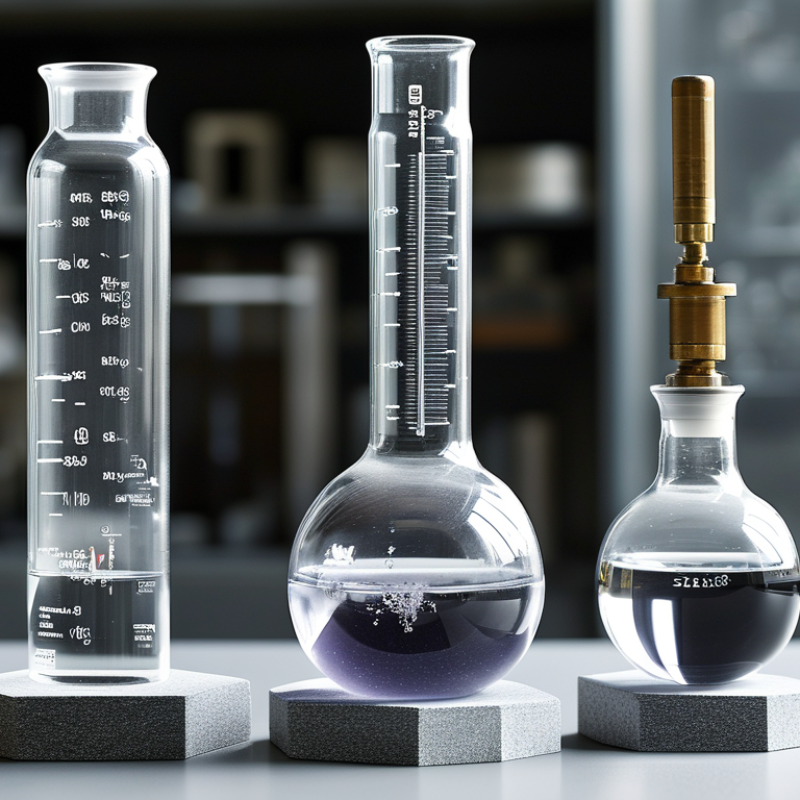
Quartz reactors are built for controlled chemical processing, thermal work, and high-purity environments. Fused quartz offers strong heat resistance and low chemical reactivity. Its transparency also allows operators to observe color changes, bubbling, deposits, and fluid movement during a run. That visibility supports faster process decisions. Not every process needs one.
The reactor body may be cylindrical, spherical, jacketed, or designed for continuous flow. Cylindrical vessels suit laboratory batches and straightforward stirring. Jacketed designs provide more stable heating or cooling around the reaction chamber. Flow reactors use narrow channels to control residence time. Core features include a sealed lid, feed ports, sampling points, a temperature probe, and a compatible agitator. Small details matter. Port placement affects cleaning, vapor control, and safe material transfer.
During equipment selection, buyers should check operating temperature, pressure limits, quartz wall thickness, thermal expansion, and seal materials. Quartz tolerates heat well, but sudden temperature changes can cause cracking. I have seen inspection schedules treated as optional, especially after repeated heating cycles. That is a weak assumption. Visual checks should look for chips, cloudy areas, scratches, and stress lines around ports. Fittings must also match the process chemistry. A precise design can still perform poorly if the heater, sensor, or support frame creates uneven stress. Supplier documentation, traceable testing, and clear maintenance procedures make technical comparisons more reliable for global purchasing teams.
| Quartz Reactor Type | Operating Mode | Typical Process Temperature | Typical Pressure Range | Common Applications | Core Design Features | Main Advantages | Key Limitations | Best-Fit Buyer Requirement |
|---|---|---|---|---|---|---|---|---|
| Quartz Reactor Fundamentals | ||||||||
| Horizontal Quartz Tube Reactor | Continuous gas flow or batch loading | Approximately 300–1,200 °C, process-dependent | Usually atmospheric pressure to low pressure; commonly operated from a few pascals up to 1 bar | Thermal treatment, chemical vapor deposition, diffusion, oxidation, annealing, and powder processing | Fused-quartz process tube, removable end caps, gas inlet and outlet, furnace zone, thermocouple access, and optional boat or wafer holder | Simple configuration, good visibility, easy loading, and compatibility with tubular furnaces | Limited batch volume; temperature uniformity depends strongly on furnace design and load placement | General-purpose thermal processing |
| Vertical Quartz Tube Reactor | Continuous flow, batch, or controlled particle feeding | Approximately 300–1,200 °C, process-dependent | Atmospheric pressure or reduced pressure, depending on the sealing and vacuum system | Wafer processing, thin-film deposition, fluidized-bed work, particle coating, and vertical furnace operations | Vertical process tube, top or bottom gas delivery, susceptor or sample platform, load-lock option, and gravity-assisted material handling | Improved vertical gas distribution options, efficient use of furnace height, and reduced sample contact with support surfaces | More demanding alignment and sealing; loading equipment may be more complex | Wafer or particle processing |
| Quartz Batch Reactor Vessel | Batch operation with charging and discharge between runs | Typically up to about 1,000 °C for many thermal applications; lower limits may apply to seals and fittings | Atmospheric pressure or vacuum service; positive pressure requires engineered vessel design | Wet chemical reactions, hydrothermal research, sample digestion, evaporation, and laboratory-scale synthesis | Open or flanged vessel, quartz cover, ports, internal stirrer or insert, drain arrangement, and external heating or cooling system | High chemical purity, strong resistance to many acids, and easy visual observation of the batch | Quartz is brittle and has limited resistance to sudden temperature changes; mechanical agitation and pressure require careful design | High-purity batch chemistry |
| Quartz Flow-Through Reactor | Continuous liquid or gas flow | From ambient temperature to several hundred degrees Celsius, depending on configuration | Near-atmospheric pressure to moderate controlled pressure, subject to fittings and wall design | Reaction kinetics, catalyst testing, gas treatment, photocatalysis, and continuous chemical screening | Defined inlet and outlet, controlled residence volume, internal baffles or packing, sampling ports, and modular heating or illumination | Stable residence time, scalable process development, and straightforward integration with pumps or mass-flow controllers | Clogging, channeling, bubbles, and pressure-drop control can affect performance | Continuous-process development |
| Quartz Packed-Bed Reactor | Continuous flow through a fixed solid bed | Commonly 100–900 °C, depending on catalyst and reaction chemistry | Atmospheric pressure to elevated pressure only when specifically engineered for it | Heterogeneous catalysis, adsorption, gas purification, catalytic cracking, and reaction screening | Quartz tube or vessel, retaining frits or plugs, catalyst bed, preheating zone, thermocouple position, and differential-pressure monitoring | Good contact between reactants and catalyst; compact and suitable for kinetic studies | Pressure drop, hot spots, particle attrition, and bed settling must be managed | Catalyst and adsorption studies |
| Quartz Photochemical Reactor | Batch or continuous operation under ultraviolet or visible illumination | Usually ambient to approximately 150 °C, depending on lamp and cooling design | Generally atmospheric pressure or mild controlled pressure | Photocatalysis, ultraviolet reactions, advanced oxidation, polymer research, and light-driven synthesis | High-transmission quartz window or immersion well, lamp alignment, cooling jacket or airflow, optical path control, and stirring or recirculation | Quartz transmits ultraviolet wavelengths more effectively than ordinary glass and provides good chemical resistance | Light intensity decreases with fouling, shading, and wall deposits; lamp heat and radiation safety require control | UV-compatible photochemistry |
| Quartz Plasma or CVD Reactor Chamber | Low-pressure gas flow with plasma or thermally activated chemistry | Approximately 100–1,100 °C, depending on the process | Typically low pressure, often from a few pascals to several hundred pascals; some systems operate near atmospheric pressure | Thin-film deposition, surface treatment, plasma etching, carbon coating, and semiconductor-related research | Quartz chamber or tube, gas showerhead or injector, electrodes or remote plasma source, vacuum ports, substrate holder, and temperature control | Low contamination potential, good thermal stability, and compatibility with many plasma and deposition environments | Deposits can accumulate on chamber walls; thermal gradients, plasma exposure, and vacuum sealing require specialized maintenance | Thin films and surface engineering |
| Quartz Immersion Coil or Serpentine Reactor | Continuous liquid or gas flow through an extended path | Ambient to approximately 500 °C, depending on heating and fluid chemistry | Atmospheric pressure to moderate pressure, limited by tubing geometry and connections | Residence-time studies, photochemistry, heat-transfer experiments, and compact continuous synthesis | Coiled or serpentine quartz tubing, controlled internal diameter, external bath or lamp, inlet and outlet fittings, and optional static mixer | Large surface-area-to-volume ratio, compact footprint, and relatively uniform exposure to light or heat | Cleaning can be difficult; bends increase pressure drop and may trap particles or gas bubbles | Compact continuous reactors |
| Core Design Features for Global Buyer Evaluation | ||||||||
| Quartz Material Grade | High-purity fused quartz is commonly selected for contamination-sensitive and high-temperature work | Material selection must match chemical exposure, temperature, radiation, and cleanliness requirements | Review purity, hydroxyl content, wall thickness, transparency, surface finish, and manufacturing tolerances | Low metal contamination, excellent thermal stability, and strong resistance to many acids | Quartz can be attacked by hydrofluoric acid and hot concentrated alkaline solutions; it is also brittle | Purity and chemical compatibility | ||
| Thermal Management | Controlled heating and cooling are essential for repeatable operation | Pressure changes during heating and cooling must be considered in the system design | Use multiple temperature zones, suitable insulation, calibrated sensors, gradual ramping, and adequate cooling clearance | Improves temperature uniformity and reduces thermal-shock risk | Uneven heating, rapid quenching, or local hot spots can crack quartz | Stable temperature control | ||
| Sealing and Connections | Configuration depends on whether the reactor handles gas, liquid, vacuum, or pressure | The weakest connection or seal generally determines the practical operating limit | Consider quartz-to-metal transitions, O-rings, vacuum flanges, glass joints, valves, purge lines, and leak testing | Properly designed connections improve gas tightness and maintenance access | Quartz does not tolerate excessive clamping force, point loading, or misalignment | Reliable system integration | ||
| Safety and Maintenance | Inspection is required before every high-temperature, vacuum, or pressurized run | Use pressure-rated engineering and protective shielding where applicable | Inspect for chips, scratches, devitrification, deposits, blocked ports, and thermal damage; provide guards and ventilation | Routine inspection helps prevent sudden failure and process contamination | Breakage may produce sharp fragments; unsuitable pressure operation can create serious hazards | Safe long-term operation | ||